Prophet margin: the seer who predicted wars and advised Edward VII
In the latest in his series on eminent Victorians, Neil Titley considers the uncannily accurate Cheiro
Thursday, 26th November — By Neil Titley
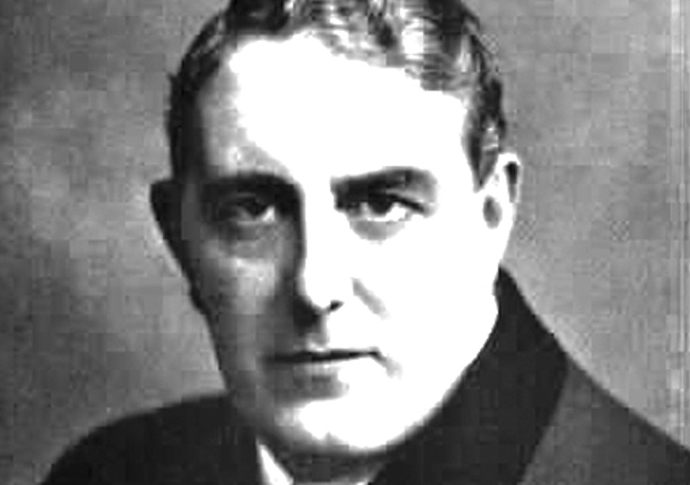
Astrologer Cheiro
IN crazily uncertain times such as these, our rulers might yearn for the advice of a man such as the seer Cheiro (1866-1936) who, with some truly astonishing success, advised such powerful contemporaneous figures as Edward VII and Lord Kitchener.
Cheiro’s origins – like much else in his life – were debateable. Probably born in Bray in Ireland, his original name was either William Warner or Count Louis Hamon. After studying in India with a mystical sect, he arrived in London and began to make a living by palm reading.
This practice was regarded by many people as bordering on the satanic. His first landlady in London’s West End only allowed him to rent his rooms on condition that she daily sprinkled the carpet with holy water. When he left, she charged him extra for the moisture damage done to the carpet.
Later he based himself in Bond Street, where he became exceptionally successful, building a fortune not only out of palmistry but by trading in champagne and Irish peat moss. He became a Freemason and a Rosicrucian (and possibly a secret agent).
After he had deeply impressed Arthur Balfour (the future prime minister and president of the Society of Psychical Research), his client list expanded to include many leading figures. On a visit to the USA, he met President Cleveland at the White House and also Mark Twain, who said of Cheiro: “He has exposed my character to me with humiliating accuracy.”
In Britain his numerous clients included King Edward VII, Lord Kitchener and the explorer Sir Ernest Shackleton (the date and manner of whose deaths he predicted with total accuracy). Many clergymen, including the Bishop of Birmingham, were drawn to visit him.
One of Cheiro’s main interests was the promotion of world peace. In 1895, he started a magazine called Entente Cordiale – A Journal in the Interest of International Peace. Unfortunately, his editorial staff included a xenophobic Englishman, a resentful Frenchman, and an Irishman with a strong partiality for alcohol.
On the night before the first edition was due, Cheiro arrived at the offices to the sound of smashing glass and the sight of the Frenchman falling through the plate-glass front door. Inside the office, the Englishman had a violent nosebleed, while the Irishman lay prone amid the shattered remnants of the furniture. He restored order long enough to publish the first few editions until the peace journal became bankrupt. Cheiro said: “The superb ideal of international peace is a dream only to be indulged in by the very rich or the very foolish.”
One of his clients was an army captain who told Cheiro privately of the curious way he had won his military medal. During the Boer War, he had been trapped by withering rifle fire at the Battle of the Modder River. As his comrades were shot down around him, the captain had become terrified and decided to run away. Picking up a corpse and holding it over his back as protection from the bullets, he managed to regain the safety of the British lines. Once there he realised that the “corpse” was actually still alive and was indeed a high-ranking officer. The captain was awarded a medal for saving the life of his superior officer and “displaying outstanding courage in the face of the enemy”.
About 1898, Cheiro predicted that the 20th century would see a terrible war, then a false peace, followed by an even worse war. He also foresaw the creation of the State of Israel and the partition of India.
On a trip to Russia in 1905 Cheiro met the Tsar and gave him the disconcerting news that he and his family would all die violently in 1917. While in Russia Cheiro also met Rasputin and forewarned the influential monk that his death would include poison, knives, bullets, and drowning. Cheiro realised the power of Rasputin’s hypnotic stare but avoided being dominated by it. He concentrated his own gaze at a point just above Rasputin’s nose, thus avoiding the all-absorbing eyes.
Cheiro had great success with women, one of his conquests being the spy Mata Hari. When she was executed by the French even the firing squad were impressed by her courage. One officer said: “Mata Hari was our enemy, but I honour her for a brave woman. She died magnificently.”
Cheiro claimed that to allow her the illusion of safety he had told her that the execution would be faked and that the bullets were blank. Thus reassured, she went to her death with equanimity.
Suffering from stab wounds inflicted by a jealous husband in New York, Cheiro moved to
California in 1930. When he died in 1936 (a date he had predicted), despite his request for simplicity he was given a Hollywood funeral, lying on a bed of roses while film stars sang his favourite melodies.
• Adapted from Neil Titley’s book The Oscar Wilde World of Gossip. www.wildetheatre.co.uk Available at Daunts, South End Green
