Plaque tribute to ‘king of the buskers’ Billy Waters
'He fired the popular imagination like no other London street performer'
Thursday, 21st November 2024 — By Frankie Lister-Fell
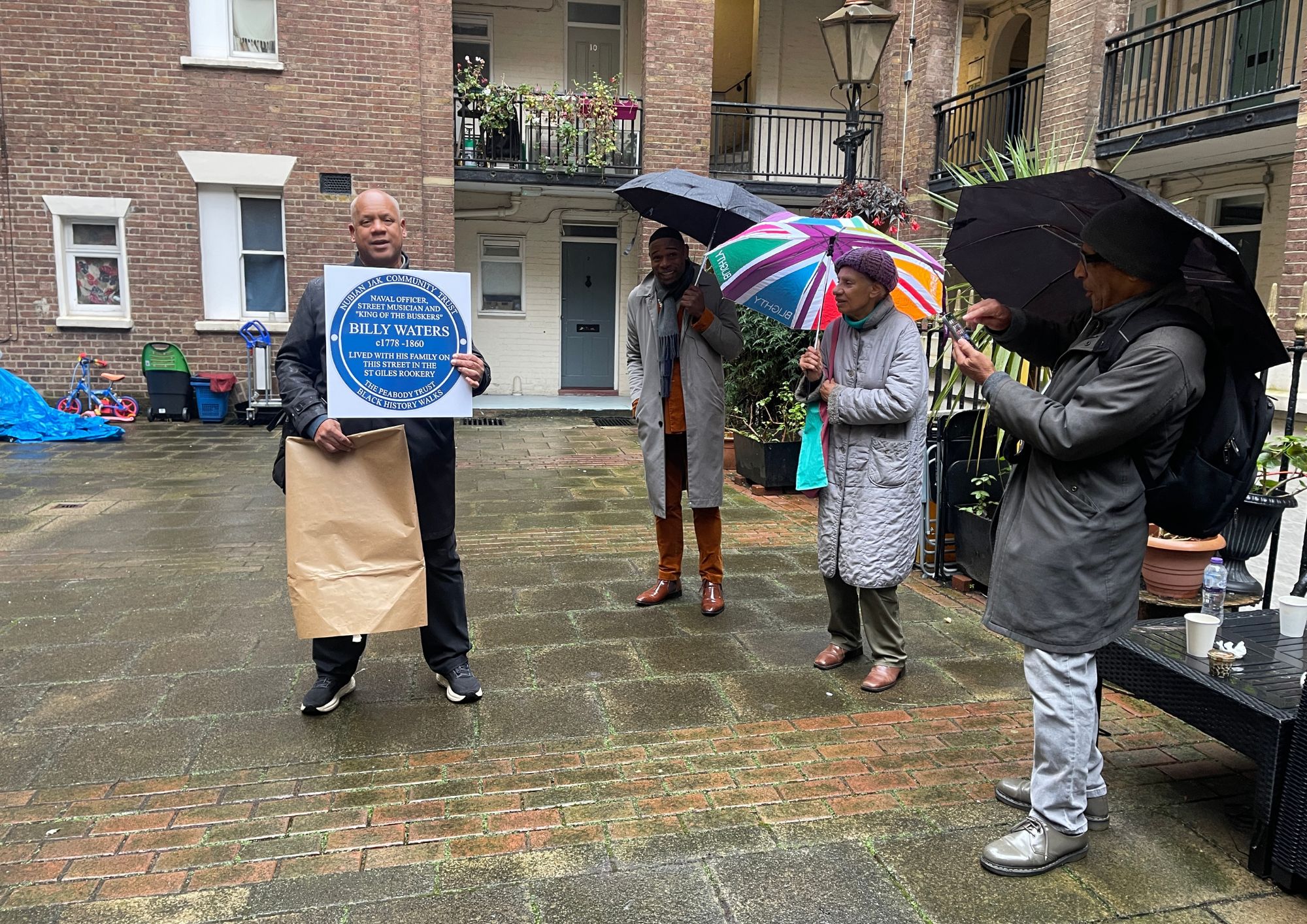
The plaque is prepared at Parnell House

WATCH OUR ONLINE POLITICS CHANNEL, PEEPS, ON YOUTUBE
A BLUE plaque commemorating the life of Camden’s first recorded black resident and celebrated street performer was put up near Tottenham Court Road this week.
Billy Waters became known as the “king of buskers”.
He lived at Parnell House, which is now owned by Peabody housing association, near the end of his life with his wife and two young children. He died on March 21, 1823.
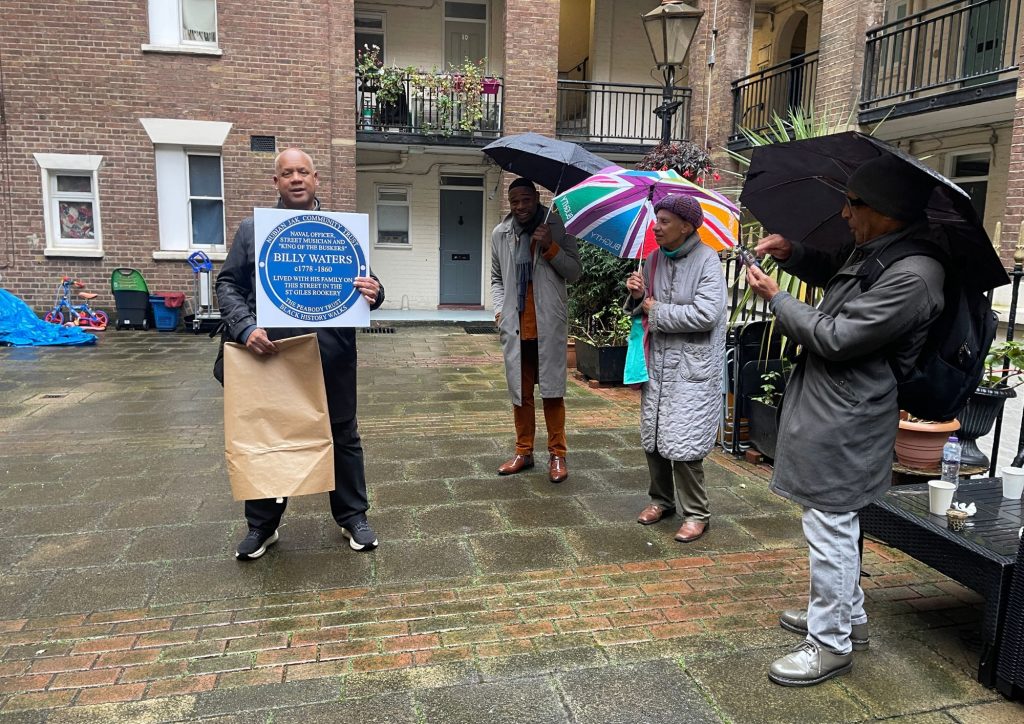
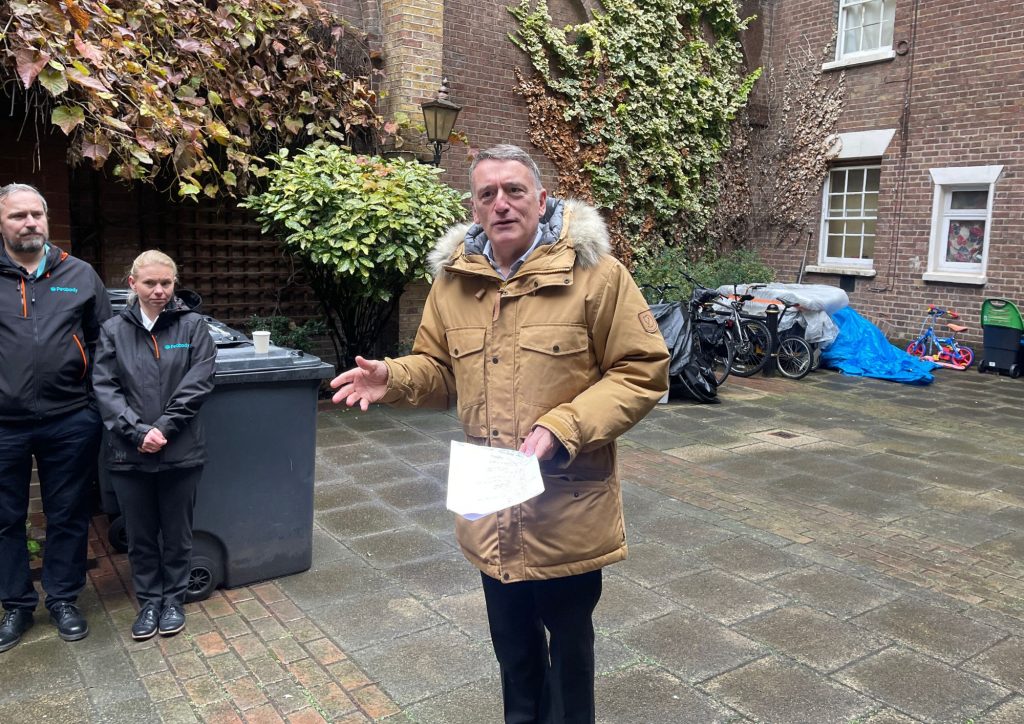
On Tuesday morning, residents, historians and Peabody workers attended an unveiling of the plaque.
Ian McDermott, CEO of Peabody, said: “We’re here to commemorate the history of the area. As much as it’s about an individual, it’s also about the really rich history that made Camden what it is today. So I’d like to welcome everybody, Peabody colleagues, residents – I’m sorry you’re not more satisfied and we’re working on it – and a particular thank you to Chris the caretaker who keeps this place running on a daily basis, and to Eugene.
“It’s right that we reach back into history and identify those people that perhaps haven’t been identified through the traditional way that we learn about history.”
Historian Tony Montague, who wrote Billy Waters’ biography, said there were few facts about Mr Waters.
He said: “He was the first African-American musician to become celebrated in Britain but he didn’t perform on any stage, he fiddled, sang and danced in the streets of the West End and in the public houses.”
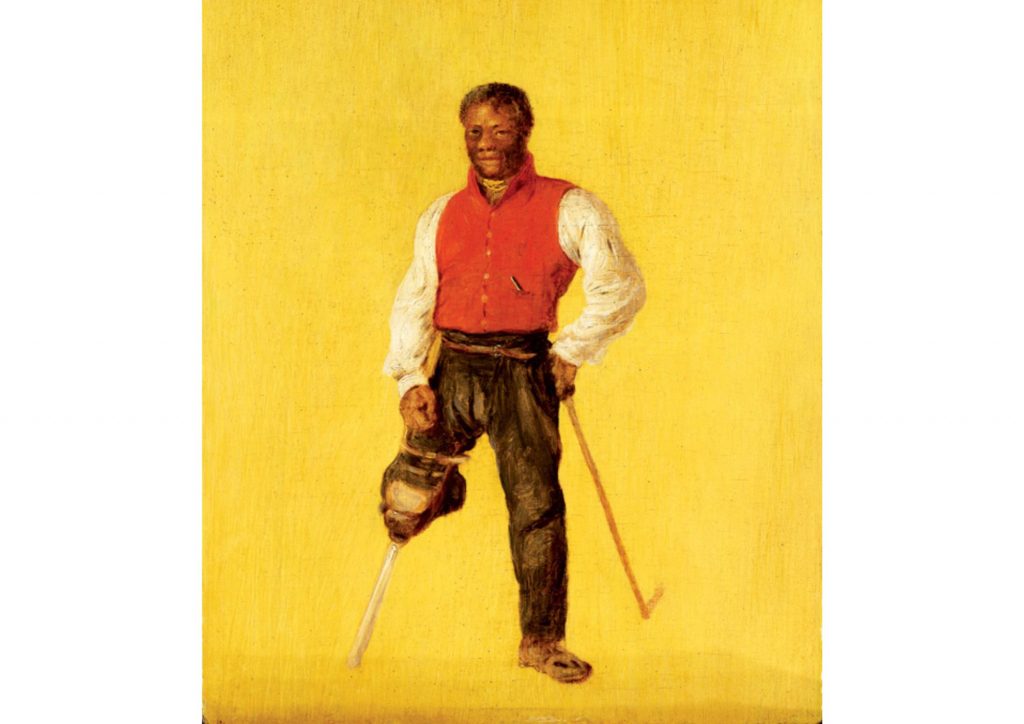
An 1815 painting of Billy Waters
Born in New York, Mr Waters escaped enslavement and joined the British navy where he was promoted up the ranks. But one day, he slipped while loosening a sail and broke both his legs. His left leg was amputated.
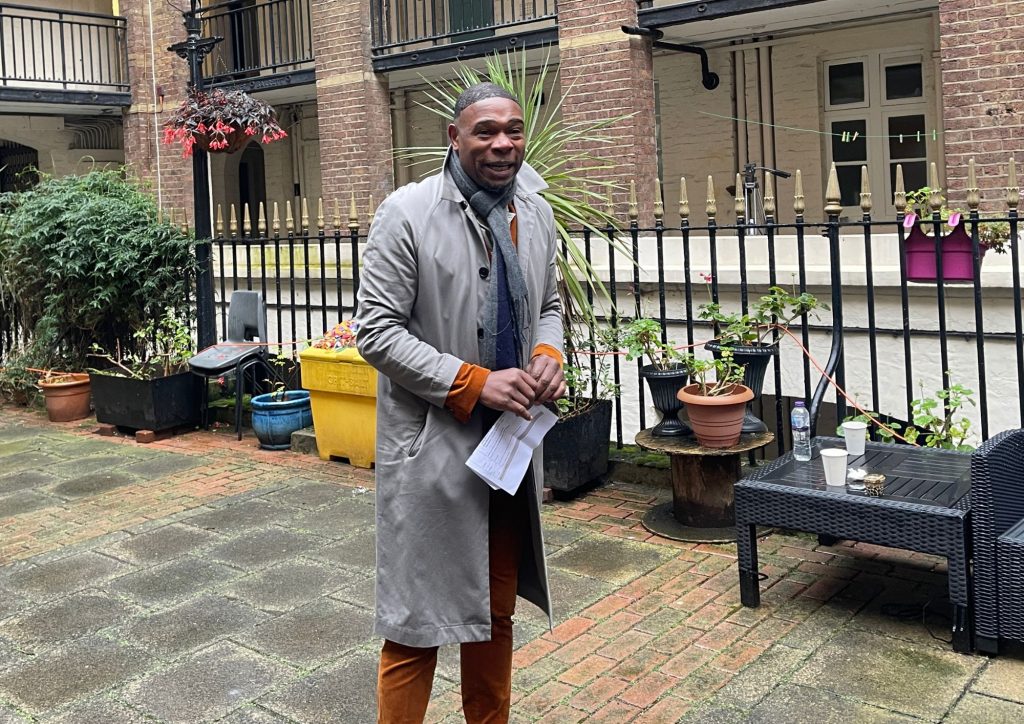
Mr Montague said: “As a disabled war veteran in London he drew on these skills to supplement a meagre pension and performed outside the Adelphi Theatre on the busy Strand. Thousands of people saw and heard Billy perform.
“He sang and danced while fiddling and used his wooden legs for peculiar antics pivoting on it and kicking it out.”
Mr Waters regularly played at a nearby pub that was the “gathering place of petty thieves, sex workers and street people” and the authorities “turned on him”, arresting him twice on the same day for begging and singing “immodest songs”.
Destitute a year later, Mr Waters ended up at the St Giles workhouse where he died after 10 days.
Mr Montague added: “He fired the popular imagination like no other London street performer. And was one of the very few early black performers we know anything at all about.”
Emily Momoh, from Camden Black British History, said she first came across the name Billy Waters three years ago when researching for an exhibition.
She said: “There’s so much more of his story to delve into, but to have this flag being put up today is something that is right and fitting and that will be here for generations to come.”
The commemoration was organised by the Nubian Jak Community Trust and sponsored by the Peabody Trust and Black History Walks.
