Locking up young people won’t help
Thursday, 4th April 2019
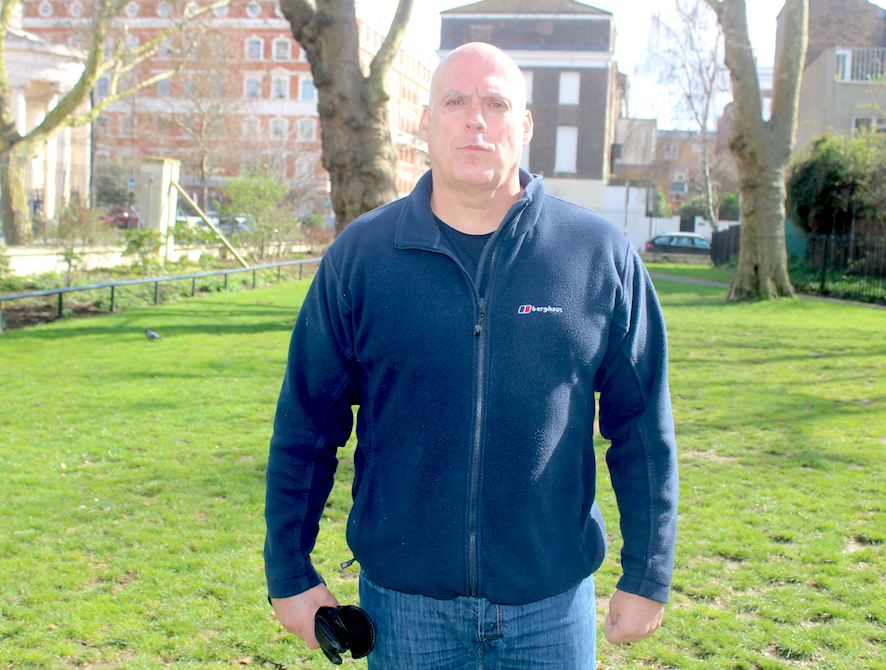
Terry Ellis
• THE April 1 fatal stabbing on the borders of Kentish Town and Gospel Oak highlights the urgency of Terry Ellis’s message in the New Journal two weeks ago, (Former armed robber forms ‘gang’ of role models to tackle knife crime, March 21).
I recently attended a meeting at which Mr Ellis spoke and where I heard moving multi-generational testimony from men and women, including parents, determined to form a male-mentoring circle to reach out to young men between 18 and 24 (the highest-risk range for victims of youth violence), supported by the group A Band of Brothers (http://abandofbrothers.org.uk/).
I was struck by one mother’s point that her son was a different person at home than when he went out into an environment that was not only physical but digital via an intense social media onslaught, a scary cyber-enhanced space where individuals have to find ways to survive.
The meeting felt young males needed a committed support network of older, experienced adults, especially male adults, not just day-to-day, but over a period of years.
Met police Commissioner Cressida Dick is on record that we cannot police a way out of youth gang culture. Locking up thousands of young people won’t help. Local initiatives, hugely important as they are, are only a start.
National and regional policies need to be put in place. Rational management of drug laws is one approach, and Portugal has a good model for this. Reducing the profit from illegal drugs will undermine the drug trade that fuels much of the violence.
Much more to the point is providing a universal income for 14- to 18-year-olds linked to a range of work experience, voluntary work and job training (and sports participation), which will keep them out of the hands of gang groomers and drug dealers.
Schools must resist excluding difficult students who then become cannon fodder for gangs. A better solution must be found. Of course, these measures are expensive, but so are the social costs arising from current measures which are manifestly not working.
Communities can also play a vital part. Councillors tell me that fear of reprisals inhibits residents passing information to the council and to police.
Yet it’s possible, completely anonymously and untraceably, to pass information via Crimestoppers (https://crimestoppers-uk.org/give-information), while fearless.org (www.fearless.org/en/give-info) is Crimestoppers’ dedicated youth service, which again offers total anonymity and untraceability.
Reporting will never bring results overnight, but weight of reporting will help bring about greater concentration of resources where they’re needed.
Communities should also demand and vote for elected representatives and parties committed to treating the issue of youth violence as the tragedy it is.
CHRIS FAGG
Chair, Gospel Oak Safer Neighbourhood Panel
