Kenwood House to close for £5m restoration
Thursday, 19th January 2012
Published: January 19, 2012
PROPERTY NEWS by DAN CARRIER
THE priceless collection of artworks by Rembrandt, Van Dyke and Gainsborough kept in Kenwood House is set to spend nearly a year on the road as the Heath’s famous stately home closes its doors for a £5.3 million restoration project.
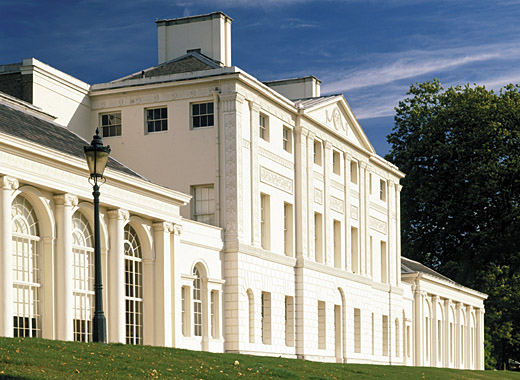
The house, dating from the 1600s, will be closed from the start of April while vital roof repairs are done and the landmark cream facade is stripped down and repaired.
The art collection, left to the nation by Guinness brewing magnate Lord Iveagh, will travel to three galleries in America in a year-long tour called the Art of Kenwood in London. The historic Vermeer will be put on display at the National Gallery, in Trafalgar Square.
Paul Griffiths will oversee the work. As English Heritage’s area manager for historic properties in and around London, he looks after such gems as Charles Darwin’s Down House in Kent, where he wrote On the Origin of Species, and the Tilbury Fort on the banks of the Thames.
Mr Giffiths is aware of the huge responsibility the conservation group has to get Kenwood back into shape.
“This really is [architect Robert] Adam’s masterpiece,” he said. “It is one of the great stately homes of England. The library is simply incredible and visitors come from all over the world to see it.”
English Heritage carry out regular maintenance but a comprehensive survey of the state of the house four years ago revealed some worrying damage.
“We looked under roof slates and it was much worse than we had originally thought it would be,” Mr Griffiths said.
Swathes of slate will have to be replaced, which English Heritage is currently sourcing from the Welsh quarries Adam bought tiles from.
The house will be shrouded in scaffolding and under a temporary roof. Other crucial work will include replacing the ornamental skylights that bathe the sweeping staircases in sunshine.
Mr Griffith’s team has also had to turn detective: with more than 100 chimneys to be repointed and swept, the team has drawn up a diagram of where all the flues go and which room they are linked to.
The work will take the rest of the year, with the house scheduled to re-open in late summer 2013. The grounds will remain open throughout the restoration.
The making of an architectural icon
THE foundations were laid by William Murray, the first Earl of Mansfield, a Scottish lawyer who wanted a home that would suit his exalted standing in London society. As a judge, he ruled that slavery was unlawful, and he soon made waves on the London legal scene.
He picked the land in Hampstead as suitably rural yet close enough to be able to head into the city for work. As his career took off, he employed architect Robert Adam to remodel the house.
As well as giving Mansfield a suitable home, the project was used by Adam as a calling card for his own brand of architecture.
The building has undergone many changes and restorations since the First Earl’s carriage swept up its drive. When William Murray’s nephew inherited the building in 1793 he added two wings and employed Humphrey Repton to landscape the gardens.
In 1906 electric lights were added by the sixth Earl. The Mansfield link had ended by 1920, when the Kenwood Preservation Committee was formed to oversee a secure future for the rambling property.
In 1925, Lord Iveagh of the Guinness brewing family bought the house and used it to show his extensive art collection. His bequest has kept the house in shape to the present day, with the help of conservation guardians English Heritage.
