Swanky Modes fashion designers in walk back to where it all began
Friday, 3rd April — By Hamish McCorriston

Willie Walters was one of the designers by the shop opposite Camden Road station
By HAMISH McCORRISTON
A FASHION collective who made Camden their home in the 1970s are reunite for a history walk down memory lane this Friday.
Four designers behind the boutique clothing brand Swanky Modes will walk from the Torriano Meeting House in Kentish Town to the store where they launched their fashion careers in Camden Town.
Willie Walters, a former director of fashion at Central Saint Martins, will be joined by former colleagues Judy Dewsbury, Melanie Haberfield and Esme Young – now a judge on the Great British Sewing Bee – to remember their roots at 106 Camden Road.
Ms Walters, a long-time resident of Kentish Town, fondly remembers 106 Camden Road as a shop where the four women spent long nights finishing unique collections which have been worn by the likes of Cher.
She told the New Journal: “On those occasions where we’d be working all night to get a collection finished, we’d just be laughing because we’d be drinking so many coffees.
“We’d be just trying to keep ourselves awake and telling silly jokes. Those are the good memories.”
She added: “We were four women working together and we supported each other. After school, our children would sit upstairs and have tea while we carried on downstairs.”
The history walk is part of a weekend of events at Torriano Meeting House organised by the Warehouse Market project, an Amsterdam-based initiative which brings together makers, designers and publishers to share self-made clothing and textiles.
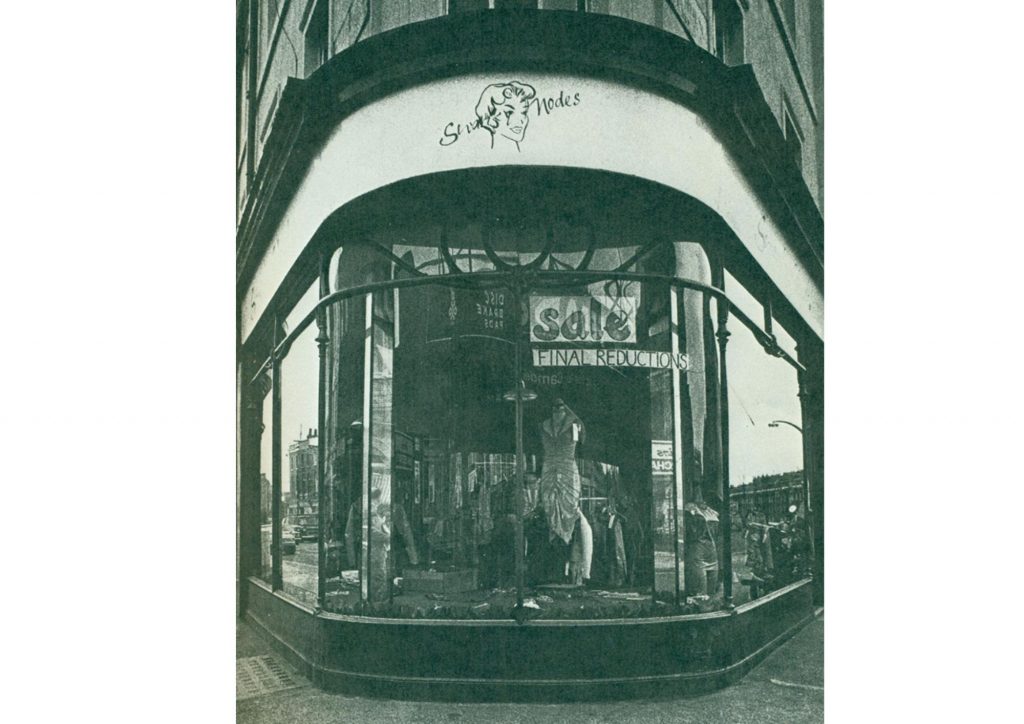
The former Swanky Modes shop in Camden Town
Swanky Modes put itself on the map after turning shower curtain plastic into raincoats – a design which was pictured in Nova magazine by renowned photographer Helmut Newton in 1973.
From there, the business’s collections experimented with Lycra bodycon dresses and disco jumpsuits, often made from reels of fabric found in markets or old stock.
Ms Walters said: “We didn’t want to do the same, that was the desire. We were design-led, and we wanted to do things that we thought were exciting at the time. I suppose we weren’t very market orientated.”
Now the empty shell of the recently closed Camden Road Arms pub, formerly run by BrewDog, the abandoned tables of No.106 tell little of a shop whose windows were once filled with dresses that have featured in Crocodile Dundee films and the V&A.
Looking back, Ms Walters remembers the seventies as a time of opportunity when four young women could decide to rent a high street shop and start making clothes.
She said: “It was that innocent. There was that feeling that you could start as a sort of grassroots and grow upwards, and that it wasn’t a mad pipe dream.
“I don’t think you could do that nowadays, because rents are so high, because everything is beyond expensive.”
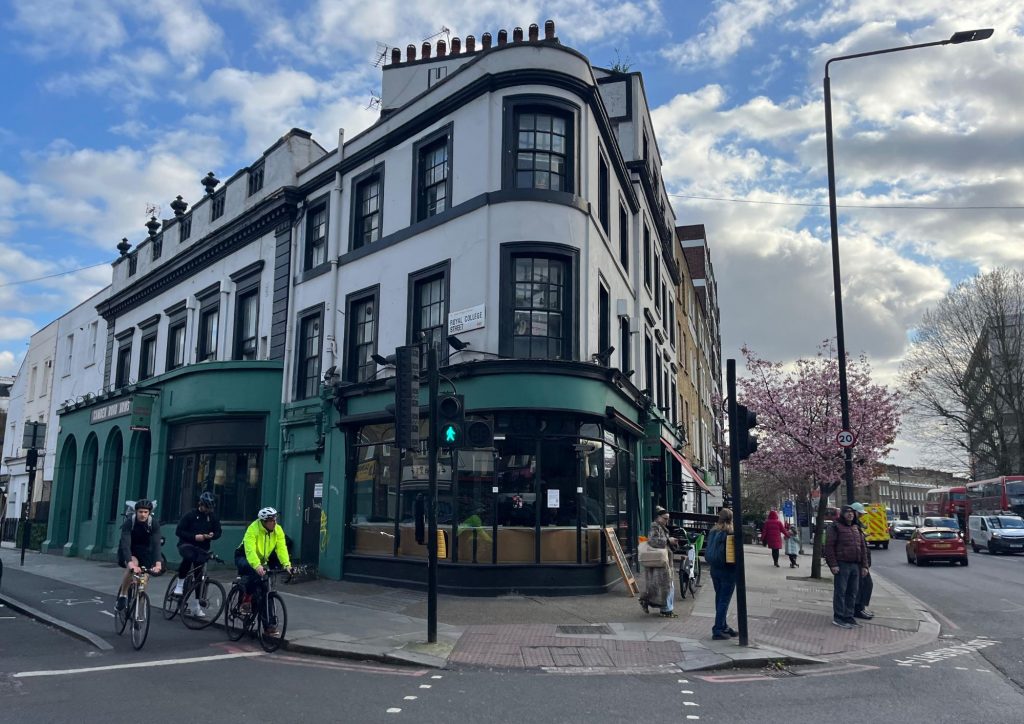
The site as it looks today
As fast fashion and internet shopping have taken over from independent retailers, Ms Walters sees many high street shops as losing the individuality which made the likes of Swanky Modes special.
But she said she hoped young designers would emerge with “the same energy to do something for themselves” like the Swanky Modes founders did in 1972.
For Anouk Beckers and Mika Perlmutter of the Warehouse Market, the project’s visit to London follows events in Amsterdam, Paris, and New York, where designers have been encouraged to share the efforts that went into their work and exchange knowledge.
Over the Easter weekend, Torriano Meeting House will host talks with designers and fashion academics, a Grenfell memorial quilt session, and a poetic label writing workshop.
All of the events are free to attend with details on the Warehouse Market website.
