I’ve discovered a new dinosaur! Researcher identifies unknown breed
Invictibellatrix was like a T-Rex – but different
Friday, 16th October — By Tom Foot
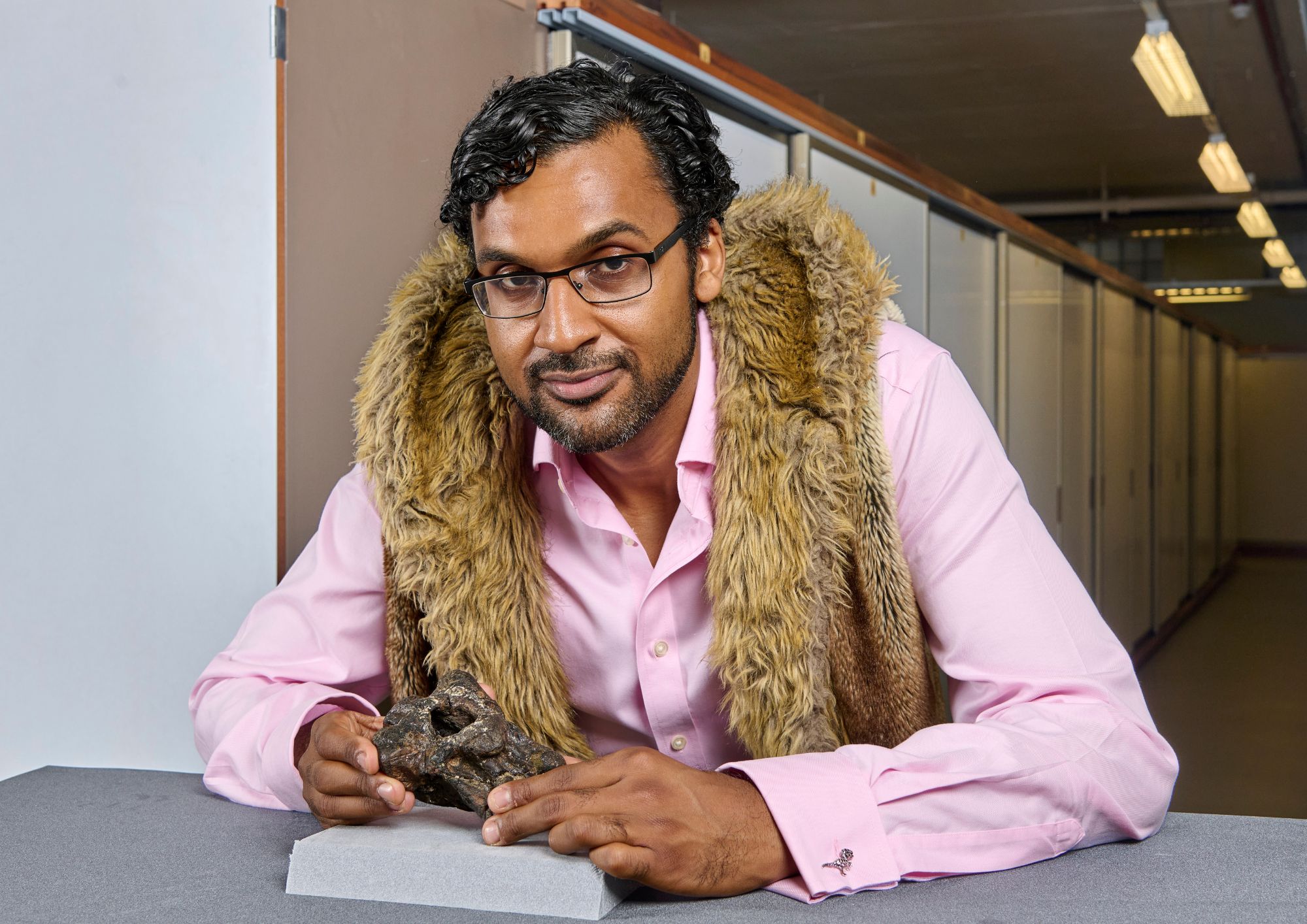
Dr Cassius Morrison
FROM an early age he obsessed over the prehistoric reptiles after watching Jurassic Park movies and family trips to the sculpture park at Crystal Palace.
But not in his wildest dreams did Dr Cassius Morrison imagine he might end up discovering a new species of dinosaur.
The UCL researcher spoke to the New Journal this week about the “mystical and magical” discovery of the back of a slender skull hidden away for more than a century in dusty basement rooms of the Natural History Museum.
It has officially been declared as a new species of Megaraptoran, similar but significantly smaller than a T Rex.
And he has chosen to name it “unconquered female warrior”, or Invictibellatrix for short, in his first ever published scientific paper.
Dr Morrison, 36, told the New Journal: “It was like it had been under this magical cloak and spirits from more than 120 million years ago have been waiting for me. Literally that is a more plausible explanation that it’s just been sitting in a cupboard for a century and no one knew it was there.”
Dr Morrison said he had been doing PhD research on the brain adaptations in semi-aquatic dinosaurs when he came across the small skull in a cupboard in the Natural History Museum.
He later spotted a replica of a Megaraptoran skull in a museum in the US and it reminded him of the fossil he had come across back in London.
A lengthy review process was launched that found several unique anatomical features – including an oval hole where the spinal cord entered the brain – that has officially differentiated it from all other known dinosaurs.
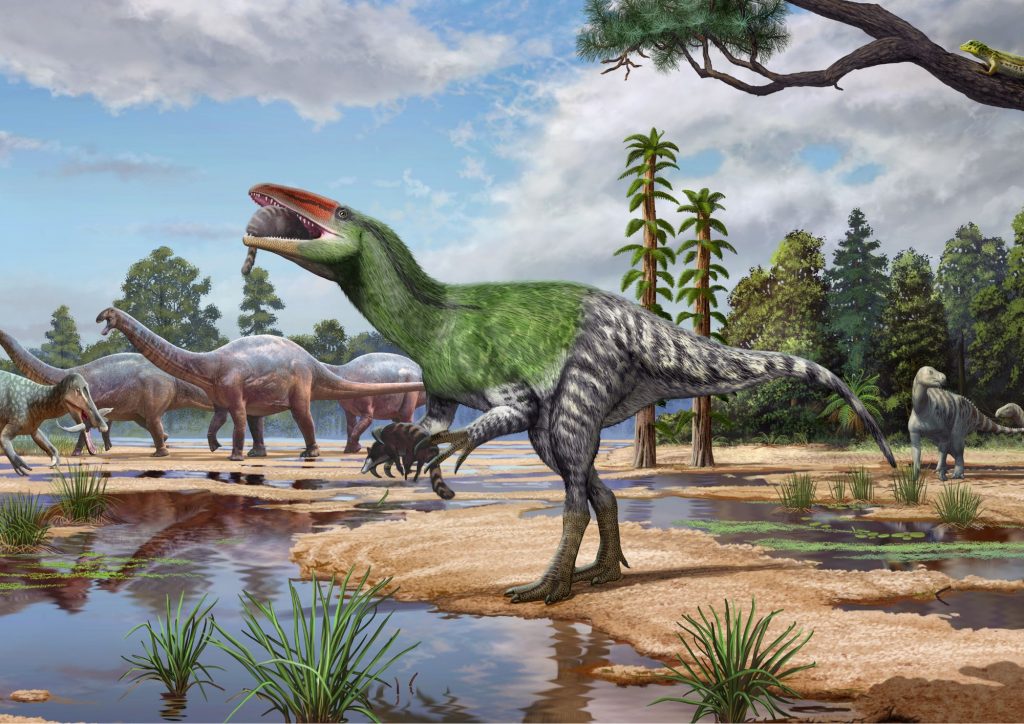
Here’s Invictibellatrix
Dr Morrison said: “Literally any dinosaur found in the UK by now would have had every technique applied to every scrap of bone. These particular dinosaurs are very rare, particularly in Europe. Their bones are among the most sought after and fought over out there.
“So it is very surreal. It probably hasn’t hit yet. It has been so weird to keep it under wraps for so long.”
It is believed the Natural History Museum acquired the skull in 1924 and it was found on a beach near Sudmoor Point on the Isle of Wight.
The working theory is that its ancestors came from Asia and migrated across to Europe.
The Isle of Wight in the Early Cretaceous Period was very different to the one that is known today for its chalk cliffs and seaside towns, home to retirees and even former New Journal reporters.
This was a subtropical place often ablaze with grassfires, with ancient river beds flanked by thick vegetation and squarking pterodactyls swooping above.
On the ground, giant predators like the crocodile-faced spinosaurus jostled for position with plant-eating iguanodontians.
And somewhere in the mix you would have got a rare sighting of the tiger-sized megaraptoran, a swift and fearsome attacker who no doubt slept with one eye open.
Dr Morrison said: “They started off small but became leaders. I thought it gives hope to other kids who like science and may have been bullied for being different.”
He said he believed the female dinosaur would have been “very clever” and capable of “advanced behaviour”, able to hunt but also were “caring parents”.
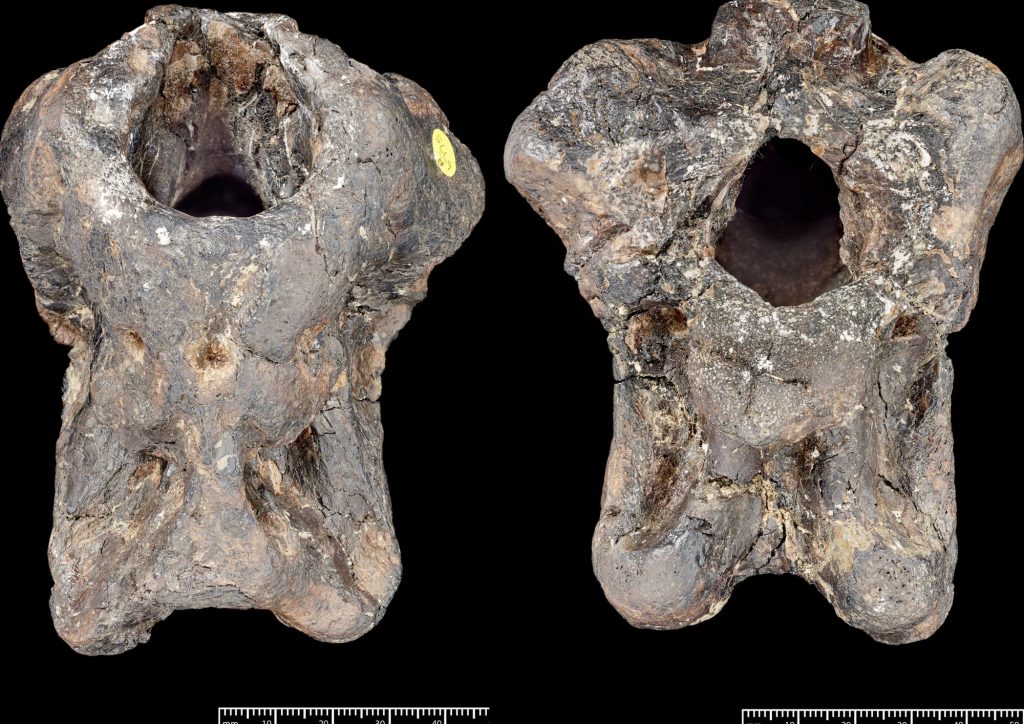
The skulls that provided crucial clues to Dr Morrison’s research
Harry Potter fans are likely to get excited about the name that chimes with the JK Rowling baddie, Bellatrix Lestrange.
But Dr Morrison said: “On Harry Potter, it’s just coincidence – I only clocked after it was all approved. With dinosaur names you have raptors, which means thief. Then you have ‘venator’, which means hunter. Then you have the maiasaura, which means good mother lizard. We didn’t want hunter or thief, we wanted to do warrior. Bellatrix is the female version of warrior in Latin.”
Dr Morrison said if it was purely down to him, rather than a joint decision with his colleagues in the UCL Earth Sciences department, then “hands down” it would have been named after the half-Elven maiden Arwen Undomiel in the Lord of the Rings.
He added: “When I was a kid the biggest film was of course Jurassic Park. I used to think about if a T Rex would suddenly appear when it attacked a car what would I do?”
He added: “You know how teachers and parents tell you to not get into drugs and drink? Well my parents were like ‘please no more dinosaurs. Stop drawing them all the time!’ They have always been the beginning and the end for me.”
Professor Paul Barrett, the study’s senior author from the Natural History Museum, praised the “exceptional” discovery, adding: “There are still many discoveries to be made.”
