Thanks for nothing! MPs spend two years looking at HS2 plan before coming up with report that's NO help to Camden
Friday, 26th February 2016
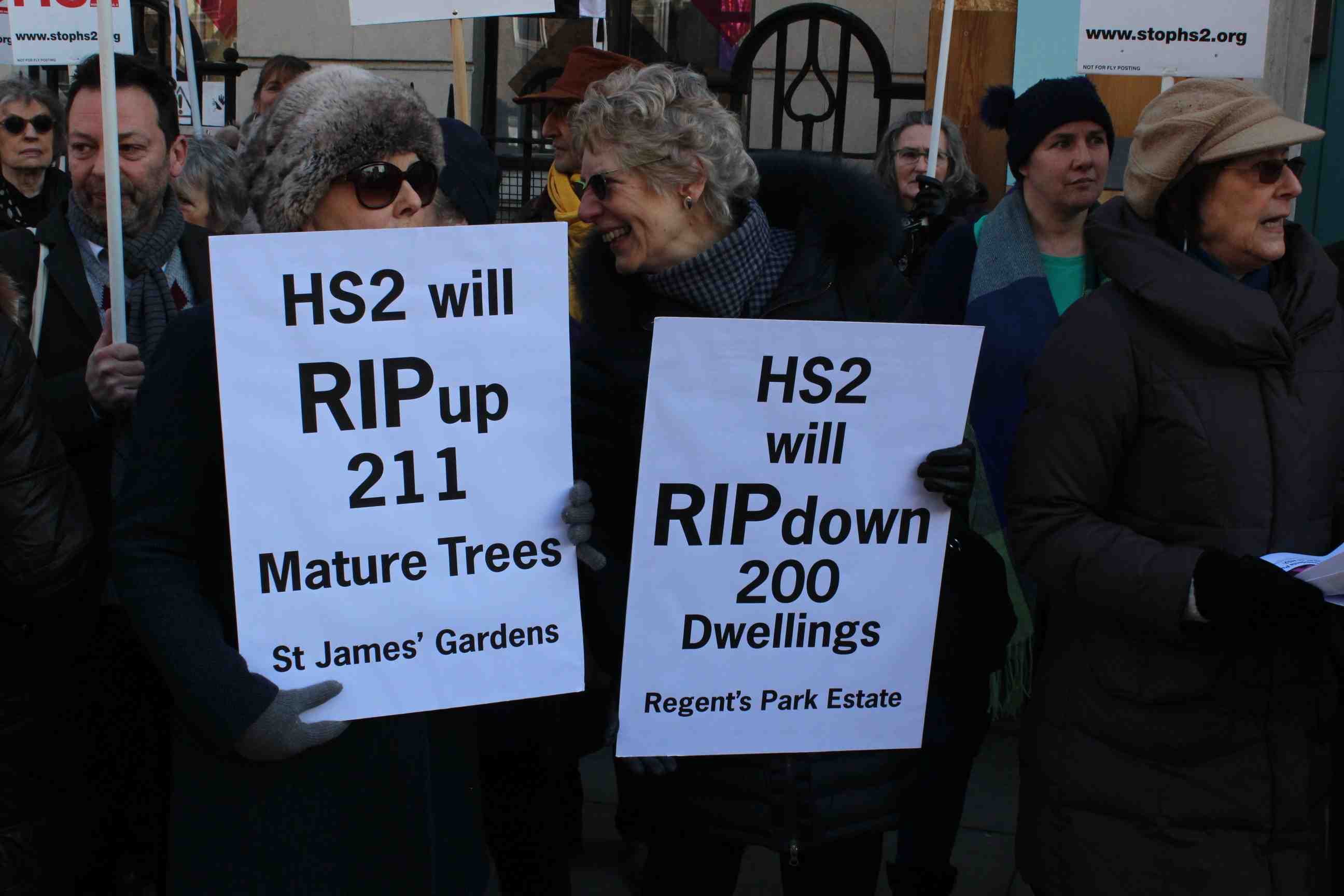
A HOUSE of Commons select committee that has spent almost two years listening to individual concerns about HS2 has warned that its impact on Camden will be “exceptional” and that the borough “needs special treatment”.
Despite this, the committee has failed to recommend any major changes to the current plans for the borough, triggering outrage and dismay from many of the hundreds of “petitioners” who appeared before the committee last year.
The long-anticipated report, published on Tuesday, said that in Camden “many residents are going to have to put up with disturbance on a scale beyond the experience in most other locations”, adding: “We are satisfied that progress has been made in meeting the legitimate concerns of Camden residents.”
Terminating the line at Old Oak Common instead of Euston – a long-held ambition of Camden’s anti-HS2 campaign – was “unviable”, while alternatives suggested by engineer experts that would have avoided destruction of homes in Regent’s Park estate were “ingenious but flawed”.
Responding, Holborn and St Pancras MP Keir Starmer said Camden would find the report “very hard to stomach” and that it was an “inescapable conclusion that the desires of rail users have been prioritised over the needs of residents”.
He added: “The HS2 select committee report will come as a bitter disappointment to many Camden residents. Although the committee had no power to amend the principle of the Bill, it did have power to suggest modifications and to seek assurances and undertakings.
“Yet, despite the devastating and long-term damage that HS2 will cause to our communities, the select committee rejected an Old Oak Common terminus either permanently or temporarily.”
The High Speed Rail committee was made up of Conservative MPs Robert Syms, Sir Henry Bellingham, Sir Peter Bottomley and Geoffrey Clifton-Brown, and Labour MPs David Crausby and Mark Hendrick. It had the power to recommend changes to the HS2 Hybrid Bill, which is due to be voted on by MPs this year.
More than 100 petitions – some representing dozens of people at a time – were submitted by Camden residents, elected representatives, businesses and organisations to the committee. Many chose to go to the House of Commons in person to deliver the petitions.
Air quality activist Paul Braithwaite, who has campaigned against HS2 for six years, said: “Those hundreds of Camden petitions may conclude, as I do, that this was a total waste of our efforts on a process now revealed to have been designed to defuse, distract and demoralise.”
During its evidence sessions Camden Council’s lawyers struck a deal with HS2’s legal team, agreeing a list of “assurances” about the way the construction works would be handled.
The deal included HS2 paying for sound insulation to more than 1,000 homes, mainly on the Regent’s Park estate. Council leader Sarah Hayward
said: “The select committee’s final report echoes what we’ve been saying for years – that the impacts of HS2 on Camden are exceptional and we need special treatment.”
The government says it is building its high-speed railway to Birmingham – later forking off to Leeds and Manchester – because it wants to create a “new backbone of our national rail network” and a key plank of its “Northern Powerhouse” transport strategy.
Transport secretary Patrick McLouglin said: “It will not only deliver significant journey time savings, but also much-needed additional capacity and increased connectivity.”
