Harris Calnan Construction fined £80,000 at Old Bailey over death of Craig Page after alarm system failed
Thursday, 2nd February 2012
Published: February 2nd, 2012
by TOM FOOT
A BUILDING firm has been fined at the Old Bailey after a dangerously overloaded crane tipped over and crushed a young father.
Craig Page, 26, was killed by the boom of the crawler crane as he helped excavate a seven-foot basement in Denning Road, Hampstead.
Harris Calnan Construction pleaded guilty on Friday to breaching lifting regulations under the Health and Safety Act 1974 and on Tuesday was fined £80,000 and ordered to pay £66,244 costs. The firm’s director, Neil Harris, also pleaded guilty to breaching the regulations and was fined £7,500 and ordered to pay £25,000 of the total costs.
Three years after the accident the New Journal – the only newspaper to attend the full hearing this week – can reveal:
- The crane fell after hoisting a skip which could have weighed almost three times the safe amount.
- Experts agreed that an alarm system, that should have disabled the crane, malfunctioned.
- The crane lift supervisor was in a hut at the time of the accident.
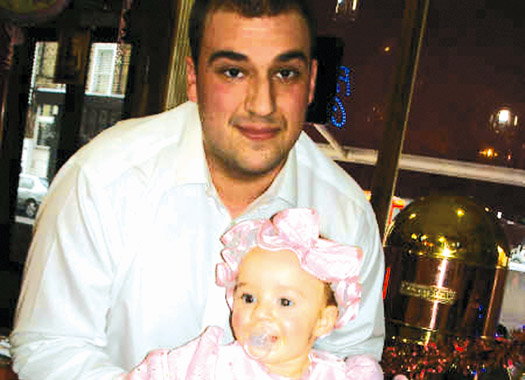
The court heard that Mr Page, who lived in Caledonian Road, Islington, with his wife and daughter – aged just one at the time of his death – was working as a “slinger” at the Hampstead site.
He was hired by Atkins and Craig, subcontractors of Harris Calnan.
Mr Page was standing on a timber island above a pit of concrete when the crane tipped and fell towards him in March 2009. He died at the scene.
Summing up, Judge Peter Beaumont, QC, the Recorder of London, said: “The boom landed on the timber tower that Mr Page was standing on. It was too far out and too heavy.”
The court heard that the workmen were using a “mini-crawler crane with a telescopic jib”, operated by a Mr Willis – his full name was not read out in court. A crucial lift plan – a written document required by law at construction sites – was absent and “any sort of planning was sketchy at best”, barrister James Ageros said.
The court heard that Mr Willis and Rob Toomes, the site supervisors, had met that morning and concluded the maximum lifting of the crane was “suitable” for the task.
Mr Ageros said: “The risk associated with this type of work was high. The assessment of this fell considerably short of standards expected of them. There was a real dearth of planning. But I am not suggesting cost-cutting of any sort.”
He said the crane was operating at a capacity “beyond safe working load”, adding: “If the lift had not been attempted, Mr Page would not have been killed.”
The court heard that Mr Willis had five years experience as a crane operator and had been tested on the crawler crane two days before Mr Page’s death, receiving a “very easy pass”.
The company’s barrister, John McDonald, described Mr Willis as a “sensitive and competent operator”.
The judge accepted evidence that the crane’s recommended weight capacity was between 360 and 450 kilos but that the actual load was “not thought to be less than 800kg and might have been 1200kg”.
The court heard the crane’s boom extended around three to four metres further out than was safe to do so.
The judge said the supervisor and operator “should have realised the danger”. People on the site said the crane’s warning alarm system failed.
The court heard that the crane should have emitted a buzzer and then a “piercing klaxon sound” when the crane approached tipping point. Flashing green lights were supposed to turn yellow and then red. At this point, a safety system should have automatically disabled the crane.
Mr McDonald said: “Mr Willis says he did not hear the alarm as the crane tipped over. Despite the relatively small site, none of the witnesses said they heard any alarm.
“The [HSE] investigation found that if the RCL [acronym for safety system Rate of Capacity Limiter] had been operating properly the crane would have stopped and the tipping point would not have been reached.”
Five experts who analysed the case before the hearing agreed through a “process of elimination” that the alarm system “malfunctioned”.
Mr McDonald said: “This accident was obviously a matter of great regret. The company really is trying to put matters right.”
He said the firm, set up in 1995, had completed more than 400 projects, although it did not own its own offices.
Take-home pay for Mr Harris was about £60,000 a year.
“These figures do not speak of someone who is affluent,” said Mr McDonald.
The Old Bailey was told that the company had no cash reserves and had made a £58,000 loss last year despite a £4.5million turnover.
Mr Harris, 53, began his working life as a crane driver, and had worked in the construction industry all his life, his barrister John Cooper said.
“Neil Harris expresses deep regrets. His was a non-causative breach of duty and that is a very important point,” he said.
“Wisdom after the event does not necessitate foolishness before the event.”
Judge Beaumont told the court, as Mr Page’s fiancée Michelle O’Donoghue looked on: “There are those who cared for Craig Page, who was doing a job to support his family, who will struggle to understand this fine.”
He added: “The purpose of this prosecution is not to compensate the victim or the victim’s family but to encourage other companies to fulfil their duty to employees. It is not a measure of the value of life that was lost.
“This is not a corporate manslaughter case, but a health and safety offence. Harris Calnan was the main contractor, Neil Harris was the director responsible. They failed to ensure the lifting operation was carried out in a safe manner.”
The judge ordered Mr Harris to pay £25,000 towards the prosecution legal costs within 28 days.
Daughter who sees her friends’ dads and asks: where’s mine?
LITTLE Shannon, just four years old, looks at the clouds and asks her mother whether they can fly on a plane to heaven, writes Tom Foot.
Just one when her father Craig Page was killed on a Hampstead building site by a toppled crane, she has started asking questions about why all her friends have daddies and she doesn’t.
Mother and daughter never stop wishing he could somehow walk back through the door.
Mr Page’s fiancée, Michelle O’Donoghue, told the New Journal yesterday (Wednesday) how she still has unanswered questions after the planned full trial hearing at the Old Bailey was cancelled late on Friday.
She said guilty pleas entered by Neil Harris and his construction firm Harris Calnan meant crucial details about the accident were never heard in public.
“I can’t move on because I don’t even know the full story. It doesn’t ring right to me. One minute it’s a four-week trial. Next minute, Harris pleads guilty and then it’s all over with,” said Ms O’Donoghue.
“Someone has to be held responsible. We were expecting a custodial sentence, or at least a ban.”
Michelle and Shannon live in Islington and it was the young girl who answered the phone when the New Journal called.
“There are so many questions: I want to know why Craig was standing there,” said Ms O’Donoghue. “He wasn’t supposed to be there. I think he was called over.
“I want to know the ins-and-outs of the crane driver’s statement. Why was there 1200kg in the skip?”
Then there are the questions her daughter asks. “Shannon sees all her friends with dads and asks: where’sc mine? She asks if we can take her on an aeroplane to see him in heaven,” said Ms O’Donoghue.
“It will be three years next month and it doesn’t seem that long. I’m still waiting for him to come home. I asked him to have the day off that Friday, but Craig didn’t like letting people down.”
She said she had been told by officials at St Pancras Coroner’s Court that an inquest is still expected to go ahead in March. It will allow her finally to sign a death certificate, more than three years after the death.
Experts’ verdict – Accident ‘entirely foreseeable’
THE Health and Safety Executive described Craig Page’s death as “avoidable” and “entirely foreseeable” yesterday (Wednesday) following the outcome of the Old Bailey hearing.
The construction industry watchdog prosecuted Harris Calnan Construction last year following an investigation.
It found the firm failed to properly plan or supervise lifting operations at the Hampstead site.
Inspector Dominic Ellis said: “From the start of this project the defendant failed to control even the most basic of risks on the construction site. These failings ultimately resulted in the tragic and entirely avoidable death of Mr Page.”
He added: “The defendant’s failure to appropriately plan, manage and supervise lifting operations on-site led to this incident.
“The attempted lift of a liquid concrete load at a distance far in excess of the crane’s safe working parameters was wholly inappropriate.
“The potential for overturn in these circumstances is well known, entirely foreseeable and could have been simply prevented.”
