Clothes encounters of the second-hand kind
Have you ever wondered what happens to clothes donated to charity shops? Peter Gruner goes in search of answers...
Thursday, 22nd October — By Peter Gruner
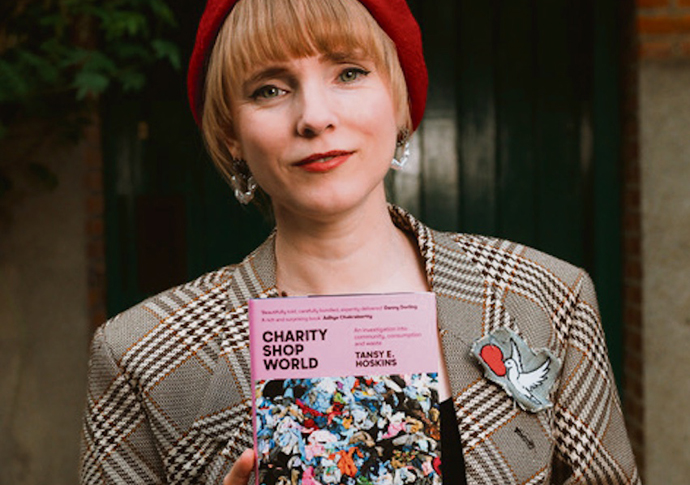
Material girl Tansy E Hoskins with her book [Kim Ford]
A CHEAP and cheerful charity shop seems to have everything going for it, but there may be an awful lot we don’t know about what’s going on behind the scenes.
Today, as more retail shops close due to high rents and lack of finance, a new book by former Camden-based award-winning journalist Tansy E Hoskins suggests that too much charity could also mean mountains of unwanted clothes end up overseas, where they can become a social and environmental hazard.
Tansy visited and often worked at a number of popular UK charity shops, but won’t identify them. One of her book’s main messages is that such shops should not be used as dumping grounds for sub-standard goods. She writes that there are more than 10,000 charity shops across the UK, nearly four times the number of branches of Tesco.
The book charts the fascinating history of second-hand clothing sales. On the cusp of industrial clothing production, London in the 17th century was host to a huge trade in second-hand clothing. There were vibrant markets in Seven Dials in Covent Garden and Thieving Lane in Westminster.
“Flying on tall poles,” she writes, “fluttering over people’s heads were flags made from handkerchiefs, scraps of silk, cotton and linen in every conceivable colour.”
By the 18th century women, once in the forefront of the second-hand clothing business, were edged out by men in men-only guilds.
Tansy describes the atmosphere in today’s charity shops.
“The bell will jingle as you open the door and someone will say ‘hello’. The aisles are narrow and the rails and shelves are heaving. Alongside men’s underwear, sports bras, polyester dresses and tartan skirts you’ll find actual vintage coats for £10 and vinyl records for £2.
“But have you ever wondered what happens to the contents of the bags you drop off at the charity shop?” she asks.
With more than 80 billion pieces of clothing produced each year, she decided to dig deep into the world of charity shop volunteering.
It’s not always good news for the charity workers. On one day 15 small, grey bin bags have been dumped on the pavement outside a shop. They are possibly from a house clearance, but no one has stuck around to explain.
Inside the bags it’s mainly navy blue T-shirts, shapeless trousers, synthetic, beige lace-trimmed shirts, some florals, some frills, some touches of embroidered flowers – all out of date, stained and stretched out of shape.
Tansy writes: “Dumped clothes that no one cares to hand over properly have a sad feel to them, stripped of all joy and worth.”
Charity shops have huge advantages over their retail neighbours. Profits are not subject to corporation tax and there’s zero VAT rating on donated goods sales. And 80 per cent of business rates are waived.
The shops would not exist without 186,800 volunteers who work in them.
“It is an industry built upon neighbours coming together, on people giving up their time and doing hard work without recognition, having a belief in something greater than their own self-interest, making friends, and selflessly dealing with the expelled waste of capitalism.”
Tansy scrutinises the donations offered to charity shops. In one shop they include not just low-quality fast fashion. People are also donating unwanted Christmas goods, including jumpers.The problem is that no one will want them for many months and there’s no space to store them.
The jumpers go in the ragbag and the decorations clog up the store room until they get thrown away.
“In another bag I find a pair of navy high-tec hiking boots, size 8. They show no signs of damage, but are covered in dried mud. Like all the other dirty clothes and shoes, they go in the ragbag.”
She describes how groups of mainly young men have become collectors who distribute unwanted donations to foreign countries.
They maintain they only collect 50 tons a week compared with other firms who collect as much as 300 tons.
Asking where the stuff goes, Tansy is informed that there are a variety of countries including markets in Ghana, Kenya, Nepal and Poland.
According to one investigation reported in the book, many of these clothes ended in rivers or landfills, or burned.
Towards the end of the book Tansy says she has friends working in charity shops and believes people who donate clothes should make sure that they wash them first.
“If your clothes need mending, then mend them, or have them mended. Dirty or broken clothes are not a charitable donation. Clean your shoes before you donate them. Remove mud from the soles or scuffs from the uppers. Replace or wash the laces if needed.
“Donations should be your best attempt to do something good.
“The same goes for furniture and kitchenware: Give it a good clean.”
Although the book doesn’t shy away from difficult truths, it’s also a celebration of community, generosity, repair, reuse, and the extraordinary people who keep charity shops running.
• Charity Shop World: An Investigation Into Community, Consumption and Waste. By Tansy E Hoskins. Indigo Press, £14.99
