Ben Whitaker: Hampstead's first Labour MP and a lifelong admirer of George Orwell
Wednesday, 11th June 2014
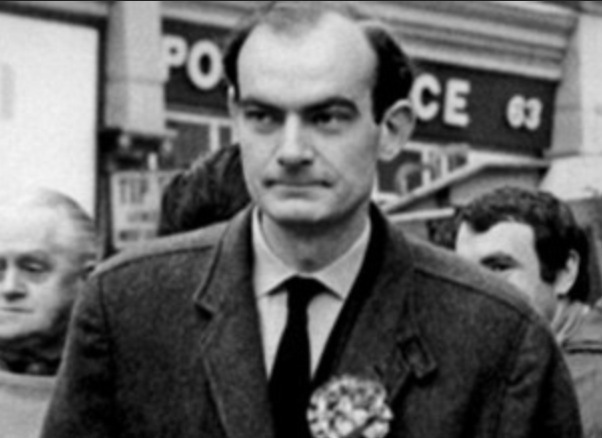
What a sweet moment of iconic victory it was on the steps of Hampstead Town Hall almost half a century ago.
Ben Whitaker, then 32, stood there in smiling silence with his arm around his wife, Janet, late on that October night in 1966, triumphant in having become Hampstead’s first ever Labour MP.
He had defeated Tory Cabinet minister Henry Brooke, known as the most-hated man in Britain after having pushed through Parliament the Rent Act that tore working-class homes apart, and had then become a humiliated home secretary.
I was there and remember it now like yesterday in sadly reporting the death of Ben Whitaker, aged 79, found dead by his daughter Quincy at his country hideaway home in Piddinghoe, Sussex.
Ben had caught MRSA in hospital after breaking his ankle, which refused to heal and left him in acute pain at the end of a remarkable life devoted to seeking help and justice for the oppressed.
He was a hidden hand fighting for social welfare, minority rights, the arts and education and against genocide, poverty and slavery and censorship.
He was executive director for a decade of the Gulbenkian Foundation UK with a £2million give-away grants budget for a decade. He was also a member of the UN Human Rights Commission, its vice chairman for 13 years, and sat on a host of committees.
His significant record was recognised in 2000 with the award of the CBE, having been awarded the Order of Merit by Portugal in 1993.
But back in the 1960s Ben affectionately called me Scoop, and with good reason after the then left-wing Hampstead Labour Party had chosen him as their parliamentary candidate for the safe Tory seat. They did so amazingly unaware that he was the son of a baronet, went to Eton and served in the Coldstream Guards, which was my exclusive revelation in the Ham and High.
After reading history at Oxford, he started his career as a barrister and lecturer and worked for the Italian Mafia-fighting social activist and poet Danilo Dolci and when elected Hampstead’s MP his many talents were soon recognised by Labour prime minister Harold Wilson.
He was appointed a PPS immediately and then junior minister for Overseas Development before, four years later in 1970, Hampstead reverted to type when the late local Tory councillor Geoffrey Finsberg won back the seat.
And it was not until 1992 after unsuccessful bids by Tony Clark, Ken Livingstone and John McDonnell that double Oscar-winning actress Glenda Jackson reigned supreme when the boundaries were changed.
Indeed, Parliament was probably not the best place for Ben Whitaker. It was too frustrating and too delaying for a man of so many parts and sensibilities.
He was totally determined and demanding, charming and forever curious in his relentless pursuit as a social reformer, author, supporter of the arts, and an unequivocal admirer of George Orwell. It was on Ben’s initiative and with the help of Hampstead bookseller Ian Norrie and myself that we put up a plaque, since stolen, to Orwell on the site of Booklovers’ Corner, in Pond Street, Hampstead, where he worked while writing Keep the Aspidistra Flying.
Ben subsequently campaigned for the BBC to erect a statue to the author of 1984 – which may yet happen, the sculptor Martin Jennings having created a portrait bust of Orwell, who, like Ben, was an Etonian.
“Orwell was always my hero at Eton, he and Shelley,” Ben told me at the time. “He is such a marvellous example of honesty and integrity in writing. Animal Farm is my favourite book, a classic that is there to be read for all time.
“I wish Orwell was here with us now, to hear his views on the mess that we are in, the media and the evidence of the Leveson inquiry. We need heroes like Orwell but there aren’t any with his vision in the world today.”
Ben too was an acknowledged author, journalist and broadcaster, editing in 1967 a collection of essays entitled A Radical Future, as well as producing a substantial study of The Police in Society and another book on Parks for People.
He lived throughout his political life in Adamson Road, Swiss Cottage, where he and his wife, the Labour life peer Baroness Whitaker of Beeston, brought up their three children.
Painting, writing, photography, theatre, music and opera and walking, especially hill and coastal, were among his pastimes until he broke his ankle.
A private humanist funeral is to be held in Sussex. Details of a memorial service will be announced later.
