‘We’ll boycott water bills until they pay up and stop the floods
Comparison made with Poll Tax rebellion in 1980s
Monday, 21st September — By Daisy Clague
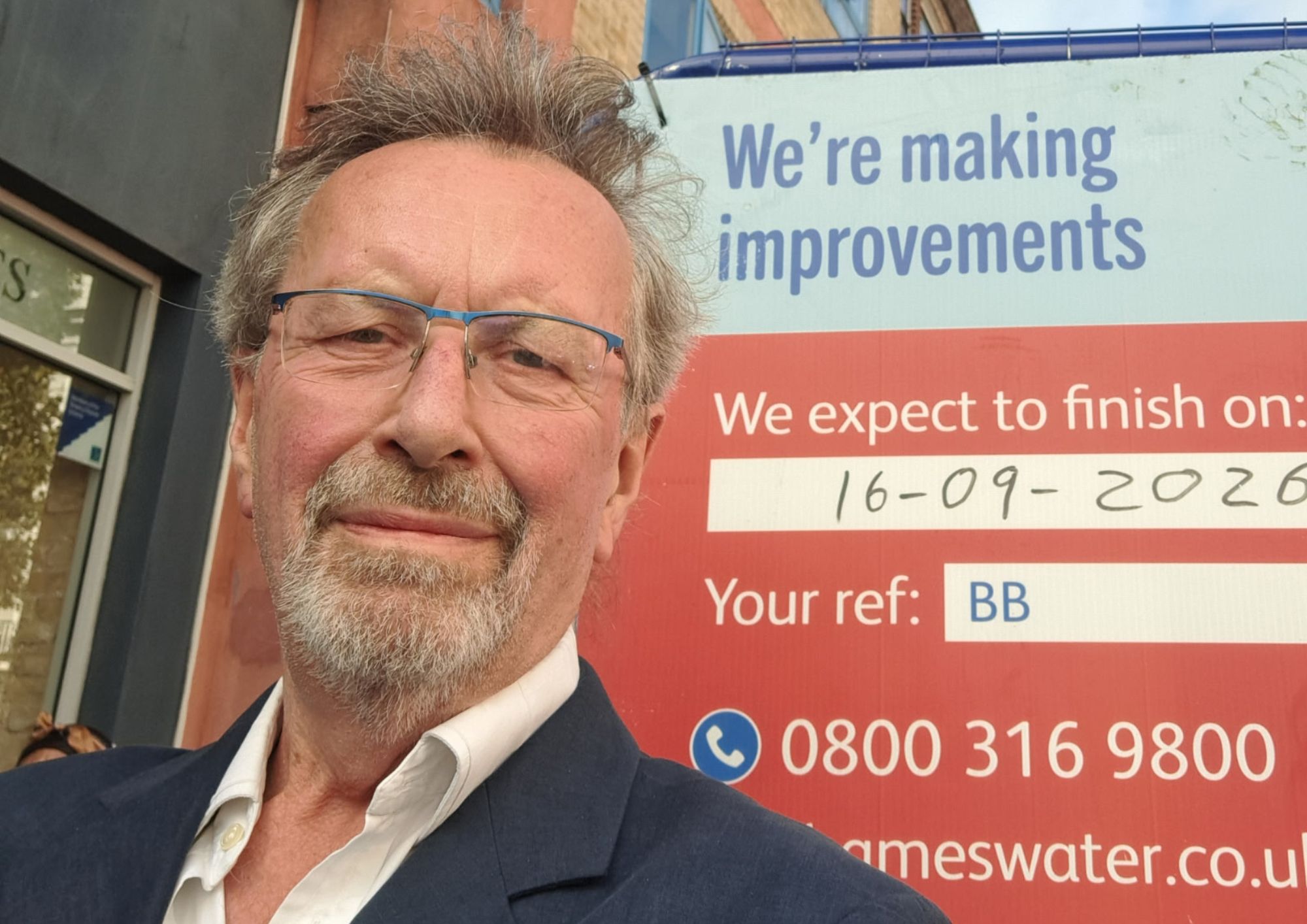
Trevor O’Farrell in Kentish Town
AS burst water mains repeatedly trigger flooding in Camden’s streets, some residents are turning their outrage into action by boycotting their bills.
Trevor O’Farrell, who lives in Camden Square, is a member of Boycott Water Bills, a national network of frustrated customers who withhold the wastewater portion of their payments in a protest against water companies dumping sewage into England’s waterways.
“Water is something that falls freely from the sky or bubbles up from the earth, and is basically harvested by a lot of greedy parasites,” he told the New Journal.
“The water companies give out billions in salaries and dividends – money that could be used to put new pipes underneath Kentish Town and stop it flooding every few months.”
Kentish Town Road has now been flooded from top to bottom in less than a year, including a burst pipe outside Scrivens last week, a burst pipe outside Pang’s fish and chip shop in August, and a major flood in and around Leighton Road last October.
When the New Journal questioned Thames Water again this week about when the mains in Kentish Town were last inspected, maintained, or replaced, we were given no answers.
Mr O’Farrell has joined the Boycott Water Bills campaign to channel his frustration about flooding and pollution into something that he hopes can lead to real change in a similar ilk to the Poll Tax boycott of the late 1980s.
He said: “People are very fearful because they think, ‘I’m a small individual taking on a large corporation. What chances do I have?’ But this is a mutualised, collective action. As more and more people annoy them, and don’t pay them, they’ll eventually have to go away.”
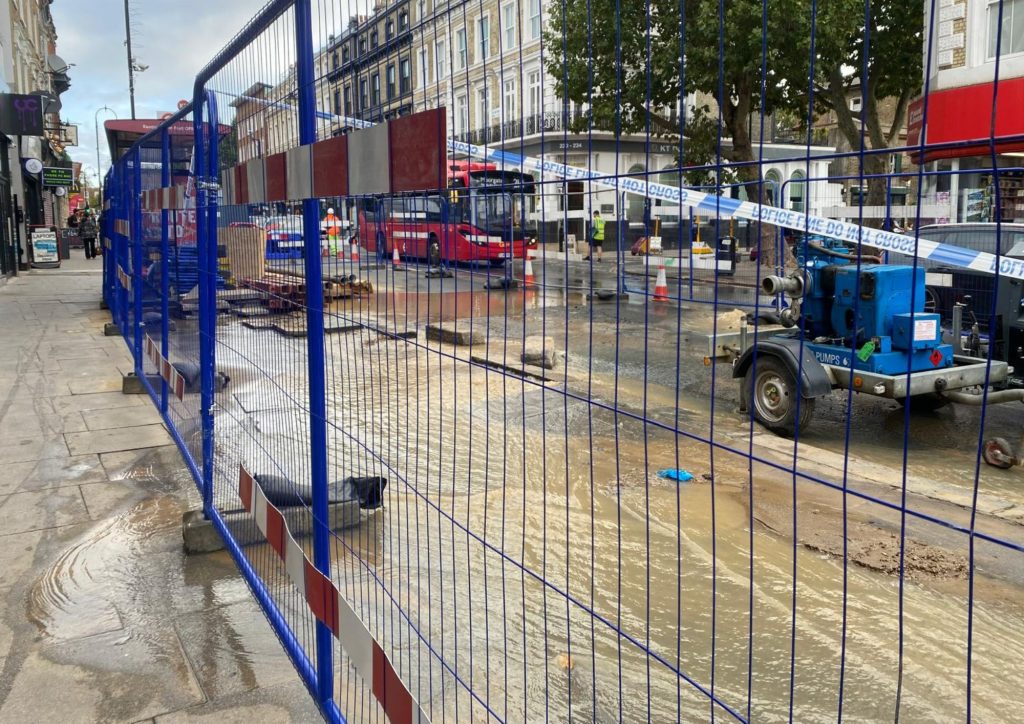
More disruption from water leaks in Kentish Town this month
He told how it is not just Thames Water and other water companies – handed to the private sector in 1989 – around the country who are letting down their customers, but also successive governments in their failure to fix a failing system and Ofwat, a “regulator that fails to regulate”.
Mr O’Farrell added: “There are clearly powerful interests from both the finance sector and the water company itself that don’t want to rock the boat, even if that boat is floating down Kentish Town High Street. They want to preserve the status quo because they are making money out of it. There is no other reason.”
He added: “When things go badly in the world, the international community will impose sanctions on a country. Withholding payment to Thames Water is imposing sanctions that the government won’t impose. We are not a group of people that don’t want to pay their water bills. We are a group of people that are scandalised by the behaviour of privatised industries.”
A Thames Water spokesperson said: “No dividend has been paid to Thames Water shareholders for the past two years and all our profits are being reinvested in the business, with vital revenue from customer bills helping to fund the biggest upgrade to Thames Water’s network in 150 years. Last year we invested a record £2.7billion, more than £7million every day, and we are planning to accelerate the delivery of our biggest upgrade to more than £4billion for 2029/30. “In the past year we reduced leakage by 15.1 per cent, pollutions by 18 per cent and serious pollutions by 27 per cent.”
An Ofwat spokesperson said: “We are continuing to hold companies to account whilst also working closely with the government and fellow regulators to drive forward reform and rebuild public trust in the water sector.
“This includes the conclusion of eight enforcement cases into failings by water companies that led to sewage spills, with the total value of redress packages and fines exceeding £300million.”
