The socialite who became known as ‘Queen of the Bootleggers’
Thanks to the Camden History Review, Dan Carrier shares Gloria de Casares’s remarkable tale
Friday, 9th January — By Dan Carrier
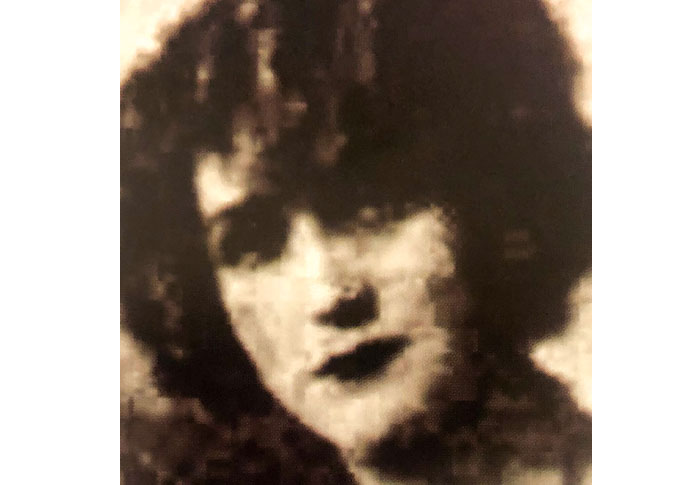
Gloria de Casares [NEWSPAPER PHOTOS]
IT was 100 years ago this week that Regent’s Park resident and socialite Gloria de Casares registered a new firm at Companies House.
The Gloria Steamship Company would buy the five-masted, wind- and steam-powered cargo ship The General Serret with the idea of trading across the Atlantic with cities on the USA’s eastern seaboard.
In the latest edition of the Camden History Review, historians Marianne Colloms and Dick Weindling tell Gloria’s marvellous story – and how this well-heeled business woman found herself accused of running a bootlegging operation into Prohibition USA.
Review covers a range of Camden-related topics and in the latest edition, Gloria’s remarkable life is revealed via their contributors’ diligent research.
As the authors relate, Gloria was the ex-wife of an Argentinian shipping magnate who traded livestock and meat across the Atlantic. Gloria would become something of a society face, known for her white, chauffeur-driven limousine, and her expensive clothes and jewellery.
After the couple divorced in 1920, Gloria moved into Chester Gate, Regent’s Park: the authors say there was no information they could find about the divorce settlement, but “she had access to considerable funds”.
They cite “foreign travel, trans-Atlantic trips, comfortable homes in London. But there may have been alternative sources of cash,” they add.
The historians have found news reports that uncover a secret business project Gloria appears to have been involved in – a trade that the renowned Camden Town distillers Gilbey’s was also inadvertently linked to: namely, getting round the US’s Prohibition laws to provide alcohol for Speakeasies.
As the History Review article outlines, Gloria founded the Gloria Steamship Company in January 1925 – and it appears her business model was based on getting spirits into the USA.
Her plans appear to have come undone when the steamship was forced into Thameside dock en route for “Halifax and Western waters,” after developing engine trouble and a crew who said they were owed wages.
“It was found to be carrying a cargo of 10,000 cases of whisky,” the History Review reveals. “Gloria maintained the General Serret had been chartered and she knew nothing about its cargo.”
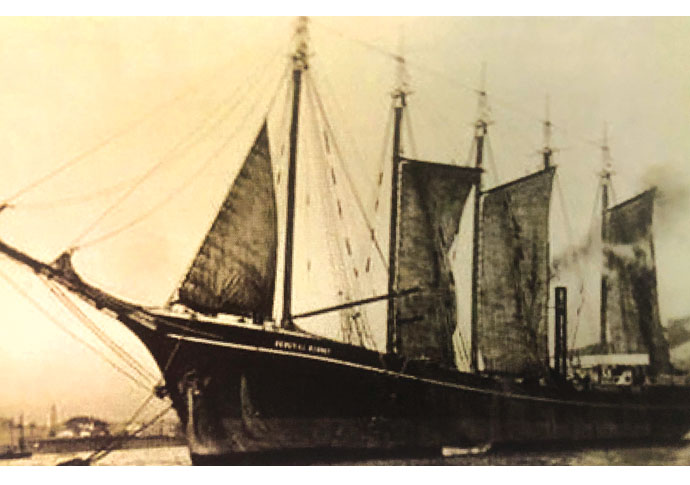
The General Serret [NEWSPAPER PHOTOS]
The press enjoyed the tale – a socialite known as the Queen of the Bootleggers made for a good headline.
“The captain didn’t help matters when he told a reporter: ‘It is true, we are smugglers, bold and free. There is nothing illegal about our calling. We ship whisky across the Atlantic where we trans-ship to other vessels,” they add.
Gloria became something of a source of fascination for the tabloid press and as the authors reveal, she left the UK for South America after the discovery of the General Serret’s cargo – though they add it is likely she travelled to the USA instead, as they found evidence of two trans-Atlantic crossings she took in 1926.
In April 1927, she was arrested in Liverpool after disembarking from a New York ship – accused of owing money to an estate agent.
“Gloria believed the authorities were prejudiced because of the bootlegging affair and gave an interview to the Sun newspaper,” they add.
“She said: ‘I think I have been treated in an exceedingly brutal manner’.”
The historians discovered she eventually did embark on a steamer for New York, after her debts were settled and her luggage, held as security, was released.
Arriving in New York a week later, immigration officers detained her while “prohibition agents undertook further investigations,” add the authors. “She was kept under surveillance and a request to extend her stay was refused.”
She would eventually overstay her visa and be deported, sailing once more from New York, this time to Le Havre and anonymity.
Gloria’s story echoes Camden Town’s other links with prohibition and smuggling.
Gilbey’s Gin was founded by brothers Walter and Alfred Gilbey. They had served during the Crimean War and on their return began importing wine from South Africa, a trade their older brother Henry had made a success of.
From an Oxford Street address – now home to Marks and Spencer – they built their first distillery and its success saw them move north to Chalk Farm, taking over the Roundhouse, where they built a distillery in 1879.
The Roundhouse became a bonded warehouse – a place where goods that were liable for duty could be securely stored and tax paid before the products were sent on for sale.
By 1920, when the USA went dry, Gilbey’s was a household name and a trusted brand of distilled spirits.
When the market in America was cut out from under them, it was said the firm sold crates to trans-Atlantic shipping firms, who would stop 12 nautical miles off the eastern seaboard. From here, smugglers would collect the gin and get it into the US. Gilbey’s Gin was popular and continued to be in great demand in the US. Home-distilled gin of extremely variable quality – ranging from simply tasting horrible to being dangerously poisonous – saw bootleggers try to pass it off as Gilbey’s.
To beat this, Gilbey’s introduced a square, sandblasted bottle that gave it a frosted effect – a style that became a trademark and lasted until 1975.
• The Camden History Review, Vol 49. £3.75. See www.camdenhistorysociety.org
