Satanic Verses? That was based on my time in Camden…
Sir Salman Rushdie reflects on his life and works at special event in King's Cross
Friday, 17th July — By Felix Bright
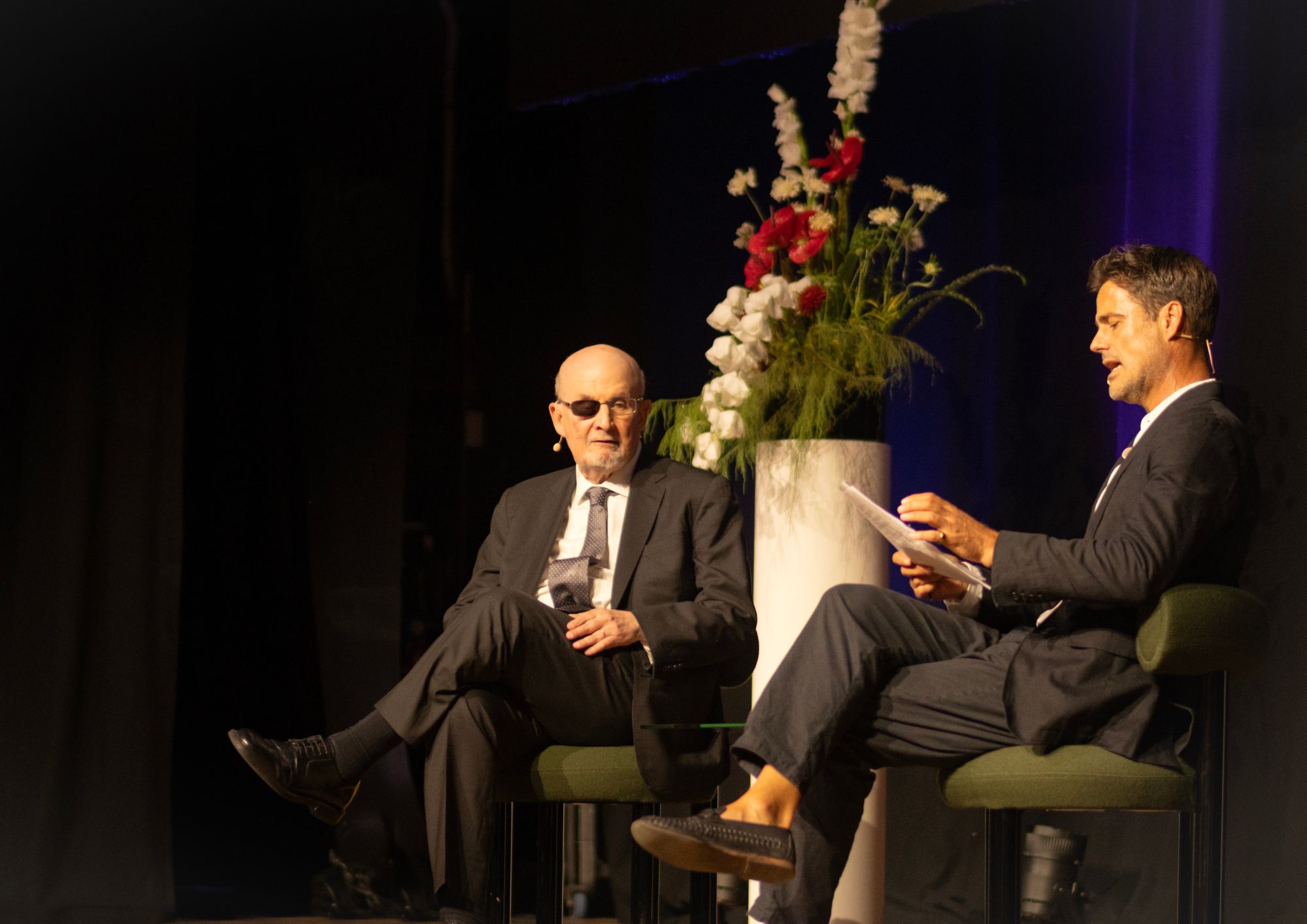
Sir Salman Rushdie at the old Camden Centre his week
By FELIX BRIGHT
SIR Salman Rushdie said that his time living in Camden had provided the inspiration for The Satanic Verses, the best-selling novel soaked in so much controversy that he faced death threats.
The 79-year-old’s book led to a fatwa being issued for his execution by Iran’s former supreme leader Ayatollah Khomeini in 1989.
“It’s not really about religion,” he told an audience at Il Bottaccio in King’s Cross, the events space set up in the old Camden Centre building attached to the Town Hall. “It’s about London in the 1980s, when race relations were quite tense. I had direct experience because of my time working in Camden.”
Looking across the venue, he said he had been in the council buildings a lot as a younger man. “I used to come here and bully people to improve the lot of London’s Bangladeshi people,” he said. “It’s changed a lot.”
The event on Tuesday was held by Liberatum, which honoured him for being a supporter freedom of expression and his literary career.
It was the organisation’s 14th cultural honour ceremony and he was presented with an award by Baroness Helena Kennedy KC, the human rights lawyer from Belsize Park. Set up by artist and director Pablo Ganguli in 2001, Liberatum has hosted similar events across the world, which have been attended by a wide range of notable figures, from Pharrell Williams to the late singer Marianne Faithfull.
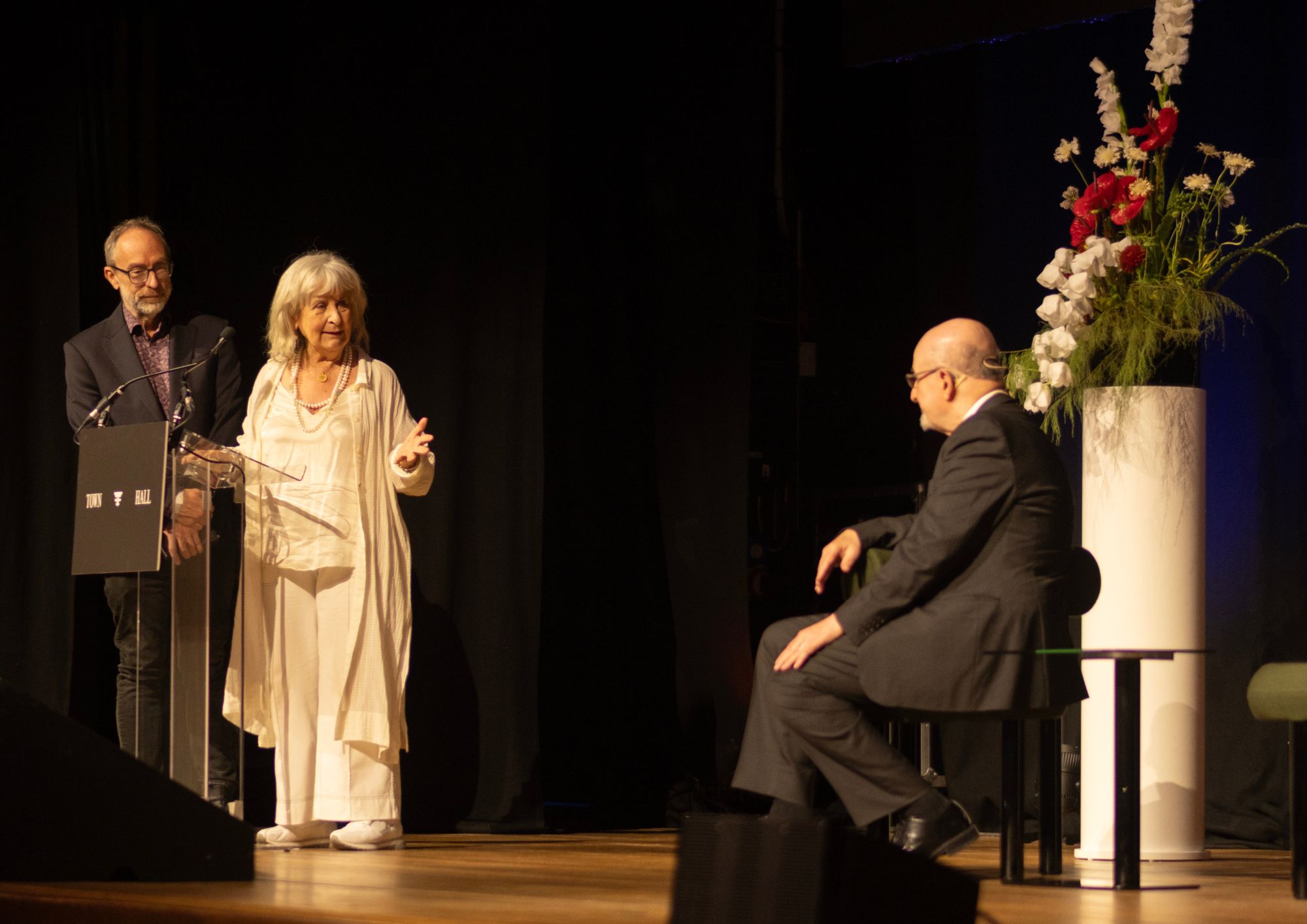
Baroness Helena Kennedy KC on stage with Sir Salman
He was interviewed on stage by programmer Michael J Harris, and as Sir Salman reminisced about his career he talked about writing the Booker Prize-winning book Midnight’s Children while living in Kentish Town.
“I had this worry of losing about where I came from and that book was a way of getting it back,” he said.
After writing his first two novels about South Asia, Sir Salman emphasised his need to engage with a different setting.
“I thought I should write about where I lived,” he said.
The Satanic Verses, however, will perhaps remain his most famous work and reprisal attacks have not come to an end with the passing of time.
In 2022, Sir Salman survived a near fatal attack in New York, which led to the publishing of his book Knife: Meditations After An Attempted Murder in 2024.
“It used to annoy me that people who were attacking me had never read the book [Satanic Verses],” he said. “I eventually found that often, in order to persecute a book, you have to have never read it. Of course none of them had – something they have in common with the Ayatollah.”
Sir Salman also provided the audience with a broader thought he felt regarding education in the UK.
“Great British literature, such as Dickens, very rarely acknowledges the British Empire,” he said.
“Many do not know why people with brown skin like me are walking around this country, because it is not properly taught in British schools. We’re here because you were there. When the British arrived in India, it was one of the richest countries in the world. When they left it was one of the poorest. The question people should be asking themselves is why that is the case.”
