Retired colonel's fears for war memorial next to Hampstead homes development
Monday, 25th January 2016
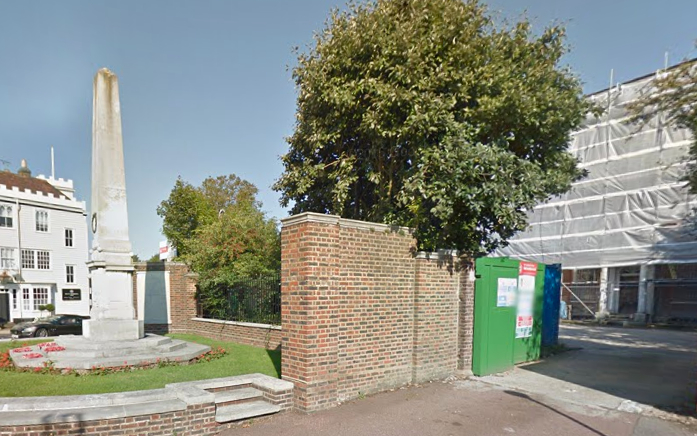
A RETIRED army colonel has warned that plans to convert a historic house into six new flats will disrespect soldiers killed in conflicts by crowding Hampstead’s war memorial with car-parking spots.
Lieutenant Colonel Peter Packham is among those opposed to the conversion bid at Heath House, the former home of slavery abolitionist Samuel Hoare, close to Whitestone Pond.
Designs are currently being reviewed by council officials ahead of a decision on planning consent, but a raft of objections say splitting the house up into six apartments is squeezing too many people and cars onto the site.
Others have complained that the proposals are on the Heath’s border in an area designated Metropolitan Open Land, a type of urban equivalent to the protection of the green belt.
Lt Col Packham, a former secretary of Middlesex Cricket Club at Lord’s, who lives nearby, said in a letter to the Town Hall: “The conversion of this house is not appropriate for a building of such historical importance. There is far too much parking earmarked close to the war memorial which is disrespectful to the memory of the men of Hampstead who gave their lives to this country.”
The war memorial sits at the junction and is the scene of a service every Remembrance Day.
Heath House is Grade II*-listed and the former home of Hoare and his descendants, including his philanthropist son John Gurney Hoare who protected the Heath against development in the 19th century.
Marc Hutchinson, chairman of the Heath and Hampstead Society, said: “This historically important house and its site are not suitable for this conversion. The prominent site by the town war memorial must not be disfigured by the parking of cars in the forecourt which will follow from the excessive number of proposed flats, some of which are underground. The forecourt and front of the house, visible from the street, will be ruined by this.”
The overhaul has been submitted by Consero London, which brands itself as a “luxury developer” creating “exceptional residences in the world’s most exclusive addresses”.
Its architects said that a car park on the lower ground floor would limit the forecourt parking.
And, in their planning application, they said it was urgent that the property was brought back to life, adding: “In its recent history, the building was subject to a period of squatting and vandalism. This led to rapid deterioration of condition exacerbated by an outbreak of dry rot.
“The building is currently in a dishevelled state but substantial measures have been taken by the owner and applicant, Consero London, since their involvement to arrest deterioration in accordance with Historic England’s guidance on vacant buildings. Whilst structurally sound, the building is in need of substantial repair, restoration and occupation as soon as possible.”
