Music pioneer Lord Eric banged the drum for African culture in schools
Monday, 2nd March — By Angela Cobbinah
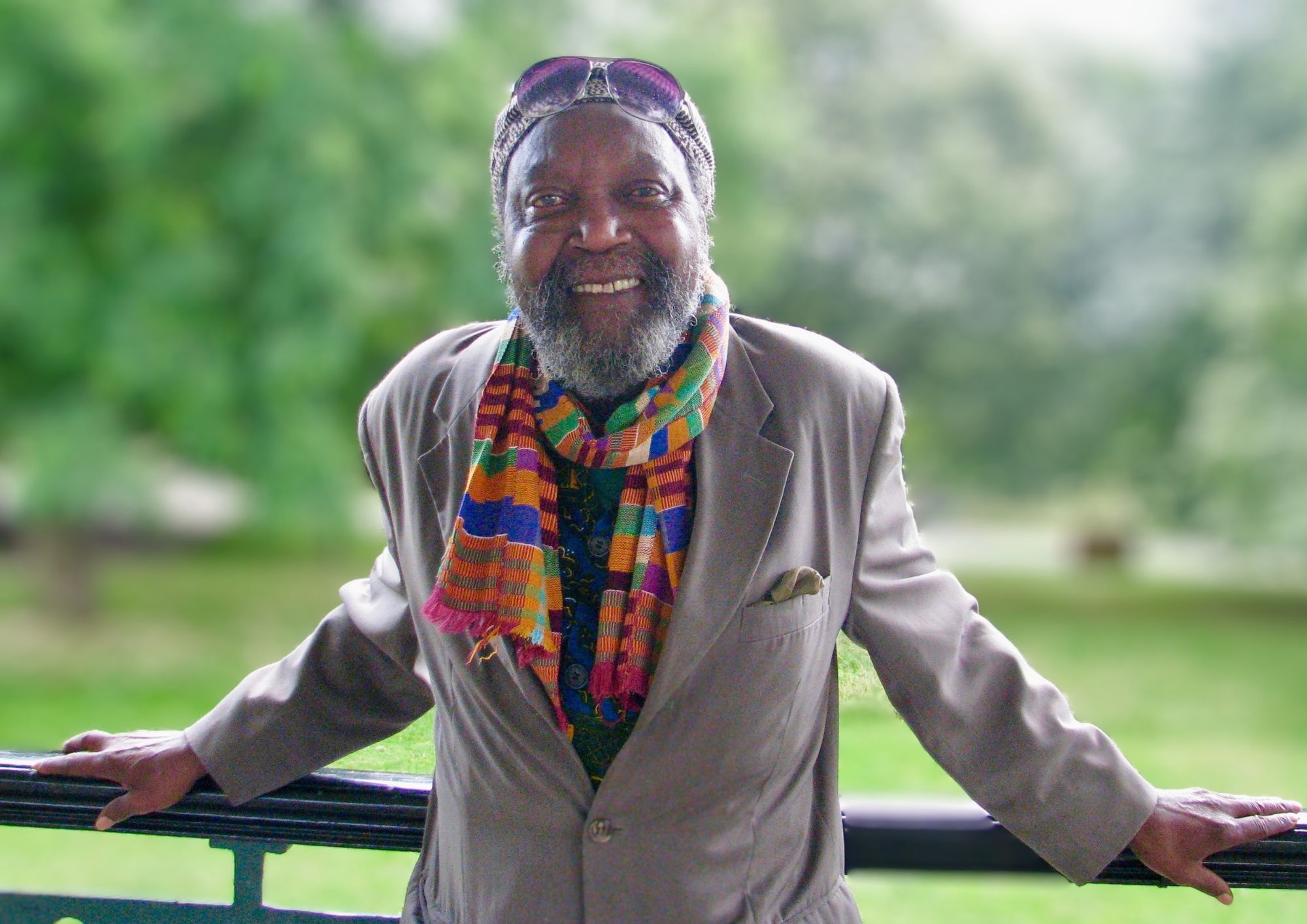
Lord Eric Sugumugu [Angela Cobbinah]
TRIBUTES have poured in for the Ghanaian-born percussionist Eric Carboo who has died after a short illness aged 81.
Described as a pillar of African traditional arts, he was better known as and enjoyed a colourful career that spanned more than six decades.
Credited with pioneering afro rock, he played with some of the musical greats, including Mick Jagger and Ginger Johnson, and in the 1980s and 90s dedicated himself to promoting African culture in schools up and down the country with his band, Agor Mmba.
The programme evolved out of Sugumugu Sunday, a popular weekly event at the Winchester Project in Swiss Cottage based around interactive storytelling, drumming and dance.
After being asked to run a workshop at the former Beckford primary in West Hampstead by headteacher Beryl Gilroy, the scheme took off in the rest of Camden and beyond before establishing itself nationwide.
“We opened up a new field and soon we were touring the whole country, from Cornwall to Scotland,” he once told me, his eyes lighting up. “It was not just jumping about but creating culture and it really inspired a lot of children. To this day, I get positive feedback from those who benefited from our work. They are big men and women now and doing well, many of them working in the arts. What we did was amazing.”
A consummate showman who could light up any stage, Lord Eric was destined to be a performer, having been part of a theatrical drum and dance troupe as a child growing up in the coastal town of Apam.
He learned to play and make a wide range of instruments and had dreams of becoming a musician.
But after leaving school he was packed off to study electronics in the Netherlands.
He arrived in London in the early 1960s and began hanging out with musicians, among them the late Osibisa saxophonist Teddy Osei, preferring to use his electronics skills to experiment with amplifying traditional instruments, a completely new concept then.
Thanks to his musical versatility, he became a sought-after session musician but also worked regularly with the Nigerian bandleader and percussionist Ginger Johnson, who had attracted a huge following amid the counter-culture of the day.
It was at one of Johnson’s concerts at the Round House that Lord Eric tried his trick of making the drums acoustic, sensationally debuting a crossover sound that became known as afro rock.
Afterwards, the gigs rolled in and he found himself at the heart of Johnson’s venture, the legendary Iroko Club in Belsize Park, which hosted the likes of Fela Kuti, Osibisa and Funkadelic.
He shared the stage with the Rolling Stones at their famous 1969 Hyde Park concert during their closing number, Sympathy for the Devil, played with Paul McCartney and Wings on the Live and Let Die soundtrack and took part in a concert celebrating the UN’s 50th anniversary in New York as part of a 45-strong drumming ensemble that blended highlife rhythms with baroque music.
More recently, he was a member of the Master Drummers of Africa, which performed at the Barbican and South Bank halls.
Lord Eric became a fixture, too, on the community festival circuit and could also be heard sounding the ceremonial abeng horn at various venues, from Theatro Technis, with which he had a longtime collaboration, to the Serpentine Gallery during an exhibition of the photographer James Barnor.
A Kentish Town resident for many years, he could often be seen purposefully going about his business down the High Road, flamboyantly attired and always ready to stop and chat.
Sugumugu means “happiness always” and he lived up to his name.
The only time I saw him vexed was when talking about the Round House, which he and a consortium of black artists were set to take over in the 1980s before Camden Council scrapped the plan.
He saw it as a betrayal. “Now we can’t even play there,” he exclaimed.
He died of lung cancer on February 17 at the Royal Free Hospital just days after a musical get-together with friends at his home in Leighton Crescent.
“He was an influential figure in African Western musical fusion, a larger-than-life African elder who made it his mission to introduce children to African culture,” said the guitarist Kari Bannerman. “He was always fun to be around but also kind and supportive. London will feel emptier without him.”
And Teddy Osei’s daughter, Shanta, said, “He was the most loyal and devoted person that I have ever met. I owe him so much for giving him sweet laughter and companionship in my dad’s last years.”
