Daisy Green owners say they will not walk away from Hampstead Heath cafes takeover deal
Exclusive: Dan Carrier meets Prue Freeman amid the backlash surrounding City of London's decision
Friday, 9th January — By Dan Carrier
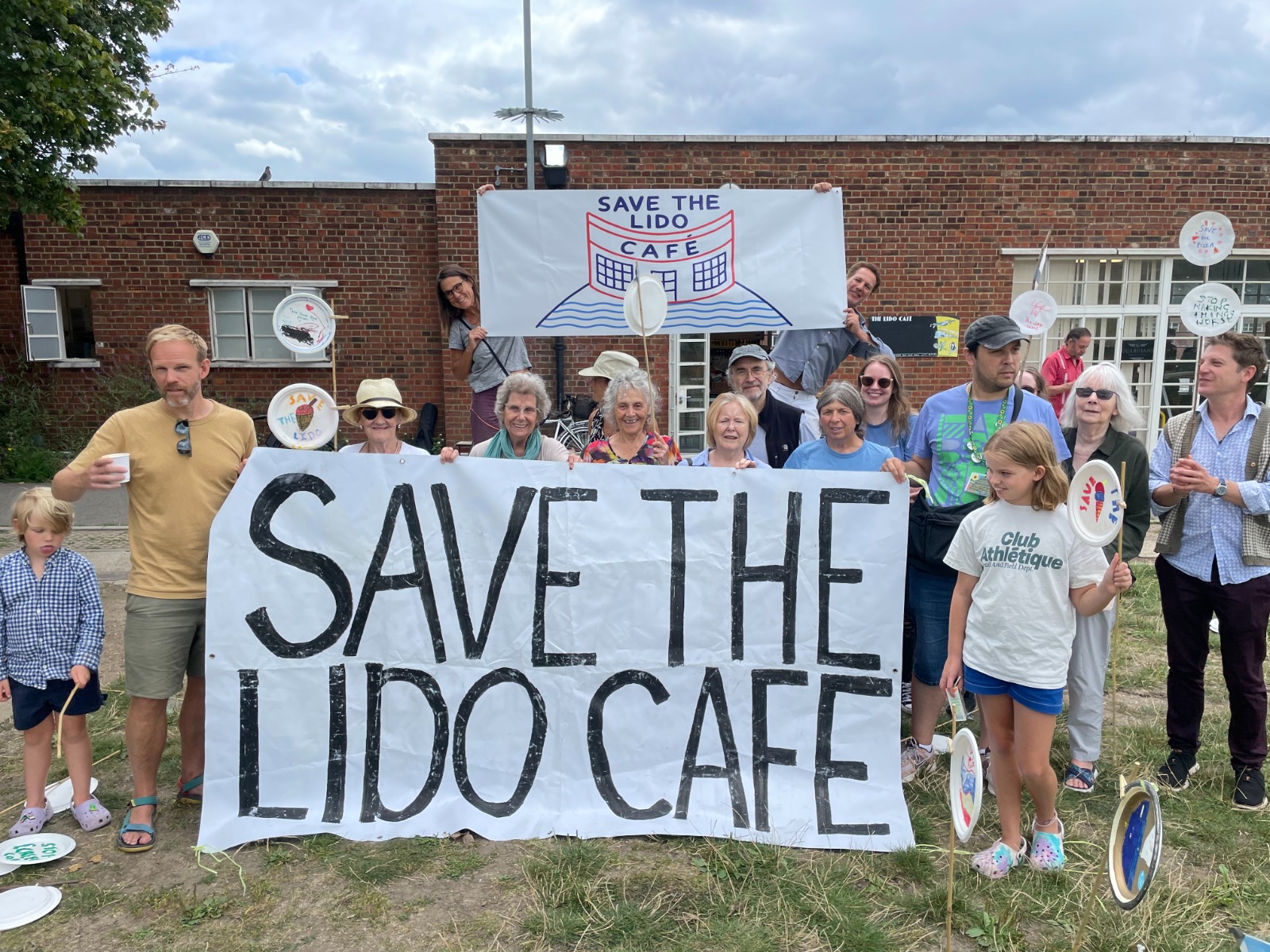
Campaigners want the City of London to keep the existing operators at the cafes
THE company which has been handed control of the Hampstead Heath cafes will not walk away from the deal, its owner said, speaking for the first time since the City of London’s controversial decision.
In an interview with the New Journal about her plans for the eateries, Prue Freeman insisted Daisy Green would not be deterred by threats of a customer boycott and that menus would be affordable.
Asked directly why she wanted to add the cafés to a portfolio of 21 upmarket eateries across London, she said: “I am a naturally ambitious person. I had my first son in 2020 and, during lockdown, we would walk each day from Marylebone to the Heath. It became a thing for me. We just felt it was a great space and there was something special about them.”
Daisy Green’s arrival has been contentious because the existing operators, who enjoy widespread support from customers, are losing their businesses, including the D’Auria family which has run the Parliament Hill Fields café for more than four decades and Patrick Matthews and Emma Gonzalez, the husband and wife team behind the café at the Lido.
Their leases are being terminated in February. Customers have been left distraught, and fearing the end of affordable lunches and coffee stops.
Hampstead and Highagte MP Tulip Siddiq has already said the decision by the City of London, the authority which manages the Heath, should be reversed, while the thousands supporting the current cafés have been joined by high profile faces like actors Benedict Cumberbatch and James McAvoy.
A petition asking the City to reverse the decision and for Daisy Green to gracefully pull out has more than 15,000 signatures, while owners of the Lido café are pursuing legal action, claiming the tendering process was flawed.
Ms Freeman told the New Journal that her company had spoken with the D’Auria family and would ensure all current staff would remain.
She added she had reached out to Lido café owners Patrick Matthews and Emma Gonzalez, in the hope they could do the same.
Ms Freeman added criticisms over menus and prices from other Daisy Green outlets – they run a café at the National Portrait Gallery, for example, where afternoon tea with a glass of champagne costs £59.50 per person – were not a reflection of what they plan for the Heath.
She said: “People have said they do not want to come to buy a bacon roll at £16 – but this is a misunderstanding. We are planning a menu that reflects what works on the Heath and with prices that suit the customers.
“What we serve in one place isn’t the same as we serve elsewhere. These are park cafés – we will sell smaller sandwiches, salad boxes. It may take time, but we plan to show we will offer what people want. We want people to be able to come in, feel welcome, feel it is their place and that it is affordable.”
Daisy Green are drawing up plans that include renovating the Parliament Hill Fields café, which they say is in need of basic repairs. This includes a new interior and landscaping outside.
She added: “There is investment needed in both spaces to make them ready for the next 40 years. They have been left as they are for a long time.
“Above all, we understand that they are a loved amenity and we will strike the right balance.”
Ms Freeman moved to the UK in 2010 from Australia, where she had trained as a lawyer.
She joined the UBS banking group and met her husband, Tom Onions, at the firm. In 2012, they decided to set up a food van business.
She said: “We built the business together and many of our staff have stayed with us from the early days. We have not used private equity to fund it, but drew on crowdfunding and raised £800,000 from friends and customers.
“We have never wanted to be a chain. We have had the opportunity to open other sites, but people do not feel they are part of a chain – we do not have corporate-style branding for what we do.”
This has been a source of contention about what is meant by “chain”, given Daisy Green’s other outlets in London, including a riverside eatery in Richmond, a café in upmarket Holland Park and one by the canal in Paddington.
They are all different, but all have “Green” somewhere in the title as a link to the overriding Daisy Green business.
Ms Freeman said she had spent a lifetime feeding people. Growing up on a sheep farm, she recalled a childhood cooking huge meals for sheep shearers.
She said: “My father was entrepreneurial – I come from that type of background. We would sell bales of hay for $2.50, go to markets with our produce.”
In 2012, she decided she wanted to leave a life in banking.
“I wanted to do something more tangible than finance,” she said.
“One day, I woke up and said – I’d like to buy an ice cream van.”
The couple bought a beat-up Bedford ice-cream truck and joined the Kerb street food markets in King’s Cross.
She said: “Every day you’d have to pack everything up as if you were going on a camping holiday. I look back and it was hard going, but it put us in a good place.” She said she was inspired to open up a series of cafés by her experiences eating in London.
She said: “I wanted to go into coffee and healthy food. I saw how people went into Starbucks for a coffee, then to Pret for lunch and I felt it could be improved on.
“In Australia, where you go for coffee matters. The café owners know you and create these relationships. I didn’t find that in London, it felt transactional.
“And there is more to life than just sandwiches. I wanted healthy salads and some protein.”
The first Daisy Green was in Marble Arch but Ms Freeman said the company had a different approach to what she would describe as a chain.
“When you become a big chain and get external investors, things change,” she said.
“They want to look at costs. Rent and staff are generally fixed – what is not is the cost of produce. It matters that you source good produce and you make everything on site. The aim is not to make economies of scale, but do what is best for the customers.”
Campaigners previously convinced coffee chain Benugo to walk away from a deal with the City.
It said it had not realised the strength of feeling towards the existing cafés.
Daisy Green, which will also run cafés at Queen’s Park and Golders Hill Park as part of their winning bid, are not planning to do the same.
This has not stopped protests at the contract award, and customers of the Lido café, run since 2016 by Mr Matthews and Ms Gonzalez, have fundraised to pay for legal action.
Mr Matthews said the City’s claims that the cafés needed to be put out to tender due to their short-term leases ignored the fact they had repeatedly requested longer leases so they could develop their businesses.
He said: “We never asked the City if we could run three cafés for them – they asked us because they could not find anyone willing to take them on. This has been a massive challenge, getting through slow winter months, but we have managed to double the turnovers and create viable businesses out of nothing.
“We do not think it is just to take it away from us and give it to someone who will use it as an investment vehicle. We asked specifically for longer leases to enable us to invest long term and have always been refused. We will be contesting this decision with the help of lawyers, who our customers have enabled us to instruct.”
This week, the City of London issued a press release claiming since the announcements there had been “several misleading and inaccurate claims” made over the process of tendering.
Its Heath management committee chairman, Alderman Gregory Jones KC, who declined to be interviewed by the New Journal when the deals were announced, said: “Moving to longer-term leases under Daisy Green allows investment to happen and secures the cafés’ future. We are simply seeking to ensure that services are properly run, leases are market-tested, and facilities are sustainable.”
He added that Daisy Green was an “independent, London-based, not a national or multinational chain”, adding: “While it operates more than one site, each café will retain its own identity.”
But Doug Crawford, who is on the City-formed Cafés Working Group, said: “How does the City propose to guarantee the new operators will be accountable for delivering ‘affordable, community-focused spaces’ given that their experience is providing completely different types of service to a different clientele? Will the City terminate leases if Daisy Green fail to deliver an affordable offering aligned with community needs – or will the community just have to ‘hope for the best’?”
“The tendering process was unnecessary, and the opaque process is not reflective of good governance – and neither is the failure to take account of the charity beneficiaries, the public who use the Heath.”
