Broadcaster Andrew Marr warns against ‘knee jerk’ reactions to knife deaths
‘Work with people who are both the perpetrators and the victims to help turn their lives around'
Monday, 4th May — By Daisy Clague
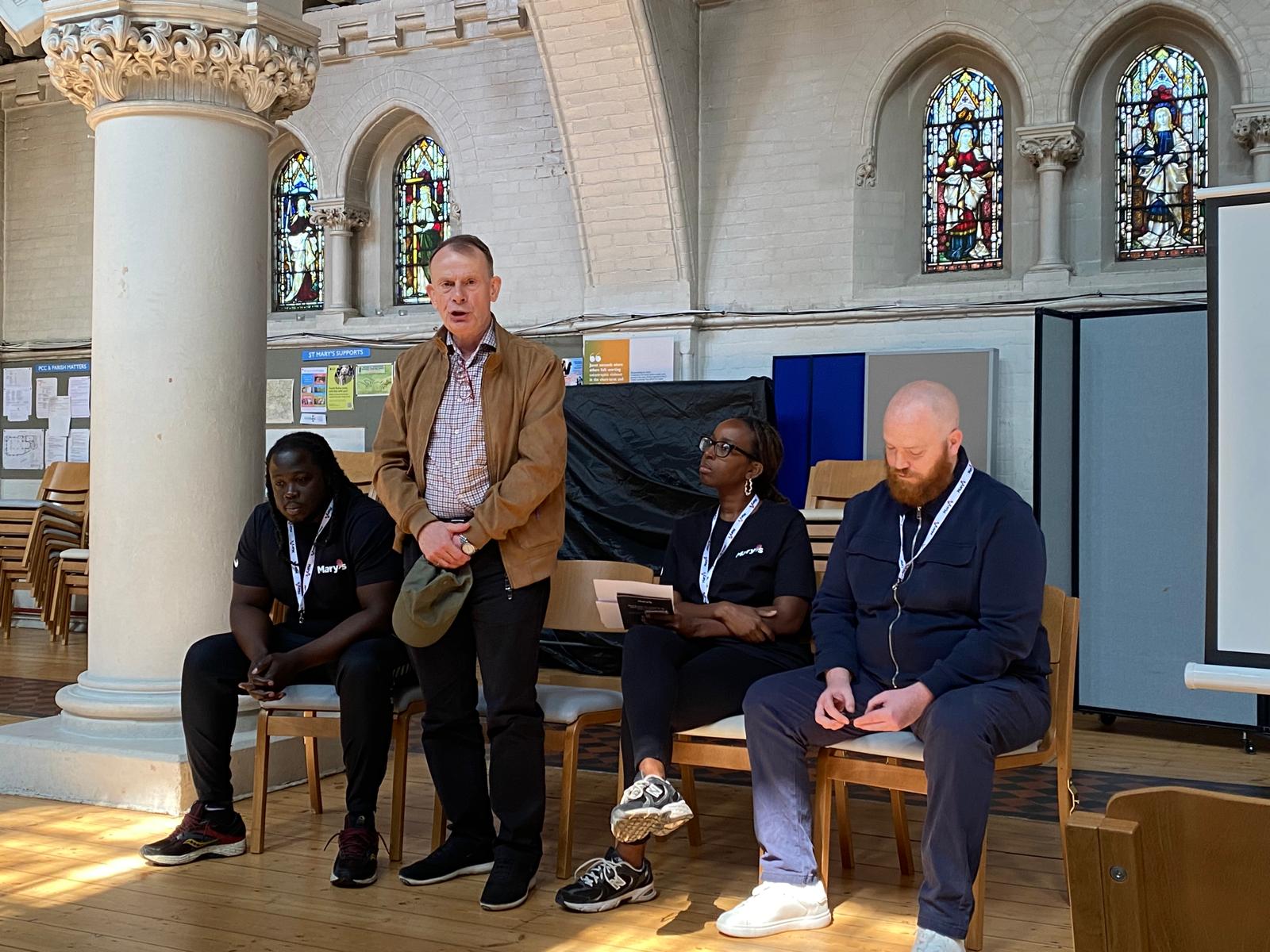
Andrew Marr speaking at the meeting at St Mary’s Church
JOURNALIST Andrew Marr told Primrose Hill residents that “knee-jerk” calls for more and better policing will not stop fatal stabbings – but youth workers “who understand their lives” can help young people move away from violence.
Mr Marr was speaking at a public meeting organised by the youth centre Mary’s, where he is a patron, in response to the murders of three young people in Camden over recent months.
Mary’s staff told of their experience supporting young people vulnerable to exploitation across the borough, not just through the charity’s own programmes but with morning wake-up phone calls, 2am pick-ups from police stations, and therapeutic weekends away.
Mr Marr said: “This is a solemn and a very, very sad time for all of us. We’ve lost three local people recently, not just the very well-publicised murder on the top of the hill, but two more besides that, and my question today is: As a community, what can we do?
“People have knee-jerk, completely natural responses to it. They will say, ‘flood the area with police’, or ‘smash the business model of the gangs’. But we can’t do that. Even people like me, who have a modest national platform, can’t make that happen. This community cannot change policing. I’m terribly sorry, but it’s a fantasy.
“The one thing we can do is work closely with the people who are both the perpetrators and the victims to help turn their lives around and persuade them not to carry knives.
“This is working with people who’ve been in and out of prison, who’ve had real trouble at school, who can’t see any way forward and really need help. Not from some posh middle class people like me but from people who understand their lives properly.”
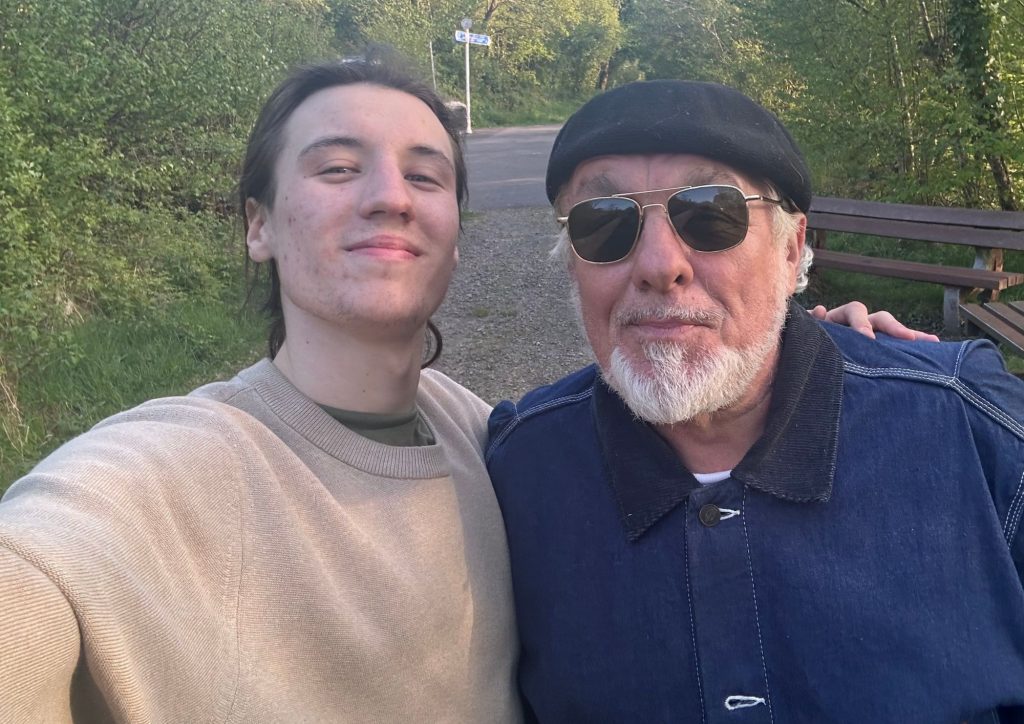
Finbar Sullivan with his father Christopher
Three young men – Suleyman Nuh, 25, Nahom Medhanie, 26, and Finbar Sullivan, 21 – have been killed in Camden since January.
Mr Marr told the New Journal: “What you don’t read about in the CNJ is the occasion when a 17-year-old leaves his bedroom one morning and, after conversations [at Mary’s] decides not to take a knife with him. And you don’t hear of that moment 12 hours later when he’s down in an ill-lit garage, he meets somebody on the other side and doesn’t stab him because he doesn’t have a knife.”
Mary’s founder, Jason Allen, told how the murder of his best friend, Diego Piñeiro-Villar, when he was 12 years old put him on a path to starting the charity some 20 years ago.
“That event changed my entire life,” he said.
“Up to the age of 12 I was just a good kid, but when your friend gets murdered it makes you change the way you view the world.”
That tragedy, combined with “adverse childhood experiences” at home including mental illness and domestic abuse in the family, he said, made him angry and violent, and such factors affect the majority of the young people he works with today.
Mr Allen gave the example of a recent residential trip to a remote cottage in Wales.
“Three of the boys got chased by a cow, and they were running and laughing – like something you’d see in a movie. These boys were 13 years old and they said, ‘the only time we’ve run that fast is from the police’.”
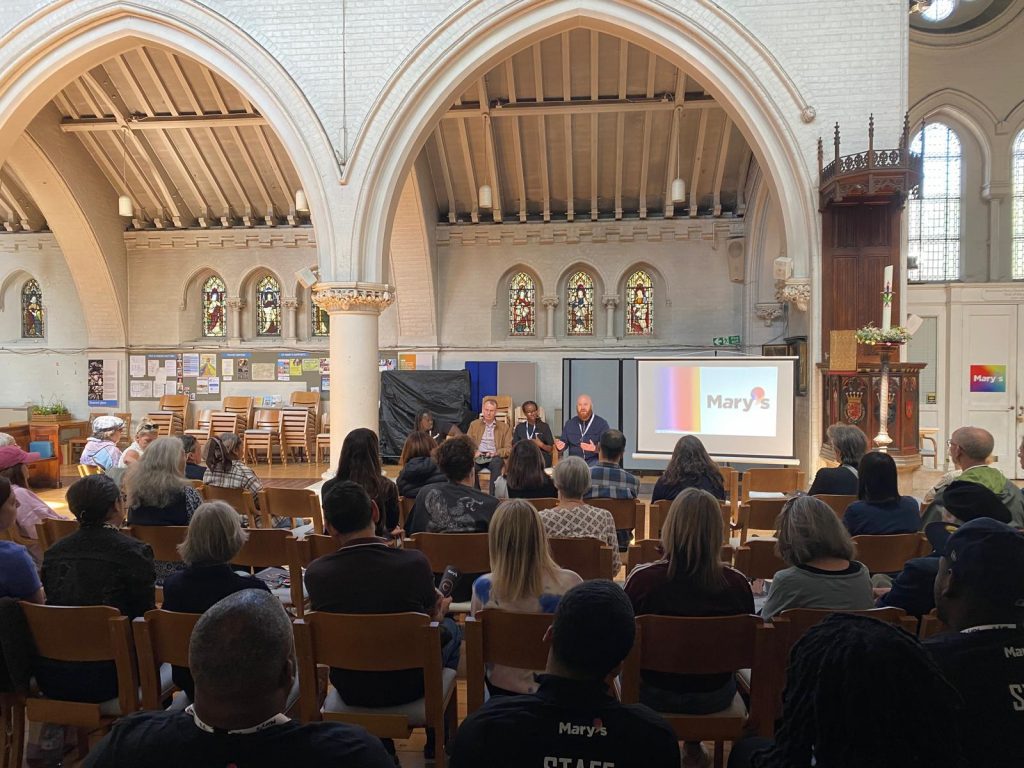
The community meeting held in response to recent deaths in Camden
He also showed an image of all the weapons handed into Mary’s knife bins over the past year.
That photo highlights the fact that many young people carry knives because they’re scared, not because they are setting out to kill someone, Mr Allen said.
“You look at the way the media spins things – they talk about zombie knives and machetes. But the majority of weapons we’re taking are kitchen knives. They’re straight out of the kitchen drawer, straight out of Morrisons, straight out of IKEA.”
Mary’s senior caseworker Emile Libock, who came up through the charity himself, also addressed the meeting, speaking about how the area has changed since he was a child.
“Back then there was a big sense of community in Primrose Hill and I think that has been lost.
“You definitely felt more of the love back then, and now these young people don’t feel they’re accepted by their own community. There’s a sense that as a collective we are letting our young people down. If you see a young person in the community, give them a nod, give them a smile – it definitely goes a long way.”
