An eye to the east
The East London Group of untutored working-class artists is celebrated in a new book by art historian David Buckham
Thursday, 9th July — By Dan Carrier
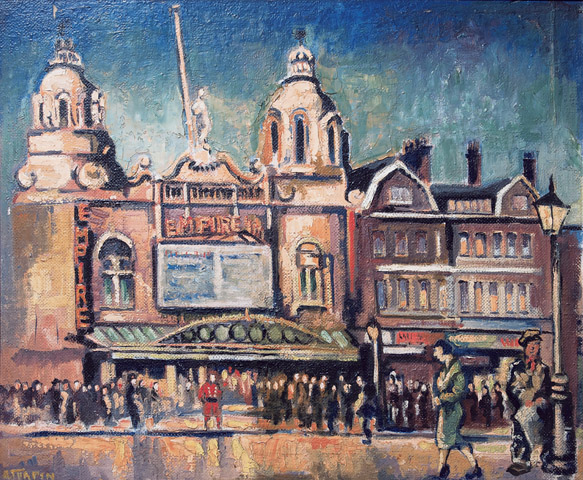
‘Hackney Empire’, by Albert Turpin (private collection)
When John Cooper was demobbed after the Great War, the Lancashire-born artist wanted to get back to his easel to forget the horrors of the trenches.
And in the coming decade he would not only hone his skills as a painter, but share his passion with a swathe of working people – and by doing so, establish an influential art movement.
In a new book by art historian David Buckman, the life of the East London Group is celebrated – and Cooper’s key role recognised.
The group would become renowned as a place where working-class men and women could learn to paint, and produce a body of realism that reflected the worlds they saw and moved in.
Before the war, Cooper had studied art in Scarborough, Leeds and Bradford. He joined the Royal Flying Corps and was twice invalided out of service.
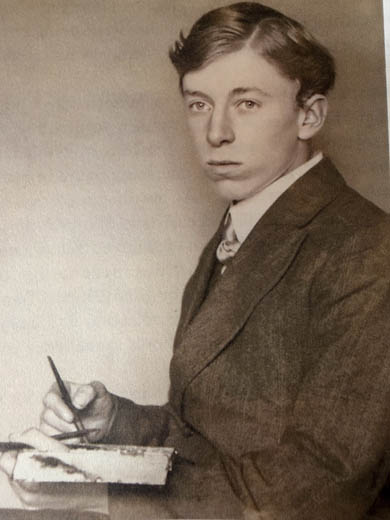
Artist John Cooper played a key role in the East London Group
When hostilities ended, he won a place at the Slade. After graduating, he turned to teaching at the Bethnal Green Men’s Institute and the Bow and Bromley Evening Institute to help make ends meet.
As the book describes, his unique teaching approach soon made a big impact on his students. He would say that his aim was to “give direct expression of East London life in the first place. My efforts have been directed to stimulating the students to express something which they feel about life. These were some of the reasons for Rembrandt’s greatness.”
Group member artist Walter Steggles would recall Cooper as a cultured man, “who soon realised that his students would benefit from more than just classroom instruction”. It meant weekends spent at galleries studying painting – and Cooper sought to introduce them to other cultural pursuits.
“His own deep love of music, reflected in his paintings, were another influence,” writes Buckman.
He quotes artist Lilian Lehy: “We would go to Queen’s Hall and he would take half a dozen of us to the Proms. ‘Take your sketch books,’ he would say. But people would be tut-tutting because of the scratching of pencils.”
The results of this diligent tutor helping talented pupils saw the group exhibit more than 700 paintings between 1929 and 1936, with its members going on to earn livings as artists and designers.
The author had spent his spare time over a period of nine years compiling material for his dictionary, Artists in Britain since 1945, and it prompted further research into the East London Group.
Many of the shows were held at the Lefevre Gallery in Mayfair – but when it was hit by a bomb in the Blitz, catalogues and other vital pieces of evidence were lost. Buckman instead sought to find members and their families, and other sources of archival material.
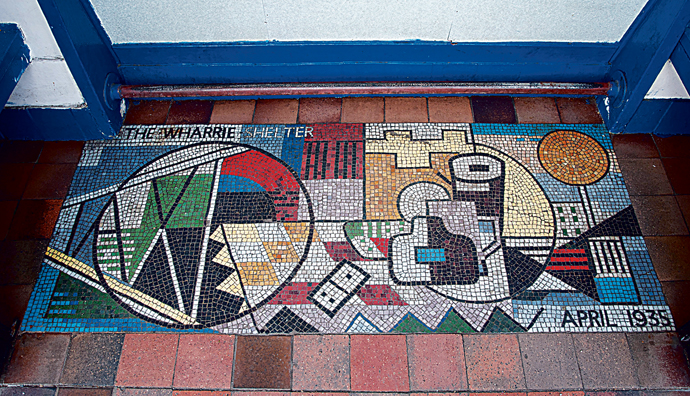
John Cooper’s Wharrie Cabmen’s Shelter Mosaic, Rosslyn Hill London [Kate Gadsby]
John Cooper’s second wife, Phyllis, was still alive and their daughter held material he could draw on.
“Subsequent detective work revealed that six members were still alive – the last died in 2001 – and these, by way of interviews and correspondence, were able to supply irreplaceable first-hand memory of its foundation and history,” he adds.
Buckman suggests that while the East London Group was well known in the 1920s and 1930s, today they are “almost forgotten”.
The group enjoyed 15 years when its output was recognised and celebrated, resulting in several painters selected to represent Britain at the 1936 Venice Biennale.
“Much of what the group achieved was due to the drive and charisma of John Cooper,” writes Buckman.
Cooper was friends with the likes of JB Priestley and Henry Moore, and his cultured inquisitiveness made him the catalyst that spawned the group: “his love of music, acquaintance with prominent musicians whom he painted, his fine draughtsmanship and work as a print maker, and correspondent for the Yorkshire Post” gave him the right credentials, adds Buckman.
“Cooper believed in the life-enhancing benefits of art, for both the practitioner and the viewer.”
In the book’s foreword, Primrose Hill-based journalist Andrew Marr sets the scene by describing the backgrounds of the artists.
“Cooper, the Yorkshire-Methodist’s grocer’s son, invalided out of the First World War. Harold and Walter Steggles, East End brothers from a poor family. Albert Turpin, window cleaner… Archibald Hattemore, boot repair man… Grace Oscroft, ironmonger’s daughter from Bow…” the list goes on, and as Marr points out, illustrates the backgrounds of the key contributors to the group.
“They were working-class painters who portrayed the old pre-Luftwaffe East End, and Cockney pleasure resorts on the coast and in the country, in pictures that range from kitchen sink realism to airy, magical surrealism.”
He states they have been “grossly underrated and elbowed aside in the story of modern art – something that author David Buckman’s magnificent book sets out to counter, and achieves through both tracking the artist’s stories, putting their achievements into context and handsomely reproducing some of their breathtaking pieces.
“There was always the smelly breath of condescension from reviewers who talked about a ‘dustbin on canvas’ and ‘pictures for narrow purses’,” adds Marr.
The group did indeed include labourers, warehouseman, off-duty sailors, shopkeepers, a navvy, a fish-smoker and a park keeper.
“They were the authentic working people of London, even if they had learned from professionals from the Slade and art superstars such as Walter Sickert.”
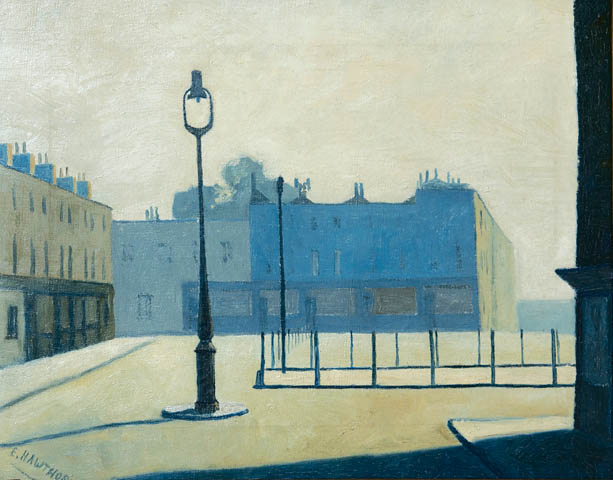
‘Cumberland Market’, by Elwin Hawthorne (private collection)
Marr also points out why the art today has such a powerful resonance – it creates an image of a London recognisable yet lost today.
“Some of their art has an eerie, lost-world feel about it – empty dawn streets in London disappeared, sunlight on the roofs of markets and warehouses, chilly coastal scenes with obsolete lighthouses and tramp steamers,” he adds.
The group was launched at a show at the Whitechapel Art Gallery, organised by the East London Art Club. They had their own show at the National Gallery at Millbank – now Tate Britain – and then other high-profile shows at leading galleries in London and in the north.
“Cooper believed in the life-enhancing benefits of art, for both the practitioner and the viewer,” writes Buckman. “His East End experiment was not unlike the slightly later and now much better known Ashington Group of miner-artists, taught for eight years from 1934 by Newcastle-based artists and teacher Robert Lyon.”
Cecil Osborne, one of Cooper’s students, would recall how “life in those days could be very new and exciting, and all art very wonderful, opening new vistas to be explored”.
“From most unpromising beginnings, within a few years Cooper was able to launch a group of mostly previously untutored artists into the artistically and commercially competitive West End gallery circuit, then to national and even international recognition.”
• Artists of the East London Group: From Bow to Biennale. By David Buckman, Batsford, £55 hardback
