Aids memorial gets green light
Campaigner says prejudice still needs defeating
Thursday, 26th March — By Dan Carrier
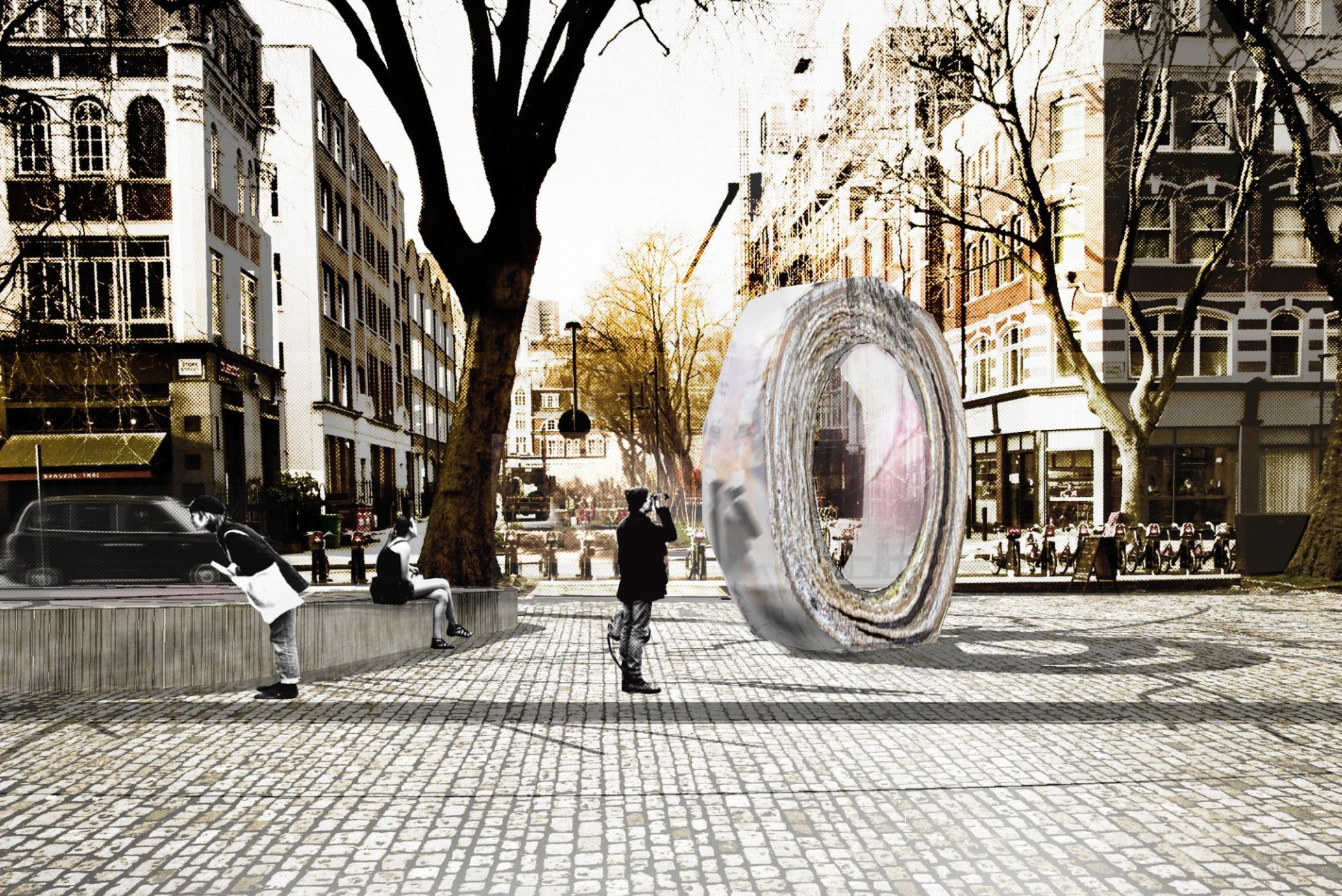
How the new memorial in Store Street will look
A MEMORIAL to people who lost their lives to Aids has been approved for a site in Bloomsbury.
The memorial, designed by artist Anya Gallachio, will be sited in Store Street – near the former Middlesex Hospital, where Princess Diana opened the UK’s first Aids ward in 1987, the sexual health centre James Pringle House and the Bloomsbury Clinic, one of the busiest health centres dealing with the illness.
It is the brainchild of playwright Ash Kotak, who has spent a decade raising funds, finding a location and garnering support.
He has received support from hundreds of organisations and individuals.
Mr Kotak told the New Journal: “It’s been a long battle, 10 years to get to this point. It’s been hard work and challenging at times, but it’s also been an ambition driven by memory and remembrance. Many of my friends died, including partners Nigel Finch and John Blake.
“I miss them all and so today it’s especially moving for me, that the epoch they died in is to be remembered. HIV and Aids changed London, Britain and the world. Nothing was the same ever again.
“As we approach 50 years since doctors in the USA first identified issues in their patients, it is fitting that we deliver The Aids Memorial in London. To remember those who died, to acknowledge the struggle many of us survivors endured, to keep us fighting on towards an HIV and Aids-free world. And to end HIV stigma at a time when we have the tools now so that nobody acquires HIV today as people on life-saving medications cannot pass it on and there is also PrEP and condoms.
“No one needs to die of an Aids-defining illness anymore, but that takes commitment, strategy and for a collective approach to ensure we reach our goal. It can happen. We must keep fighting.”
The sculpture, crafted in Highland granite, is called the Halo Tree and is in two parts.
It is said to be inspired by a felled trunk on its side, while a separate section offers the chance for people to sit on the sculpture in contemplation.
The work includes text engraved on the sculptures in a number of languages.
Human rights campaigner and a patron of the scheme Peter Tatchell said the plans would offer a landmark recognising the terrible impact HIV/Aids has had on so many.
He said: “London experienced the majority of UK deaths from Aids-related illnesses. Gay and bisexual men were the prime victims – and were often demonised. Many thousands died.
“The real figure will never be known, as Aids/HIV was not always written on death certificates. It is important to remember those who died, and to celebrate the achievements of those who cared for the sick and educated the public to save lives. Aids/HIV is not over. Ignorance and prejudice remain.”
