Government advisers demand eradication of ‘foreign' snakes found living near Camden Lock
Thursday, 8th May 2014
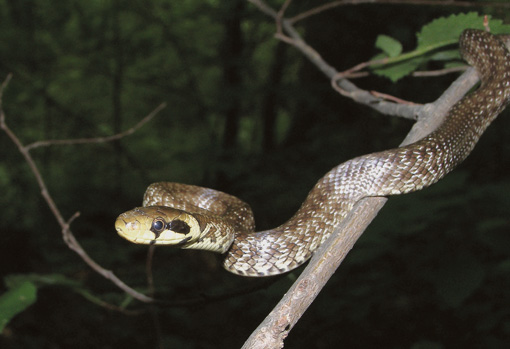
ECOLOGISTS have rushed to the defence of an “illegal” colony of rare snakes that has been found lurking around Camden Lock.
More than 30 Aesculapian snakes – measuring up to two metres in length and known locally as the “Camden Creatures” – have been discovered living on the banks of the Regent’s Canal feasting on large rats and birds.
The agile predators – Europe’s third largest snake – are believed to be descended from ancestors who escaped from London Zoo or a nearby Inner London Education Authority building decades ago.
But the “non-native species” has been ranked “of high concern” by the London Invasive Species Initiative (LISI), a government advisory quango which has called for the “foreign” family of snakes to be eradicated. It claims, if not stopped, the snakes could spread, causing “serious negative impact” on the eco-system.
This tough-line stance was this week disputed by Dr Wolfgang Wuster, a snake venom expert and senior lecturer of the School of Biological
Science in Bangor University, who told the New Journal: “Any attempt to eradicate the Aesculapian snake would require justification of resources to be devoted to an almost certainly non-problematic introduced species with little prospects of spread, as opposed to the many far more damaging species already out there.”
Dr Wuster works with the only other known colony of Aesculapian snakes in this country, near the Welsh Mountain Zoo in Colwyn Bay.
“From a wider and more philosophical point of view, we should ask ourselves what we can really conserve,” he said.
“Given the near certainty of massive global climate change over the next century, the idea that we can treat the UK fauna and flora like some kind of pre-industrial vicarage garden and preserve it forever without any changes is simply farcical.”
LISI manager Karen Harper said: “Aesculapian snakes species is listed in the Wildlife and Countryside Act 1981 meaning it is illegal to allow the species to spread or escape into the wild. At present there is limited information on what affects the species may have on our local ecosystems.”
