When three sisters spent time in Wales as evacuees
Thursday, 15th August 2019
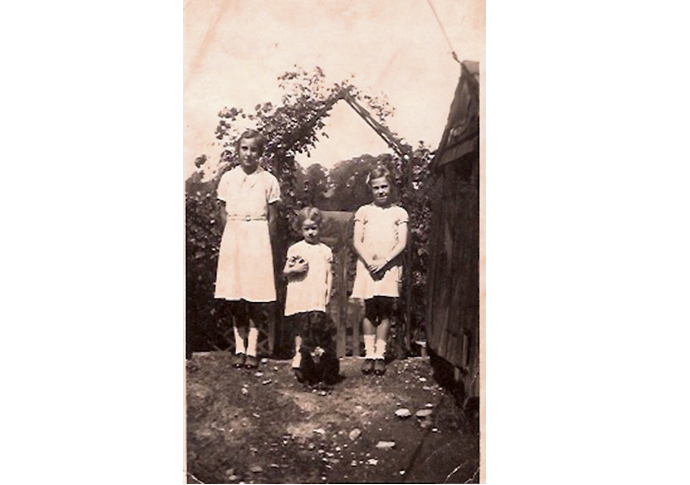
The three ‘Smith’ sisters, who spent time in Wales
• I RECENTLY visited my Aunt Joyce, who was 90 years of age in July and, along with her two younger sisters, were evacuees from Kentish Town to Wales for a period of World War II.
We had a good chat about their experience, which was not a happy one in the village of Pontlottyn, east of Merthyr Tydfil in Wales.
Given this discussion, I came home and searched the web in the hope of finding out more about child evacuees who were sent to Wales and in particular to Pontlottyn. That is how I came upon the letter in the New Journal, (Calling Kentish Town’s 1944 evacuees, July 4).
The three “Smith” sisters, including my mother Betty (born 1932) Joyce (born 1929) and Sheila (born 1935) lived at Una House in Prince of Wales Road, Kentish Town, with their parents Harold and Florence Smith.
Initially, at the outset of the war, Betty and Joyce were sent to a family in a small village near Aylesbury and Sheila, being much younger, remained in London with her mum, as Harold was with the Royal Artillery and was at Dunkirk with the British Expeditionary Force in 1939.
Eventually, Florence decided she wanted all three girls to be together, so the two older girls were returned from Aylesbury and all three sisters were sent to Wales. Their time near Aylesbury was an enjoyable experience.
Upon arrival in Wales, they were taken in by a miner’s family. All three girls were accommodated in a small room in the loft which had a tap and a bucket. No sink.
The bucket was to be used for washing and as a toilet at night, given the lavatory was outside and it was slopped out each morning.
They were kept in the room for most of the day. Joyce upon reaching the age of 15 returned to London in 1944. The two younger girls remained with the family in Pontlottyn.
Joyce tells me that the family, and their only daughter, used the girls to run numerous errands and Joyce’s particular job was to run to the fish and chip shop for the family and numerous neighbours.
She was often called upon to perform this task late in the evening. When Joyce returned to London this task was passed to my mother, Betty.
One year later the two younger girls returned to London and were found to be in such poor health they had to have urgent medical care, being undernourished, suffering from rickets, and covered in sores.
On seeing the girls, the headmaster of Burghley Road School (in Tufnell Park) wanted the family to take legal action against the family in Wales.
Both girls had to be deloused before they were admitted into the school. My grandfather and grandmother decided they did not want to pursue any legal action. In their words, as quoted by my aunt, “ the war is over, let’s move on”.
My mother bore the mental scars of abuse suffered in Pontlottyn throughout her life; most of it in silence. But in her last few years of her life (she died in 2017) she often referred to her time at the house and was saddened and troubled at her cruel treatment.
Unbeknown to me, Joyce and Betty often discussed their time in Pontlottyn. I’m not sure if these bad experiences were shared with Sheila, but she died of ill health in her 50s.
Apologies to John P Fox if you thought this reply might be a shared joyous experience of being an evacuee from Kentish Town. Maybe your evacuation was a more enjoyable experience. I trust it was.
STEVE STANIFORTH
SE1
