‘We had a House scene kicking off before anywhere else, and its proprietors were all people from Camden and Islington’
Dan Carrier talks to Richard West, aka Mr C, about north London’s role in the House music scene
Thursday, 12th November — By Dan Carrier
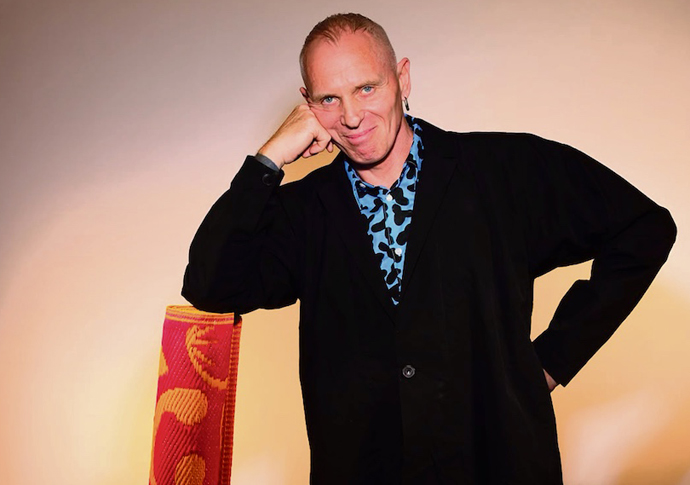
Mr C – ‘I play tracks I made 30 years ago that people think are new’
THE cultural impact of House music stretches beyond dance floors: it has become a defining sound for generations, and influenced everything from musical trends to related aesthetic movements in fashion and art through to a less obvious but pronounced impact on politics, the environment and beyond.
House music grew in London from the mid-80s and one of its key proponents was a young man from Tufnell Park – the DJ and rapper Richard West, known by the moniker Mr C.
While House music can trace its roots to parties in Detroit, Chicago and New York, it was north Londoners who took the genre, forged it to fit a London audience, and then sent it back out to become a global phenomenon.
Mr C was a pioneer: at the forefront of London’s House music scene and he and his crew of friends, DJs, producers from Tufnell Park and Holloway were partly responsible for what became dubbed the Second Summer of Love in 1988.
“People talk about the Hacienda and Manchester but we were well ahead of them in north London,” he says.
“We had a House scene kicking off before anywhere else, and its proprietors were all people from Camden and Islington.
“Camden and Islington was the home of House music in the UK and we helped create a rave culture that went on to go all around the world. It was as DIY and underground as it gets.”
Born and raised in Tufnell Park, he recalls how electro and hip hop in the early 80s inspired his peers. “I did not DJ until I was 18, but I started rapping in 1982,” he reflects.
“There was a CB radio club at the Ingestre Road community centre, by Acland Burghley school. That was where I played my first record with my friend Robert Brown. I’d MC as he played records.”
The 1980s saw a fresh explosion of dance music – a move from funk and disco into hip hop and electro.
“Hip hop really turned me on,” he recalls. “I remember buying Rappers Delight as a 12-inch by The Sugar Hill Gang and I learned every word of it. Then bands like The Furious Five, Afrika Bambaata and Jekyll and Hyde began to reach London. There was no London scene at that point. All the music was American.”
With his friend Robert, Richard began to compose his own rhymes.
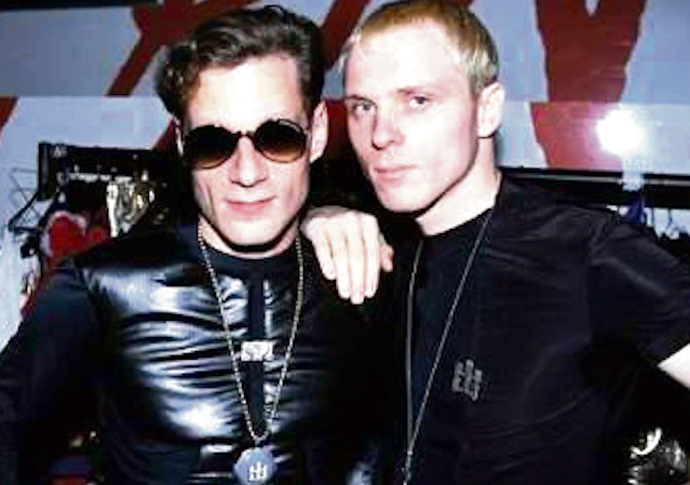
Founding member of The Shamen, Colin Angus, with Richard in 1992
“I remember writing these raps and my mate telling me my lyrics were really good. I upset everyone within earshot by just constantly rapping – all day, every day,” he says.
“Robert wrote his own and I thought they were great – and then about six months later I realised he had just copied them off American artists and hadn’t written a word.
“But I had managed to keep up with him and that spurred me on.”
His natural musical talent at school was recognised.
“I was a self-taught piano player,” he says. “When I had to choose my O-levels and I didn’t pick music, my music teacher Mr Ward said he was very disappointed and I was a natural talent. I just laughed at him.
“I was good at finding my way around a keyboard. It meant when I got into a studio it was easy for me to get what I could hear in my head, my imagination, down. It felt natural to make up melodies, bass lines. I would hear cow bells, kicks, rim shots on the drums. Expressing myself was simple.”
After leaving school, Richard worked as a motorbike courier and then as a milkman for Express Dairies – all while honing his DJ and MC talents.
“Express Dairies had a depot in Bloomsbury. It was an early start and that suited my lifestyle,” he adds.
“I could go out seven nights a week to listen to music. I had to be at work at 5am and I could be done by 10.30am. I’d sleep till about 8pm and then get my glad rags on and go out, come home when the clubs closed at 3am, have a shower and go out on my milk round.”
Richard was part of a Tufnell Park music eco-system, the coming together of a group of young people who immersed themselves in a dance music culture and were key in shaping it, too.
“I had a lot of friends into their music – [the DJ] Eddie Richards was my mate, and DJ Kid Bachelor, who was at Holloway School with me.
“By the summer of 1986, I could see where things were heading. I was bored of hip hop – it had begun to be about gangsters, so I switched my style.
“House was appearing by then, and London had the places for it to grow. There were lots of warehouse parties – Soul II Soul, Family Funktion, Shake and Finger Pop. It was a rare groove thing, but you’d be at a warehouse party and they’d start slipping House music in.”
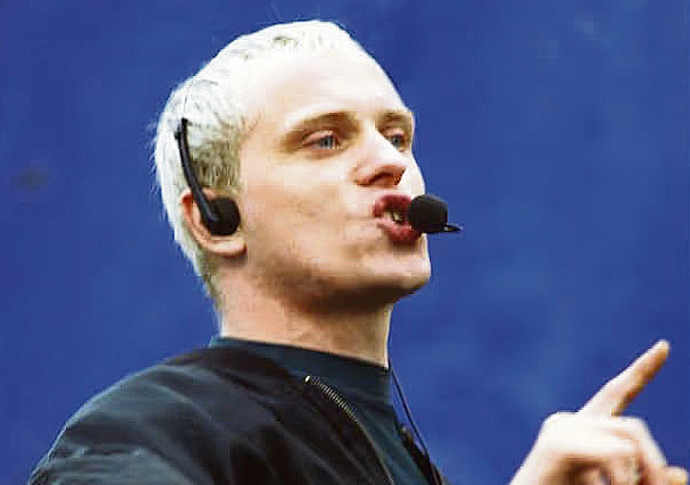
Soho shops such as Groove in Wardour Street and Black Market in D’Arblay Street were bringing in American imports, with very little made in the UK.
“It was coming out of Chicago and New York, and by 1987 and 1988, the early Detroit House music began to happen,” he says.
“We took music from the gay scenes in New York and Chicago and we turned it into rave culture.
“We were realising quite how big this would become. This music turned people on.”
Mr C and his friends were now making their own. In 1986, Mr C made his first House tune, called Page 67.
“I released the record and my mum said to me: you can’t eat records. But I started getting gigs and she was okay,” he says.
Mr C looks back today and recognises how various elements came together as a catalyst.
They included the music firm Roland developing drum machines and bass sequencers called the 303, 808 and 909 and the Moog synthesiser.
“There were key ingredients: the development of music technology, a bunch of young, creative Londoners, and then the popularity of taking MDMA and LSD by people in the movement,” he says. “And we were not shy to kick down doors of empty spaces to hold parties.”
As House music swept across the UK and then around the world, the music industry sat up and took notice.
In 1988, he was contacted by Charles Cosh, the manager of a psychedelic rock band from Scotland called The Shamen. Mr C made a number of hit records with them as the front man.
House music today is ubiquitous, possibly the most popular genre in the world.
“Today, anyone with a laptop can make music – and 99 per cent of it is generic or cheese,” he reflects.
“But the tunes we made years ago still sound fresh. I play tracks I made 30 years ago that people think are new.”
• As well as DJing, Mr C now runs a red light therapy centre in Brecknock Road. See https://www.bedlightandbeyond.com/
• He has a new tune out called Liquid Acid, that can be found at: https://soundcloud.com/mrcsuperfreq
