‘The pub is overshadowed by an impending cloud of death’
Dan Carrier talks to two academics of Asian heritage but steeped in the culture of the ‘good old English’ pub who have analysed its history and culture in a search for ways to ensure they survive
Thursday, 8th October — By Dan Carrier
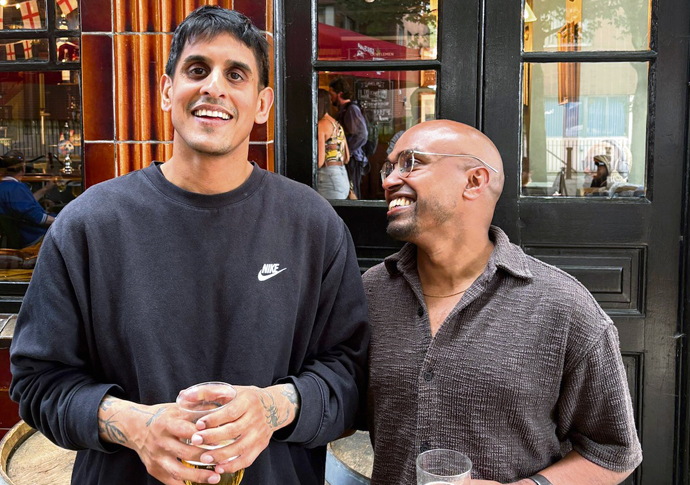
Amit Singh and Sivamohan Valluvan
AMARJIT was the “first person licensed to pull pints and teeth”, and also the first president of the Sikh Guinness Club – a self-appointed role, and one that the publican of the Railway Tavern in Southall took seriously enough to occasionally travel to Dublin and taste the stout at source.
Now his son, Amit Singh, has joined forces with Sivamohan Valluvan to write a comprehensive and brilliant dissection of the British pub trade.
In Pubs For the People, the two academics give the reader a history of the pub, consider its place in British culture, the ever-downward trend in terms of sales and closures – and what all this means for the social fabric of our nation.
Vallu, as he is known, met Amit in 2022, appropriately enough in a pub. The pair – both sociologists – decided to combine their research skills with their favoured pastime: going to the pub.
“Pub life still offers a useful social and communal space – at least in terms of how time, leisure, and sociability are experienced and how that might give space to different political yearnings,” they say.
“We are in desperate need of different political horizons. Costs are spiralling and wages stagnant, private leisure has triumphed over public infrastructure, and we are angrier and more defensive. Abandoned by the state, left to the mercy of the market, we are also asked at every turn to cultivate impossibly optimal and impossibly resilient individual personalities. Amid the frustrated sense of failure and self-loathing that inevitably prevails, profit seeing digital infotainment ‘fills the void’, algorithmically perfected to prey on our time-squeezed embitterment.
“This is the perfect storm, experienced in lonely isolation which in part explains the rise of what commentator Richard Seymour has called ‘disaster nationalism’.”
The pub, they say might seem an odd antidote to all this.
“People’s lives were once lived not online but in physical spaces, and spaces that were not always, if at all, profit-driven.
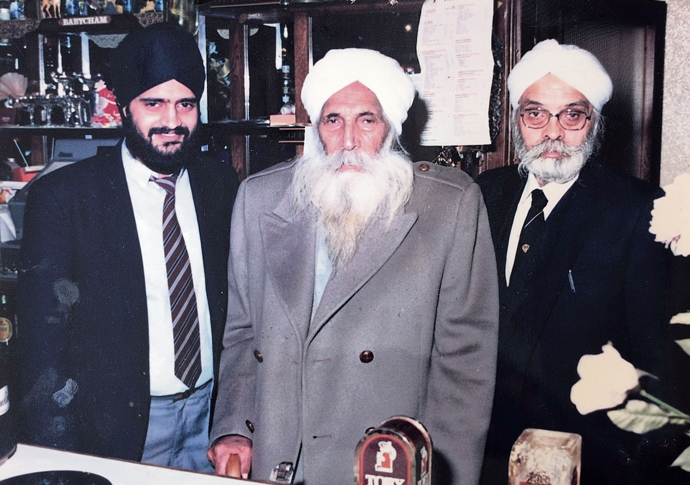
Amarjit with friends behind the bar of the Railway Tavern, also known as The Glassy Junction
“This is sometimes called social infrastructure that was central to the welfare state. Churches, union meetings rooms, libraries, miners clubs, workplace canteens, social clubs, leisure centres and of course local pubs.”
Amit’s father was born in a pub in Dar es Salaam, Tanzania. It had been founded by Amit’s great-grandfather in 1940 and is described as an “old-fashioned saloon style bar”. Amit’s great-grandfather was a drinker, and had a fondness for opium, too. He did not manage to stay the distance: “He wasted all his money on women and wine,” the book adds, “all that life-affirming excess culminated in him begrudgingly surrendering the pub to Amit’s grandfather.”
The family lived upstairs and Amit’s father had the pub trade in his blood.
They moved to England in the 1960s. Amarjit worked as a dentist, and became a regular at a pub that neighboured the family home in Southall.
“His proud sense of his publican family pedigree combined with a fondness for drinking pints of Guinness and London Pride acquired in 1970s England also meant Amit’s dad had always nursed a hope of being third-generation publican,” they write.
When the lease for the Railway Tavern came up in 1986, he took it on.
There is much more to the book than anecdotes about trends in bars, though the pair are well versed in what publicans do to keep afloat.
And the economics of running a pub is a microcosm of late-stage capitalism: “The underlying economics of why pubs exist, or increasingly don’t, or how they exist, offers a lens on the economic morass of floundering 21st-century capitalism,” they say.
“What is revealed is a sorry story of colossal debt, spiralling rents, the suffocating hold of consumerist lifestyle aspirations, the lobbying power of supermarket giants, not least the offshore machinations of private equity and venture capital.”
They cite the real owners of chains such as Greene King – Hong Kong property developers; Stonegate – registered to in the Cayman Islands; and Punch Pubs – owned by a New York investment fund, which in turn is owned by Emirati sovereign wealth fund.
Has this hollowing out of a sacred part of our national psyche contributed to the eroding of civic values?
“We find ourselves in dreadful times,” they add. “Overt racism, having become taboo for a brief spell, is again publicly respectable.
“As opposed to serving as a prop for nationalist myth making and racial resentment, this book is about reclaiming the pub as a site of multiracial, multi-generational sociability.”
They cite Desi-pubs – like the Glassy Junction, which included a tandoori oven – which serve affordable food and drink to a multi-racial working- class clientele.
“Pubs remain daily hubs of everyman hospitality, but also of how these ideals are imperilled by other prominent characteristics of today’s pub landscapes,” they say.
This includes the gastro, the hipster and yuppie pub, issues over rural poverty and the dominance of the offshore owned pubcos.
“The pub is presented as a uniquely English institution…an institution that is overshadowed by an impending cloud of death. Not unlike test cricket, the BBC and the NHS,” they state.
They cite Hilaire Belloc and an essay from 1912 called On Inns: “From all towns inns have been driven, from the villages most.
“No conscious efforts, no Bond Street nastiness of false conservation, will save the beloved roofs. Change your hearts or you will lose your inns and you will deserve to have lost them.
“But when you have lost your inns, drown your empty selves, for you will have lost the last of England.”
The book covers what they call “origin myths”, stretching back to the Romans and tabernas on the roads they built in conquered Britain. Fast forward and beer was the thirst quencher through the Middle Ages. The brewing process was a protector against water-born disease, and a low alcohol content meant it was served to all ages and at all times of the day.
There was already a pub trade: Anglo Saxons introduced England to the alehouse, and in the 10th century King Edgar decreed there could only be one per settlement. It was Edgar who introduced the “peg” system, to limit the amount one person could drink, and gave us the expression “ taking someone down a peg or two”.
The book takes us through Victorian industrialisation and how pubs became the go-to for working-class culture, followed by temperance movements.
Understanding the history of pubs puts us in a better position to understand what the trade looks like now and why it matters. There are the stark facts as to the decline of the pub trade: the number open has fallen by 25 per cent since 2020. Nearly a third of those closed were demolished or converted without planning permission.
“Pubs have lost 50 per cent of their beer sales to supermarkets in the past 35 years,” the book states.
Above all, the book is a reminder of what makes the pub the lubricant for so much we value in our communities.
The sad demise of the pub trade is not just the story of another high street business going bust – as Amit and Vallu reveal, it’s more than that.
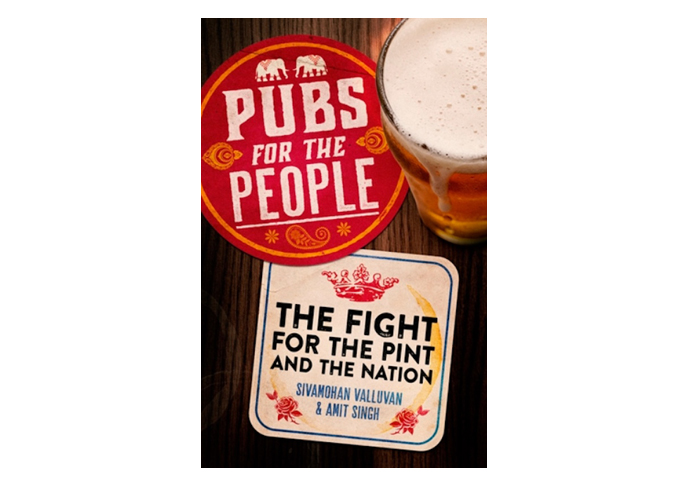
• Pubs For The People: The Fight for the Pint and the Nation. By Sivamohan Valluvan and Amit Singh. Manchester University Press, £18.99
