The Kenwood Dido painting speaks for itself
Friday, 23rd August 2019
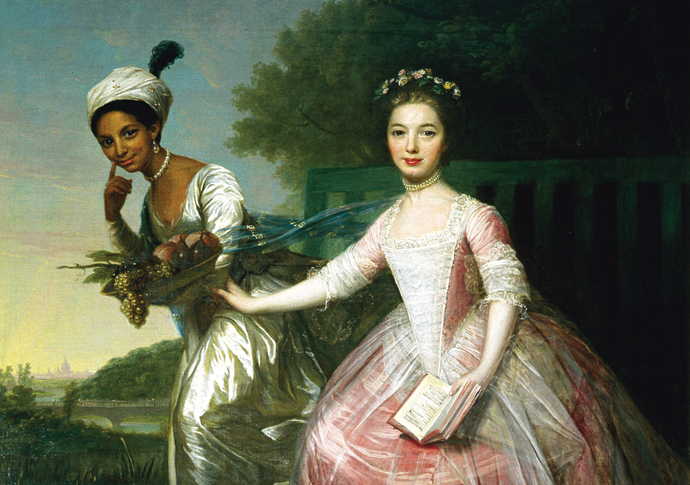
Kenwood’s painting of Dido Elizabeth Belle and Lady Elizabeth Murray
• IN response to Roger Elliott, (To revisit Kenwood’s ‘treasures’… August 9) the painting of Dido Belle and Lady Elizabeth Murray speaks for itself.
It is not an image of an amicable relationship, and Gainsborough was on hand at the time, a notable critic of slavery, as was Lord Mansfield, who brought up Dido knowing she was a slave after her father Sir John Lindsay, had delivered her from the West Indies (saving her from slavery).
Mansfield raised her as a gentlewoman before she became his secretary with a wage that enraged her cousin Lady Elizabeth Murray. Mansfield’s will decreed her free and awarded her a fortune.
Nor did I attribute the abolition of slavery to Lord Hamilton, I wrote Lord Mansfield, and most of this was unknown till it was fleshed out in Amma Asante’s fabulous film Belle – the biopic inspired by the portrait, which highlighted her intellectual and moral influence on the judiciary who initiated abolition of slavery, overturning an attempted insurance fraud.
As to its provenance, Mr Elliott is partially correct. A similar painting in Scone House, presumed to be painted by Johann Zoffany, was exposed by the BBC’s Fake or Fraud? as a work by Scottish artist David Martin.
The idea that the Kenwood canvas is a copy is too ridiculous to contemplate, never mind that it has the hallmark of Gainsborough’s expressive brushwork.
Mr Elliott’s comments on Rembrandt are nitpicking. He admits to the painter upsetting his clientele, yet denies the evidence of the artist’s defiant pose, after he was forced into penury before selling his collection of antiquities to fend off the bailiffs.
He recognises Rembrandt’s real crime was insulting the “founding fathers”, not that they made his life extremely uncomfortable.
Mr Elliott also misses the point about Nelson being a working-class seaman who’d earned his title, not inherited it. Aristos and the petit-bourgeois disliked him and used his relationship with Emma to tarnish his reputation.
Unlike Mr Elliott, I had access to Jack Lindsay, the former art critic on the Daily Worker and founder member of Artery, a magazine I edited, whose seminal work Thomas Gainsborough provided much of my knowledge of the artist he considered bridged the gap between Hogarth and Turner – pointing out that the painters’s letters refer to Dido and Lady Elizabeth Murray in another composition.
Again, compare the two figures. Belle is in shadow, exiting left, carrying what could be a tray, while the white woman appears to be pushing her out of the picture.
As for Jacob Simon’s assertion that it’s not painted by Gainsborough (August 9), as the former curator, perhaps he could hazard a guess who produced the problematic picture?
JEFF SAWTELL
NW1
