The 168 buses on the streets is a debate we have already had
Friday, 14th August 2020
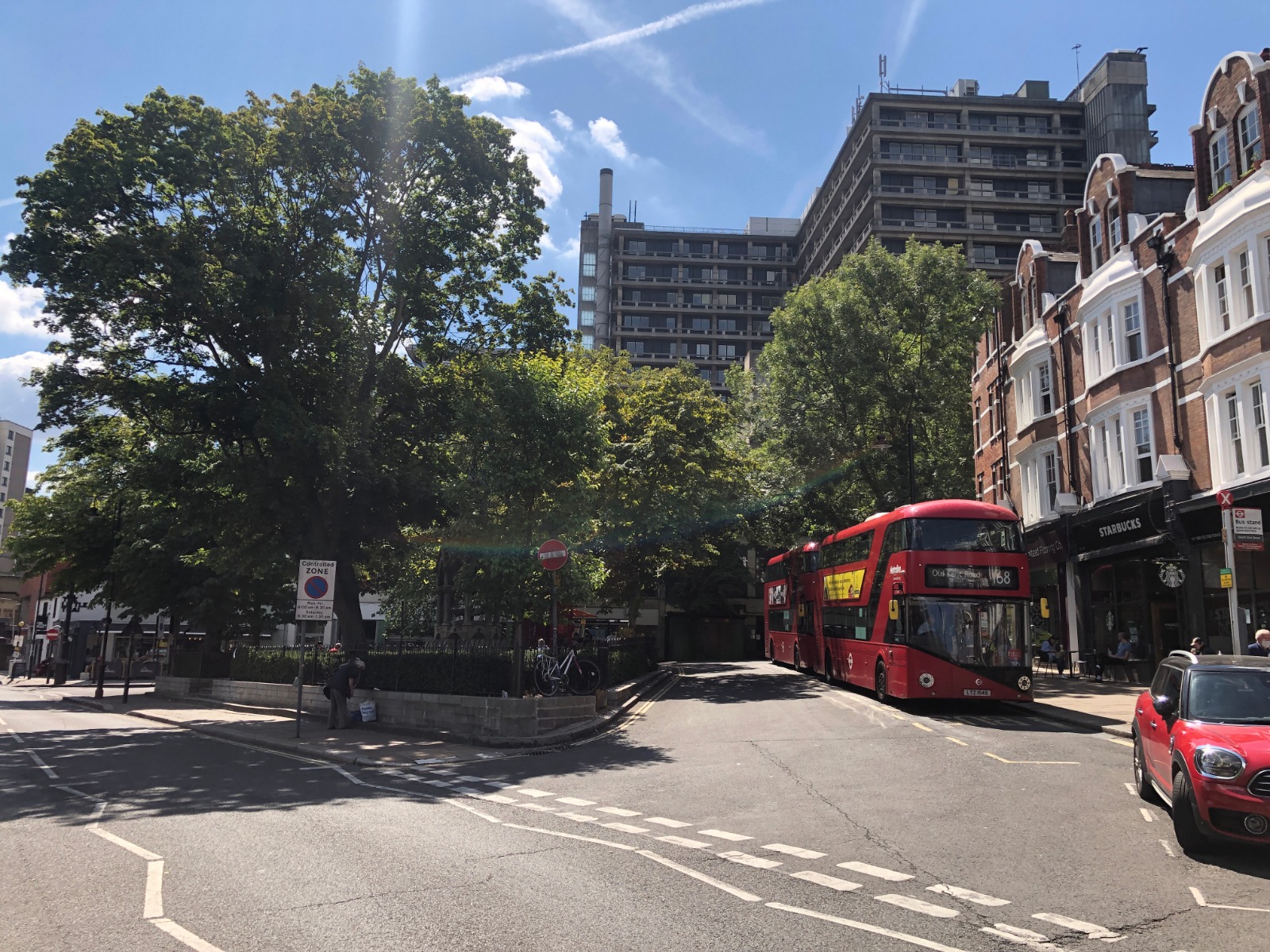
The slip road in South End Green used by the 168 bus
• THE entire morning of July 7 2005 I spent glued to the television as news of the London Underground and Tavistock Square bus bombings dominated the news channels.
By the time I left my flat some five hours had passed and I was completely wrung out and exhausted with grief, sorrow, and terror.
As I wandered down the street in confusion, I turned left off Agincourt Road and onto Cressy Road, in front of the ambulance station.
There I was staggered to see ambulances lining the street. Turning onto Fleet Road, more ambulances… everywhere, crowded against one another, along the road.
All of the ambulances from central London had been parked there, as it was as close as they could park after unloading survivors of the bombing at nearby hospitals, in readiness for more potential acts of terrorism and more victims.
For the past three years, I and others had fought bitterly to keep these streets free from the 168 bus stop. We fought on the basis of noise and pollution, traffic danger and societal effects in the neighbourhood.
And, yes, so the ambulances could have a clear run while speeding to save lives.
We never really comprehended that the ambulance station could be the hub of a major disaster such as the bombing.
And I had this thought. What if we had not fought so hard to keep the roads surrounding the ambulance station clear of the 168 buses?
Now I ask readers. What if we hadn’t?
It is one thing to provide multinational restaurants and coffee shops with outdoor space for customers and call the space by a trendy new name (‘Streatery’ set for South End Green slip road, July 27); it is quite another to line up the surrounding streets with 168 buses.
We have covered this ground. Think again.
SALLY TAYLOR
Address supplied
