Teenagers treated for Post Traumatic Stress Disorder as knife cases rise
'It's a ripple effect which will go on and on'
Thursday, 29th March 2018 — By William McLennan
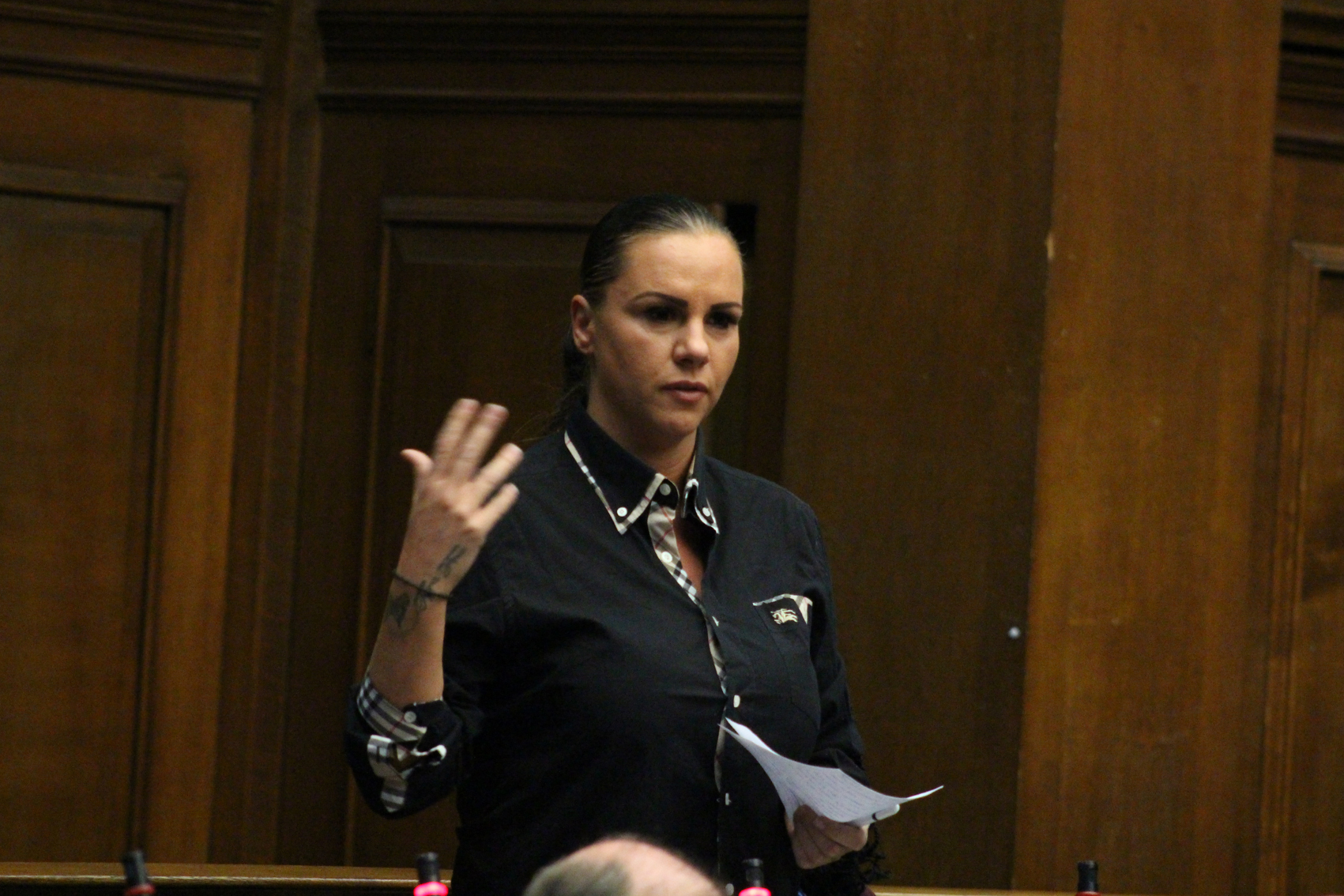
Singer Gemma Fox launched Save Our Boys, Save Our Girls
TEENAGERS are suffering from a mental health condition first diagnosed in war zones after being repeatedly exposed to the trauma of street violence, youth workers have warned.
They spoke out as the Town Hall opened its doors to people with a first-hand picture of how knife crime is wrecking the lives of Camden teenagers. They were invited to speak at a full meeting of councillors in the wake of the borough’s bloodiest night of violence in recent memory and with the community demanding a response.
Politicians were provided with a series of worrying insights, including an alert that authorities are not doing enough to deal with the psychological toll of the attacks, with some children being diagnosed with post-traumatic stress disorder (PTSD).
Kate Bond, of New Horizon Youth Centre in Somers Town, told Monday’s meeting: “If somebody walked in here now and stabbed somebody and we were all witness to that, it’d affect all our lives forever. “Yet I find we expect young people to go back to school, go back to college, go back and look for an apprenticeship without hardly talking about it.”
She added: “One of the young people I work with was stabbed and nearly lost his life. He was given a speech to go back to school with, which said: ‘I can’t talk about what happened to me. I’ve had some time off school and I’m fine, and I want to concentrate on my studies.’ “Again, it’s this thing of not acknowledging the problem, not acknowledging that young people just cannot carry on like that.” PTSD, she added, was “the same thing as people in war situations are facing”.
Ms Bond, who has spent 35,000 hours talking to young people over the past decade, said that tackling youth violence was “really complicated,” adding: “We cannot think we are going to solve this situation with one answer.”
The killings have led to new resolve from community groups to tackle knife crime head-on. Three separate groups have formed: Camden Against Violence, which organised Thursday’s march through the streets, Camden Parents and Save Our Boys, Save Our Girls, which set up a community meeting last week and is planning to provide a series of opportunities for young people.
Gemma Fox, a recording artist from Queen’s Crescent and a Save Our Boys, Save Our Girls founder, echoed Ms Bond’s concerns. “Let’s be honest, if someone got stabbed in here right now, it’s not just that person and their family, it would affect every single one of us who had seen the trauma,” she told the meeting. “It’s a ripple effect and it will go on and on.”
She said: “Young people in Camden do not feel safe. A high percentage of people are carrying knives for protection out of fear – not force. That’s a horrible thing, I think, to hear. If your young person, your child, or your sibling or your brother or sister is scared to go to the shop or scared to go to school, we can’t carry on like that.”
The self-funded Save Our Boys, Save Our Girls has acquired a shop in Malden Road. It is planning job clubs to help young people get into work, a mentoring phone line, homework sessions, music workshops and a t-shirt printing press to help young people learn entrepreneurial skills.
A key element, Ms Fox said, would be the operation’s 24-hour nature. “Our young people don’t clock off,” she said. “These problems do not finish at five o’clock on a Friday.” She said services should be available to all victims of knife crime, whether gang-related or not, adding that she had been “sliced a few times” in a domestic violence situation. The meeting heard that levels of knife crime had risen in Camden at a faster rate than elsewhere in London.
There were 94 stabbings of people aged 25 and under in Camden in 2017, up from 49 in 2016 and 53 in 2015. A council report stated that knife attacks in Camden had “continued to increase over the last two months while other boroughs have started to level off or decrease”.
Detective Sergeant Caroline Haines said: “It is primarily but not exclusively linked to internal gang disputes and rivalry.”
Among evidence of the daunting scale of the problem presented on Monday was the case of an eight-year-old boy who had brought a Swiss Army knife to primary school and threatened to “cut” a classmate. Conservative councillor Leila Roy presented a letter of apology, which had been written by the boy to his victim. It said: “I am so sorry for what I did… I should never say that I am going to cut you.”
Cllr Roy criticised the school’s response and said: “The headteacher decided not to report it to the council or police.” Camden Council said it acted “in the proper way” once the threat was reported, but added: “Clearly, there were lessons for the school, which has since reviewed its procedures.”
What the councillors said:
Georgia Gould (Labour, council leader)
“We heard a lot of grief, a lot of fear, a lot of anger, but we also heard a huge amount of passion and energy and the power of our communities. I think that really says something about Camden. We are not a place where that kind of tragedy can happen and people see it as normal and walk on by, but it’s somewhere that we stand up together. We have to acknowledge that for some young people it feels like there isn’t a lot of hope and there isn’t a lot of choice in their lives and that’s something that has to change.”
Awale Olad (Labour)
“We had a choice growing up: the choice was to either fall into crime and drugs, or you don’t. Unfortunately, as the years have gone on, that choice has been taken away. What we now see is young men in particular feel compelled, feel vulnerable, feel like they have no choice whatsoever but to take up knives. They often find themselves under threat from crime, under threat from drug dealing, under threat from all sorts of nefarious activities. Young black men in particular are left to fend for themselves in society and we need to do a lot more to support them.”
Sian Berry (Green)
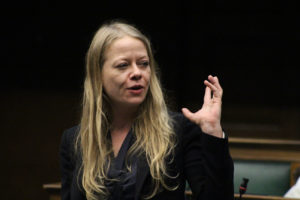
“We are definitely a community here that is in trauma. The emphasis on the Scottish model, the emphasis on the public health model in dealing with this is right. It’s about prevention. I’ve been looking across London at the cuts that boroughs have had to make to their youth centres because of cuts from central government. Camden is below average on this so far, but I think we all need agree, in a cross-party way, that government needs to step in and give us some funding on the prevention side. We also need to look at the healing side of this.”
Flick Rea (Liberal Democrat)
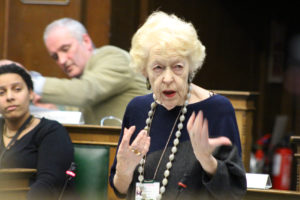
“I find myself more interested in a way in the prevention side of things [and the transition from primary to secondary school]. This is the point that we tend to lose control. Transitional funding was never statutory, whereas funding for children, funding for youth services were ok. Many years ago there were cuts in transitional funding that never got restored, long before the age of austerity. It was one of those things we felt presumably we could do without. There has always been that gap, between primary and secondary. The age at which you really must get young people interested.”
Andrew Mennear (Conservative)
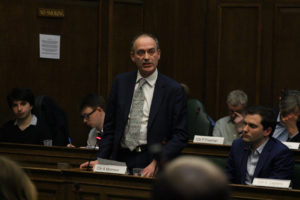
“Something has gone wrong. Our young people were safe, it was one of the safest boroughs in the country. The youth service in Camden has always been too aimed at education so it hasn’t drawn enough children. We haven’t had enough sports facilities for young people. Drugs have never received sufficient attention in this borough. The police will always say they can’t prioritise it. There’s too much of it happening, it’s too difficult. This council has to lead, it has to really say: Don’t come to Camden if you are looking for drugs. It isn’t the place to go.”
Abdul Hai (Labour)
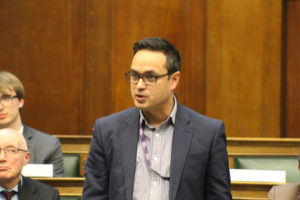
“We have done lots of focus groups to make sure lots of young people are involved [in the council’s youth safety taskforce]. We are gathering evidence. It is quite complex. The early findings, there is something around the public health approach. It’s holistic and understanding how that happens. Early stuff around trauma, early indicators, complex families, peer pressures, social media, lack of role models, lack of opportunities. There’s issues around gangs, drugs, grooming, particularly around Camden Town. Fundamentally, I believe, inequality is the underlying issue.”
Siobhan Baillie (Conservative)

“We need a whole-family approach. We know crime affects parents. It affects siblings. They can live with this for years and years before they actually get help. We also know that sometimes there are hideous problems behind the young person who is getting into crime or having behaviour problems. I would like to call on the council to train and spot the problems. Don’t let families fall off a cliff. It shouldn’t stop when families are back on their feet. Recognise the triggers, even little ones. We know absenteeism is rising in our schools
Sally Gimson (Labour)
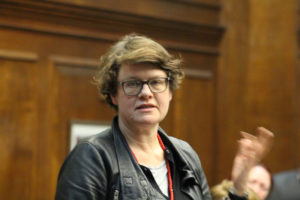
“[Pupils at Parliament Hill School] wanted to say that it wasn’t just boys who were involved in knife crime. That it was girls too. And that girls were often asked to carry knives for boys in Camden. They knew of girls that had been asked. They wanted schools to do something about this and they asked me to say they wanted schools to do random bag checks at secondary schools. They also said that they wanted intervention at primary school. They said when intervention happened in year 9 or year 10, it was too late. That this was often about boys in year 6, year 7.”
