Take a deep breath and then let’s talk about the prostate…
Patients urge men not to be shy about seeking answers to cancer questions
Thursday, 5th November — By Tom Foot
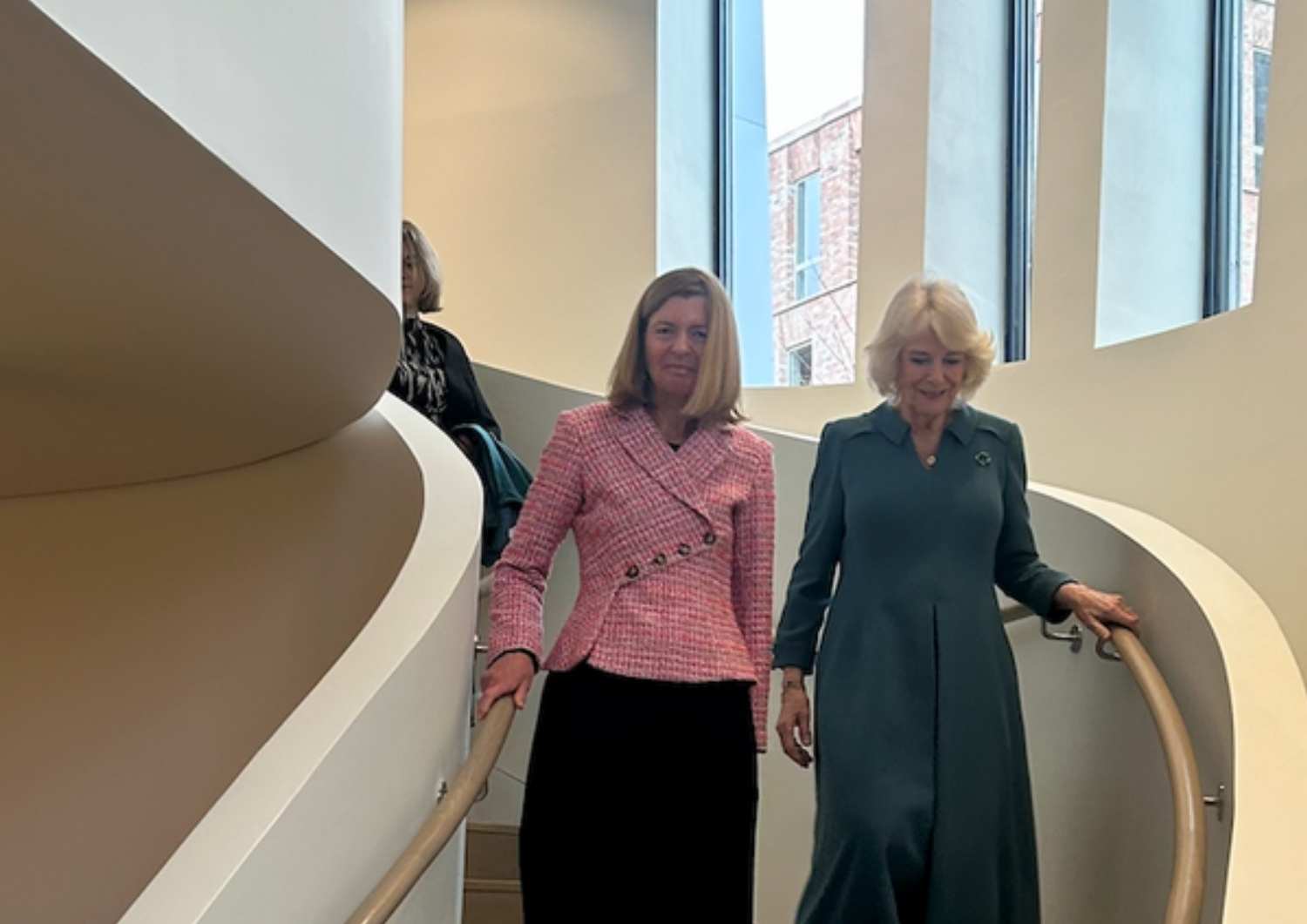
Maggie’s, the cancer unit at the Royal Free, was opened by Queen Camilla (pictured with Dame Laura Lee) in 2024
THE New Journal was this week invited to sit in on a men’s cancer group session at Maggie’s impressive new centre behind the Royal Free Hospital.
The majority of people there were either in treatment or remission for prostate cancer, a disease which most commonly affects men from the mid-50s onwards.
The group came from all walks of life and backgrounds, but all from a similar generation often said to be uncomfortable with expressing emotions or showing signs of weakness. This was a chance to leave all that at the door, open up, share, listen, ask questions – let the anger out.
On Tuesday, one man started off by saying he had been worried that he would “stick out like a sore thumb” in what was his first go at a group session. He wanted to understand what it meant to be in “remission” and the extent of the “monitoring” that others had been through.
He spoke about how the early warning signs turned into a new diagnosis and a treatment programme that appeared to be a “death sentence”, telling the group: “I found it very tough when I was analysed, it was almost like tripping on acid.”
He spoke about how it was hard on his daughters, whom he didn’t want to impose on, and worse yet could not fall out with as he was now dependent on them. Physical deterioration had left him isolated from his social circle.
Adjustments in family dynamics and loss of fun weekly routines are an impact of treatment which is often understated, the session’s facilitator said.
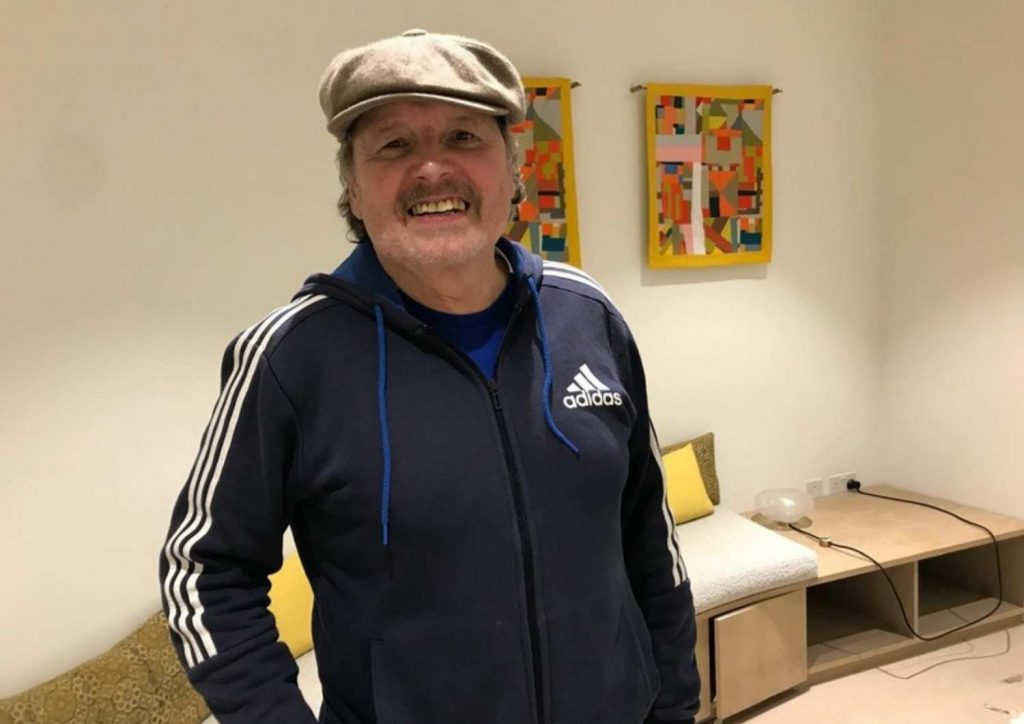
Joe Lucy values the talking sessions
The Maggie’s Centre in Rowland Hill Street was opened in 2024 by Queen Camilla. It was designed by internationally renowned architect Daniel Libeskind and has a range of spacious rooms that are completely unlike the sterile world of the neighbouring hospital.
There is a wide range of sessions for all kinds of people, including the Look and Feel Better group for women that helps people practically with hair loss and maintaining self-esteem.
All the men asked each other questions about their “PSA” levels from tests that record levels of protein in the prostate gland.
Another man had a relatively low reading and had been given the choice of simply “sitting tight”. He had that day felt a “great relief” that he would not be started on hormone therapy or have to have the operation until after Christmas.
“It’s best not to worry, but of course it is not easy not to worry,” he said, before explaining in detail what the operation would do and how tablets of medicine would boost enzymes that prevent prostate cancer spreading.
The North Central London area – five boroughs including Camden and Islington – has the highest rate of prostate cancer cases in the country, with around 1,250 diagnoses in the last recorded year.
Not every man at the session had cancer of the prostate, a small walnut-sized gland in the reproductive system. One spoke about how a “lazy cancer” had unfolded over 25 years without detection despite several screening tests, leading to a brain tumour.
After a career as a frontline public sector worker, he had had to retire, he said, adding: “My memory is very limited. I can’t really read or write. My sight has been affected.
“It’s been a total change and a challenge to cope with because bits of my brain have been chopped out. I look quite normal and when I’m in a small group like this I feel normal. In other situations I find it really difficult. It’s why I like to pop in here from time to time.”

Maggie’s at the Royal Free Hospital
There was a discussion about the way black men are more than twice as likely to get prostate cancer potentially due to a “cultural resistance” to treatment.
And questions about “the manhood element”, as treatment often leads to erectile dysfunction and stops semen being ejaculated and much of the sensation of pleasure during orgasm. This often stops people getting tested, one of many specifically male anxieties that pose a difficult question for educators not wanting to scare off potential patients.
“Many men don’t want to be troubled by checks,” one elderly man said. “When I had mine there was a lady nurse in the room. I had to get into a funny foetal position. I was in that position for a while. They were chatting about something. I felt humiliated.”
On the procedure, he said: “You can feel a puncture going on. It’s not hurting and of course you know exactly where it is. If you are a man, you might hear something like ‘oh you shouldn’t be moaning about a little scratch’. But the injection was done with one of the biggest syringes I have ever seen.
“I don’t go to the GP unless my wife drags me there. Most men are already afraid to go to the doctors. It should not be on us guys to dupe our fellow guys about it by not telling them the truth.
“You can’t just say, go: it’s going to be a cinch. The system has to help us out.”
But many people at the session said it was not right to scare people unnecessarily, with one man saying: “The best thing to say is the first thing is just a simple blood test and nothing to be frightened of.”
After the session, Joe Lucy, 75, said: “These sessions are about comradeship. Shared experience. Empathy. There are so many different kinds of treatment and people can relate. ‘I am having problems with this, did you?’ You can talk to people that have been there and got the T-shirt.”
Mr Lucy, a retired psychiatrist who lives in Clerkenwell, stressed the importance of exercise to help with recovery and told how he had started playing for Arsenal’s Prostate Cancer Walking football side at the Hub at the Emirates Stadium. The side plays in a nationwide league with other prostate cancer patient teams around the country.
“I’m actually injured at the moment – my groin – and I did wonder if that was to do with my treatment,” he joked. “Yes, it is competitive. I’ve played three years for them and I found out about it via Maggie’s.
“We come to these meetings to feel safe. To open up. Sometimes you come out and feel like you are walking on air.
“When you think about it, the people here today were maybe not talking about their emotions so much, but they were demonstrating them.
“The service here is essential. Support groups save lives. But they can also make lives more pleasant. Information is power, as they say.
“Some people can’t talk with their families, they get too upset and so on. You come here and there is no stigma. You may be in a marriage and you have children and you have an active sex life. For years, with the treatment, you may not have a sex life at all. But all that can be overcome.
“My father died with cancer. I saw him die. I’d been very fond of my father. I have had two near-death experiences in hospitals of my own.
“I have become quite philosophical about life and death. It’s left me thinking when my time is up, it is up. I am not going to worry about it until that day.”
No referral is needed for the free sessions at Maggie’s. To find out more, visit the charity’s website at maggies.org.
