Special date!
Legendary Specials lead singer Neville Staple talks to Dan Carrier about his life in music, Two Tone and fighting racism. He's live at The Garage on June 20 – and we’ve got two tickets to give away
Thursday, 11th June — By Dan Carrier
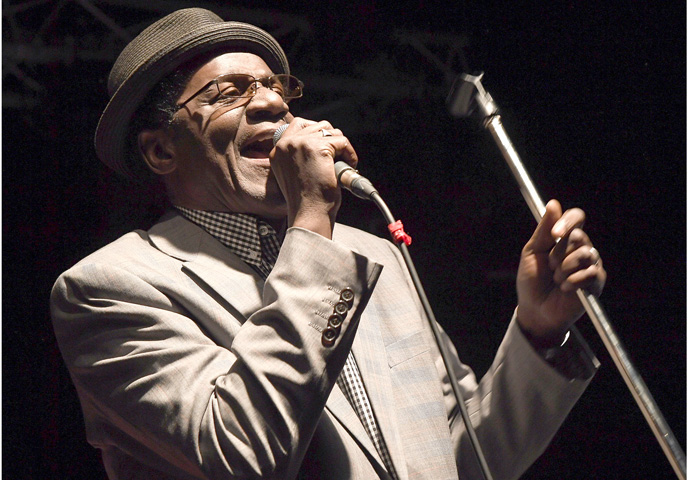
Neville Staple [John Cole Photography]
HE was at the forefront of one the UK’s biggest ever bands – Neville Staple of The Specials lent his voice to tracks that defined a generation.
The singer is taking to the stage this month at The Garage in Holloway Road, and told Review about a lifetime in Two-Tone culture.
Originally from Jamaica, he moved to England aged five, settling in the Midlands.
“When the Staple kids got to England, it was like landing on the Moon,” he would write in his autobiography, Original Rude Boy.
“This was a totally different place. The young Neville lapped up all these experiences and wanted to know everybody and everything about his new home.”
Music was intertwined with every step of his youth.
“I used to sing in church from the age of five onwards but my main inspiration was running a sound system with my cousin, called Messenger Sound,” he says.
“That really made me get into the performance side of it. I remember people saying ‘Nev, why don’t you get up there and have a go?’ I knew how to relate to an audience – I am a natural performer, I don’t mean that in a big headed way, I mean I just didn’t feel fazed. People encouraged me, that was just a great thing to hear. I didn’t have a fear, I just felt it was fun. I didn’t think of it as performing. I remember thinking ‘I have never been up on stage really before, and this feels good, I can do this’.”
His cousin’s sound system was an entry to performance. “I remember we had the big boom boxes we had built ourselves, and we’d have to lift them into the back of a Transit – they were seriously heavy,” he jokes. “Just getting them to the dance was hard work, but all part of it.”
The Jamaican culture of sound system DJs working with MCs and “toasters” was an early attraction for Neville. He recalls hearing U-Roy and I-Roy – two hugely influential and respected singers. “I got a lot from them,” he says. “I used to listen to them carefully as toasters. I loved the way they used the microphone and I thought I could get up and talk like that.”
Neville recalls how he found a youth movement in Coventry that was absorbing. He became a regular at a club called The Locarno where a DJ called Pete Waterman, who would run the 1980s pop hit factory who gave the world Kylie Minogue, played.
It was in Coventry that he became involved with the Holyhead Youth Club, where he stored his sound system speakers.
“One day I walked in to have a mooch around,” he says. “As I approached the basement door, I could hear a band rehearsing. The sound was unfamiliar. My curiosity was aroused and never being too shy to introduce myself, I decided to interrupt them. But for a moment I paused behind the door to listen to them for a bit longer. There was a bit of reggae and a bit of punk and a guy with a deadpan vocal style. Without knocking, I pushed the door open and walked in. I had no idea that my life was about to be completely transformed.”
It was 1977 and Neville had walked into a rehearsal for a band called The Automatics, a combo that would morph into The Specials.
The Specials rose with a political movement: they lead the charge in the 1970s against creeping racism and an emboldened National Front – an experience that Neville says we need to draw on today as bigotry, ignorance and racism once more stalks our streets.
“We came to prominence with bands like The Clash, who were overly political in their messaging,” he says. “It was our lived experiences we were drawing on. We saw black and white kids fighting each other and thought this is no good, we can stop this. In Coventry, Two Tone became a vehicle to stop this nonsense.”
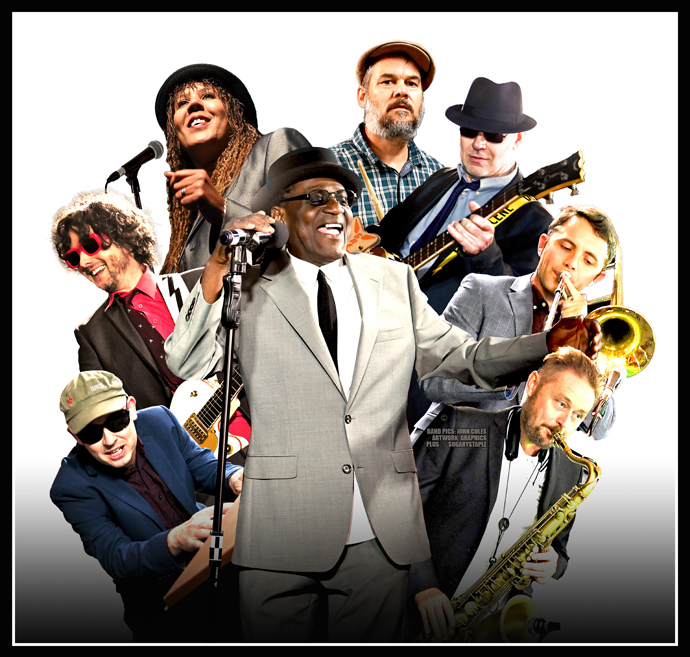
The Neville Staple Band [John Cole Photography]
Skinhead culture had been hijacked by racists, he says, and not all skins were fascists. Quite the opposite. “When I first came to England, there was this pronounced racism – you’d face it in school,” he recalls. “But there were skinheads who looked out for us at the gigs.
“They had this attitude – let’s get rid of all this fighting. When we got together as The Specials, we could see who we appealed to, and that really helped glue us closer together.
“Two Tone fought racism. We went through a political enlightenment and that was caused by the work we did as performers. The right were trying to divide working-class culture, which was colour blind, we were told there was black and white but we just disregarded all that talk.”
The rise of Reform as a political entity and the failure for the establishment to counter their ridiculous claims is a worry, he adds.
“It is sad to see racism coming back. The Two Tone message is still so relevant,” he says.
“You get a lot of youngsters saying they can relate to The Specials. They tell me their dad played them the music, and they know what the songs are about. New generations are discovering our music and through that, understanding the battles we faced.”
Neville says to fight the far right today, we need to learn the lessons of the past.
“We need to shine a light on racism, need to make sure it is public so we can identify and fight it,” he says. “There is plenty of racism today and sometimes it is not as upfront and explicit as it used to be, but this is there.”
Neville’s life in The Specials and then the chart-topping act Fun Boy Three took him all over the world. But fame was never an aim.
“I never wanted to be a pop star,” he said. “I just loved music and I loved performing. I loved so many different genres of music, and I loved what we were writing songs about. That gave me a push. That’s all I wanted, and when I look back and see what happened, I do sometimes think ‘bloody hell! I am from the street’. It is actually quite funny.”
His band today plays Special hits and other famous ska and two tone tracks.
“I love being in an amazing band, playing live with a crowd enjoying it, and I can get everyone involved,” he says. “I know everyone wants to sing the chorus, and I love thinking ‘let’s have a party, let’s do this together’.”
And his shows at The Garage are a celebration of life, he adds.
Neville has lost fellow Special band mates Terry Hall, who shared lead vocals with him, and the drummer John Bradbury.
Neville has survived two heart attacks and as a thank-you to the doctors and nurses who have saved his life, he has invited NHS workers to the gigs for free.
“The NHS staff have been amazing,” he says. “This is a small way of saying thank you.”
• Details of the gig at The Garage on Saturday June 20 at:
www.thegarage.london/gigs/neville-staple-from-the-specials-the-garage-london-tickets-2026/
• To win a pair of tickets to see Neville Staple at The Garage on Saturday June 20, answer the following question:
What were The Specials originally called?
Email: dcarrier@camdennewjournal.co.uk
