Review: Women in Hollywood’s Dream Factory
If you thought the #MeToo movement had put paid to the abuse of women in Hollywood think again, says Professor Karen McNally. Olly Gruner talked to her about casting off the casting couch
Thursday, 30th July — By Olly Gruner
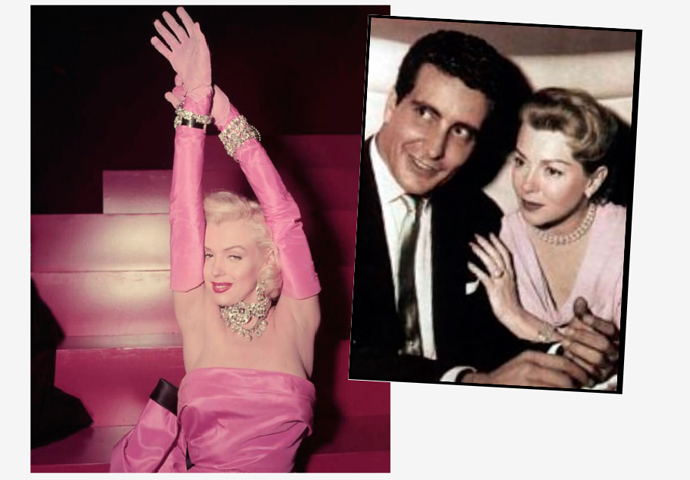
Marilyn Monroe in a publicity shot for Gentlemen Prefer Blondes; inset: Lana Turner and Johnny Stompanato
ALMOST a decade since reports of Harvey Weinstein’s sexual misconduct launched a widespread debate on gender equality in Hollywood, a new book edited by Holloway-based London Metropolitan University professor Karen McNally uncovers historic abuse in the film industry and asks what, if anything, has changed?
“Things are definitely going backwards at the moment,” Professor McNally, editor of Women in Hollywood’s Dream Factory, tells me, referring to the pervasiveness of sexism across the entertainment business.
“The initial shock [after the Weinstein revelations] provoked some limited action. And then what happens to a lot of those men who were accused? They’ve been allowed to come back again, to slide back into place quietly in the background.”
Earlier this year, the actor Cate Blanchett took aim at Hollywood elites for “killing” the #MeToo movement, pointing to glacial (at best) progress in terms of gender parity on film sets.
“There’s definitely been an anti-MeToo backlash”, says Professor McNally, “you know, ‘MeToo’s gone too far.’ How has it possibly gone too far when there were barely any consequences?”
As the book makes clear, there never have been much in the way of consequences for perpetrators. Lurid accounts of “sex scandals” and jokes about a “casting couch” obscure systemic abuse as old and enduring as the movies themselves.
Comprising 15 essays written by an international group of film experts, the book shifts between focused accounts of stars like Marilyn Monroe and Doris Day and critiques of wider issues facing women in the industry: sexual assault and harassment, online misogyny and unequal labour practices.
We are reminded that the archetypal story of a lecherous film producer taking advantage of young women desperate for a break in Hollywood was there in popular culture as early as the 1910s.
For more than a 100 years, nods to the casting couch have explained away the practice of granting employment in return for sexual favours.
“That [the casting couch] is a pretty minimising term for what this is,” says Professor McNally as we bring things up to date with a discussion of recent coverage of Sunday Sport proprietor David Sullivan. When power is concentrated in a few men at the top, this is going to keep happening.”
The book draws powerful connections between past and present, encouraging readers to reinterpret current issues in the light of historical precursors.

Professor Karen McNally
Professor McNally writes on the iconic, and oft-misrepresented, star Lana Turner. There’s a famous image of Turner, arriving at King’s Cross station in 1957, accompanied by an, as yet, unknown actor by the name of Sean Connery.
Luxuriously attired and smiling, she looks every bit movie royalty, ready to dazzle Britain with her glamorous presence. And yet, behind the glossy image lurked a darker reality. Shortly after this photograph was taken, Turner’s violent, jealous, mob-connected boyfriend Johnny Stompanato would follow her to the UK and turn up with a gun at the Elstree studio where she was making Another Time, Another Place.
Alongside continual violence toward Turner, Stompanato adopted abusive methods that will be grimly familiar to followers of contemporary news.
“Stompanato took nude photos of Lana Turner while she was asleep,” says Professor McNally, “and the police found photos of other women, so he was clearly getting ready to blackmail any woman who didn’t do whatever he wanted, including giving him money.”
Not long after they returned to Los Angeles, Stompanato was dead, killed by Turner’s daughter after one too many threats to her mother’s life.
“What then occurs afterward is the shaming of Lana Turner in the press. It’s somehow her fault that this has happened – if she hadn’t gone out with all these men, her daughter wouldn’t have killed him.”
Images of Turner as “immoral”, a victim of her own bad choices, prove remarkably durable, with historians today still often presenting her in this light.
Ultimately, as Professor McNally highlights, Turner was a modern woman, who believed she had the right to date who she wanted. That this was turned into an opportunity to blame her for an abusive partner’s death says more about ingrained cultural attitudes than it does about the episode itself.
“What gets lost in this whole conversation, is Stompanato. None of this would have happened if he hadn’t constantly beaten her up, threatened to kill her, threatened to kill her whole family and said you’re not getting out of this relationship.”
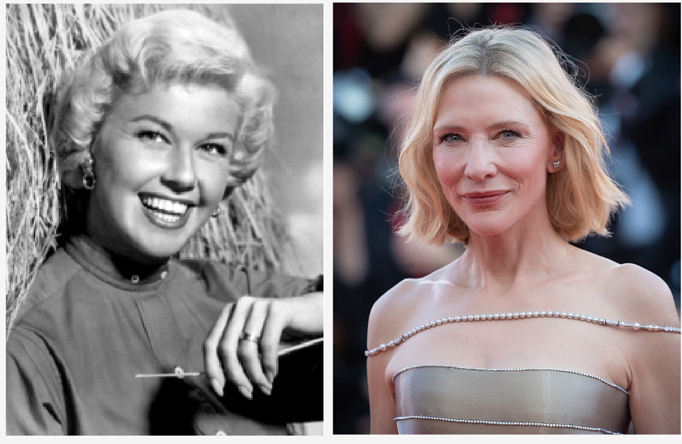
Doris Day and Cate Blanchett [Harald Krichel_CC BY-SA 4.0]
From Clara Bow and Marilyn Monroe to Amber Heard and Megan Fox, the sheer magnitude of abuse ripples down the years. Harassment was there in plain sight.
Monroe publicly wrote about her experiences of arriving in Hollywood. Before she even had a chance to meet the big producers, she was forced to fend off the advances of lowly employees at the studio, all claiming to be able to offer her a shot at stardom. Such behaviour was a “systemic industrial practice,” ingrained throughout the Hollywood rank and file.
However, there are more hopeful stories of resistance, which enhance the book’s urgency and activist resonance.
Monroe fought against sexism with writings intended to support other women arriving in Hollywood; contemporary film critics today use online platforms to challenge sexism and unearth hidden histories.
Professor McNally ends our interview with a call to arms. “We need people to take hold of the situation, to recognise what is going on and to make changes.”
She points to the success in 2023 of the billion-dollar blockbuster Barbie (co-written and directed by a woman): “If things don’t change with a film like that. If the men at the top don’t want to change things after that kind of success, then that’s illogical.”
Only with more women in positions of power can there be progress.
“It’s always a case of taking actions and not just sympathy, and that includes consequences as well as a new way of doing business.”
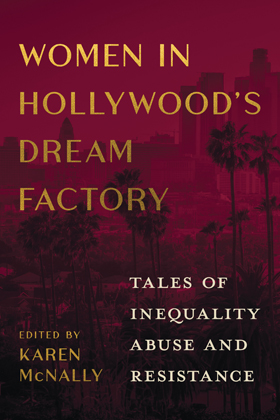
• Women in Hollywood’s Dream Factory: Tales of Abuse, Inequality and Resistance. By Karen McNally, Illinois University Press, £23
