Revealed: How council pension cash ended up helping to fund Trump’s gas dream
Pension chief says it’s only £200k as bureau journalists follow the Town Hall money trail
Tuesday, 28th April — By Daisy Clague

Camden’s pensions chief Rishi Madlani
CAMDEN Council pension members savers are unwittingly bankrolling the construction of polluting gas terminals in the United States, it was claimed this week.
Scores of factories used for importing, exporting or processing gas are popping up along a 1,200km stretch of Louisiana and Texas coastline in a building frenzy turbo-charged by Donald Trump’s second term as President.
That may seem like a distant issue – if money from the Town Hall’s pension pot wasn’t helping to pay for it.
According to research by Josephine Moulds and Simon Lock at The Bureau of Investigative Journalism (TBIJ), Camden Council Pension Fund has investments in a fund managed by the company KKR, which in turn put money into the Port Arthur LNG (liquefied natural gas) terminal.
In total, 60 local government pension funds have invested £8bn into funds that are investing in the building of gas ports along the Gulf Coast, the research found.
It was claimed that this money trail means Camden pension savers – staff past and present – are indirectly funding fossil fuel infrastructure thousands of miles away.
The council acknowledged that its pension pot helps fund gas projects, but said those investments are small compared to what it puts into renewable energy.
A spokesperson said: “Camden’s indirect exposure to gas-related infrastructure currently totals 0.01 per cent of Camden’s total £2.4 billion Pension Fund. Our ambition remains to continue to reduce our fossil fuel exposure.
“In 2019 Camden declared a Climate Emergency and continues to work with the Pension Fund to move to a lower carbon economy.”
TBIJ’s data – taken from Camden’s 2024/5 pension report – shows that the council invested £123.9m into a pooled fund, of which £6m went to KKR, which in turn used a portion of that money to fund the gas terminal.
While the publicly available data is no more detailed than that, Camden’s pensions committee chair Cllr Rishi Madlani said that when you dig deeper into how the investment was spent, only around £230,000 went towards Port Arthur LNG specifically with the rest going into renewable projects.
He said: “Camden is moving money where the science says it should go – fossil fuel exposure down to 0.62 per cent, with £67.7million invested in renewables – and only negligible, indirect gas exposure as part of a managed transition set out by the UK Climate Change Committee.”
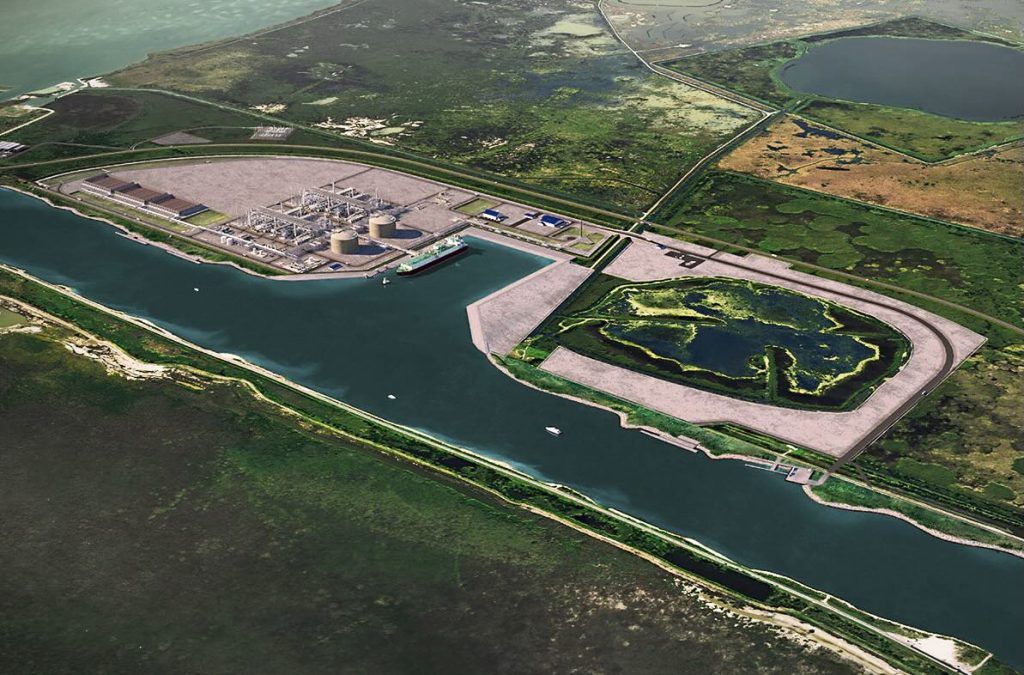
Port Arthur LNG
LNG – liquefied natural gas – is often promoted as a good “transition fuel” to bridge the gap, but a major 2024 study found it actually has a greenhouse gas footprint bigger than any other fuel. While President Trump pushes ahead with new infrastructure, climate campaigners have argued it has no place in the transition to a green economy.
Although Camden was downplaying the size of its investment in Port Arthur LNG, it continues to invest in fossil fuels like this via so-called “private markets”.
These typically involve putting money into several big funds, which in turn invest in everything from private equity, to property, to company loans.
Private markets can offer healthy returns but are set up in a way which makes it harder for the public to know where the money goes.
And they’re often excluded from the scope of council climate commitments.
This has led to claims that pension schemes that have promised not to invest in fossil fuels have ploughed money into funds that are paying for major gas projects.
Green Party councillor Lorna Jane Russell said: “It is deeply concerning that Camden’s pension fund is investing in highly polluting infrastructure. This underlines the urgent need for far greater transparency, with the council clearly setting out where its pension money is invested and how those decisions are made, rather than leaving them in the hands of multi-billion-pound asset managers.”
Cllr Madlani and the Labour leadership at the Town Hall have faced months of protests over claims the pension fund has deposits linked to arms companies, including those reported to have been used by Israel in its bombing of Gaza.
While this debate rumbles on, Camden had already made pledges on eco-friendly investments. Gas infrastructure has not only been branded dangerous for the planet, but for people too.
Families living near developments in the United States say air and water pollution from the terminals is harming their health.
Among them is Roishetta Ozane, who told the TBIJ pollution had caused asthma and increased cancer rates in the area.
“We’re seeing more women develop health issues that are living near these facilities, having pre-term babies or having miscarriages,” she said.
“We’re seeing our air quality deteriorate. We have a drinking water crisis.”
Two of her children have asthma and, according to Ms Ozane, a doctor has said that pollution may have exacerbated the seizures suffered by her son, who died last year.
“When my son passed away, I was like, what are we doing this for?,” she said.
“We’re fighting for our children, for our future, for our community, but yet they’re dying.”
The New Journal contacted Port Arthur LNG and KKR for comment, but did not receive a response from them before we went to print.
What is the Bureau for Investigative Journalism?
CAMDEN Council this week found itself among local authorities facing questions about the money trail research of journalists Josephine Moulds and Simon Lock at The Bureau of Investigative Journalism. TBIJ, set up in 2010, is a non-profit group of reporters funded by donations with the aim of paying for investigations which hold power to account and maintain journalism’s role in a healthy democracy.
