‘People were forced to fight back – there was racism absolutely everywhere’
Taj Ali’s new book charts the history of South Asian political activism... from Highgate! Dan Carrier talked to him
Thursday, 17th September — By Dan Carrier
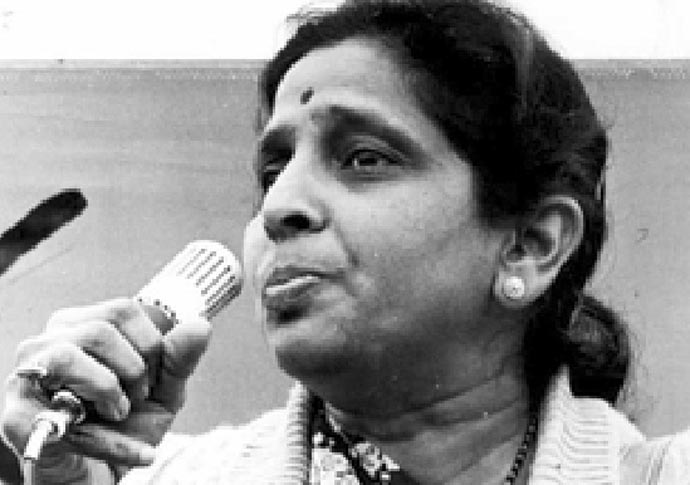
Jayaben Desai
THE red-brick home in Cromwell Avenue, Highgate, was a typical piece of London suburbia. Built in the late-1800s, it was designed for a well-to-do family.
On May 10, 1908, it would have been hard for neighbours to ignore what the house was then used for: known as India House, it was the scene of a commemoration of the 51st anniversary of the 1857 rebellion against British imperial rule.
It drew people from across the country. So many attended, crowds were forced to stand outside.
As author Taj Ali writes in his new book, Come What May, We’re Here To Stay: “India House was decorated for the occasion with red banners. This was seen as an incendiary thing to celebrate in the heart of the colonial metropolis.”
The story of how a house in Highgate provided an early base for South Asian political activism, is one of many told with diligence and passion in this excellent read: Taj has charted a political history that covers decades of what he describes as the “rich and proud tradition of political activism in the British South Asian community,” and considers how we can fight racism today.
It was, he explains, also a case of recording for posterity what happened.
“Few of these stories have been documented and are at risk of being lost,” he reflects. “I wanted to consider ideas around race, ethnicity, and migration. I knew there were these oral histories, things that were not written down. And the events of the last few years have given these stories added importance. What lessons can we learn from the past?”
His own experience of racism as a person of South Asian heritage was a starting point.
“I was 12 years old when the English Defence League marched through Luton,” he told Review.
“I remember my teacher telling us not to go into the town centre because of the EDL. We were grappling with questions over identity and belonging, learning about stereotypes. We were asking about what the EDL meant – who were they defending England from, and what did their England mean?
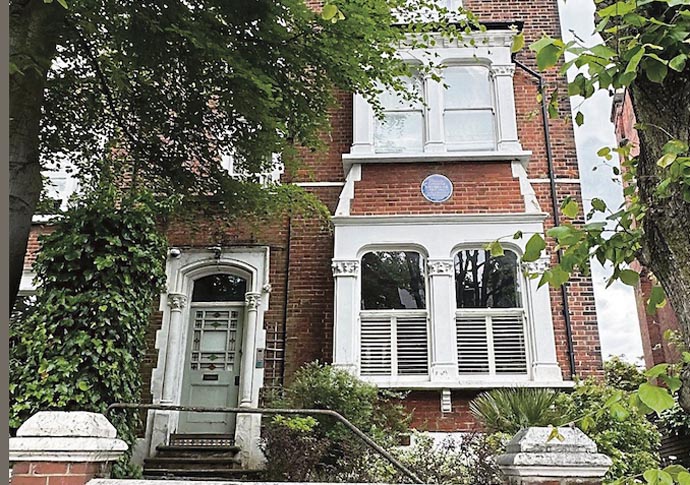
The property in Highgate that was once India House
“I spoke with my dad and he told me how when he was a young Asian man, you could not walk down certain roads.
“People were forced to fight back. They were humiliated by teachers, could not rely on authorities to protect them and there was racism absolutely everywhere.”
His book begins with colonialism and takes the reader through to the present day. He covers early attempts to organise – through groups such as the Indian Workers Association – to famous causes, such as the Kodak strike at Grunwick in Willesden, led by Jayaben Desai.
His diligent research reveals how British South Asians have a long tradition of political activism. Before the rise of racist groups like the National Front, which prompted a response in the 1970s and 1980s, there were students involved in the Indian independence movement, seafarers who kept the Empire’s trade flowing campaigning for better working conditions, and factory workers battling for equal treatment with their white counterparts.
Taj reveals how the basic issues South Asians have faced are linked to issues across working-class activism: they include a commitment to anti-imperialism and anti-racism, of forging alliances with movements including Irish republicanism and 1960s Black Power groups.
Today, the UK faces a fresh challenge from bigotry being given a mainstream platform, he asks what we can learn from earlier struggles and how we can be inspired by their successes.
“The far right have new tools in their arsenal, such as provocative social media,” he says. “There is a new generation of people of Asian origin who are having to learn about the use of the P word. It is important we learn about the experiences of South Asian people – but also understand this is a part of British history, too.
“If you look at how Jewish people were treated in the 1890s – ‘this is a community that refuses to integrate,’ the press said – you can see the same accusations and language.
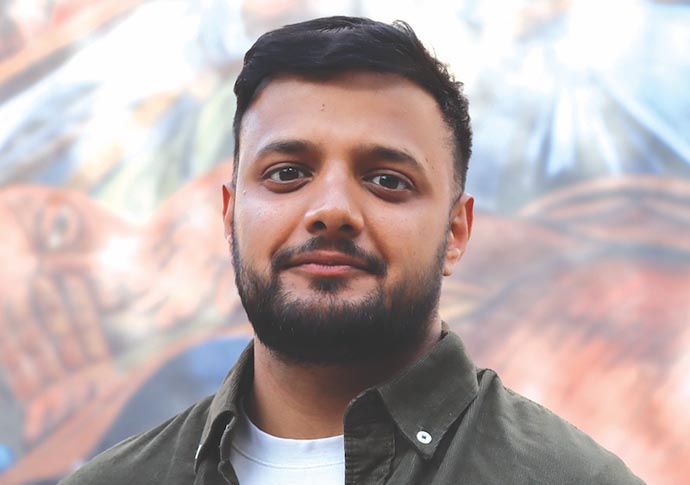
Taj Ali
“If we share these stories, it makes us all stronger.”
Understanding why Britain is facing a pungent public discourse where racist rhetoric has become common is vital.
“We should not be confused about what is causing this new upsurge of race hate,” he adds.
“There may be parallels with the past, but there are differences, too. Today, we live in the outrage economy, where racist vitriol is rewarded, misinformation is monetised and riots are live–streamed.
“Minority groups, immigrants and Muslims aren’t just the targets any more – we are the content.
“Without us they could not have their TikTok views, Substack subscribers and YouTube followers. Now is the era of TV channels such as GB News and Talk TV, which broadcast hate into the homes of millions. An era where the richest man in the world, Elon Musk, amplifies misinformation on his X platform, regularly retweets far-right accounts such as that of Tommy Robinson and pours money into right-wing groups around the world. As these racist narratives continue to shape society, a generation of young South Asians are trying to make sense of their own identities and the world around them.”
The stories within are not politically pious accounts. They are lives lived. Taj draws on numerous sources: as well as interviews and newspaper archives, he has delved into secret surveillance files of the India Office.
“It would be a mistake to treat any community as a monolith,” he reflects. “Colonialism produced both winners and losers. Some collaborated, others were co-opted into the system or maintained resistance. The same is true of racism, past and present. While there are some inspiring examples of South Asians putting religious differences aside for anti-colonial and anti-racist struggles, there were divisions.
“Between the lascars, who toiled on ships, and the serangs, who served as intermediaries and often exploited them, too. Between the Asian youth who fought the fascists on the street, and the self-proclaimed community leaders who condemned their own while enriching themselves. The bosses and the workers, the careerists and the collectivists.”
Taj’s work spans centuries: he reminds us that Canary Wharf’s monument to modern financial capitalism was once home to docks. East India Dock handled the ships of the East India Company, whose wealth was derived from the looting of India (the word “loot”, Hindustani slang for plunder, was one of the first Indian words to enter the English language).
But as Taj points out, Britain’s trade relied not only on the riches of colonies, but also their labour. Shipping firms suffered high losses through sickness and became reliant on South Asian seafarers. They were treated horrendously and sometimes, when they landed in Britain, would do all they could to avoid going back on board.
Life onshore offered little relief, adds Taj.
“They had to make do with overcrowded slums and left to fend for themselves in port cities,” he writes.
But communities formed – ex-seafarers set up cafés and lodging houses in Glasgow, Cardiff and Liverpool.
The relationship between Britain and South Asia continued to grow. “By the end of the First World War, Indian seamen made up around a fifth of the British merchant navy,” he adds.
Around 1.4 million Indians served in the British Army, supplying frontline troops in Europe, Turkey and Iraq.
“The history of South Asians in Britain is a history of struggle,” he says. “But it is also a history of resistance. Far from being passive victims, South Asians organised against racism, colonialism and everyday exploitation. They stood on the shoulders of those who came before them, and, in turn, laid foundations for those who follow.”
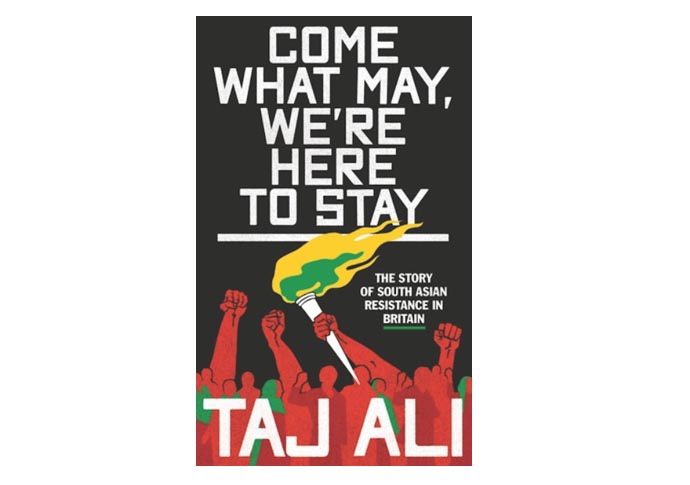
• Come What May, We’re Here To Stay: The story of South Asian resistance in Britain. By Taj Ali. Manchester University Press, £20
