John Crouch, former councillor who could see a better world for all
He was the driving force behind the purchase of the Lissenden Gardens estate by Camden Council in the 1970s
Tuesday, 17th December 2024 — By Dan Carrier
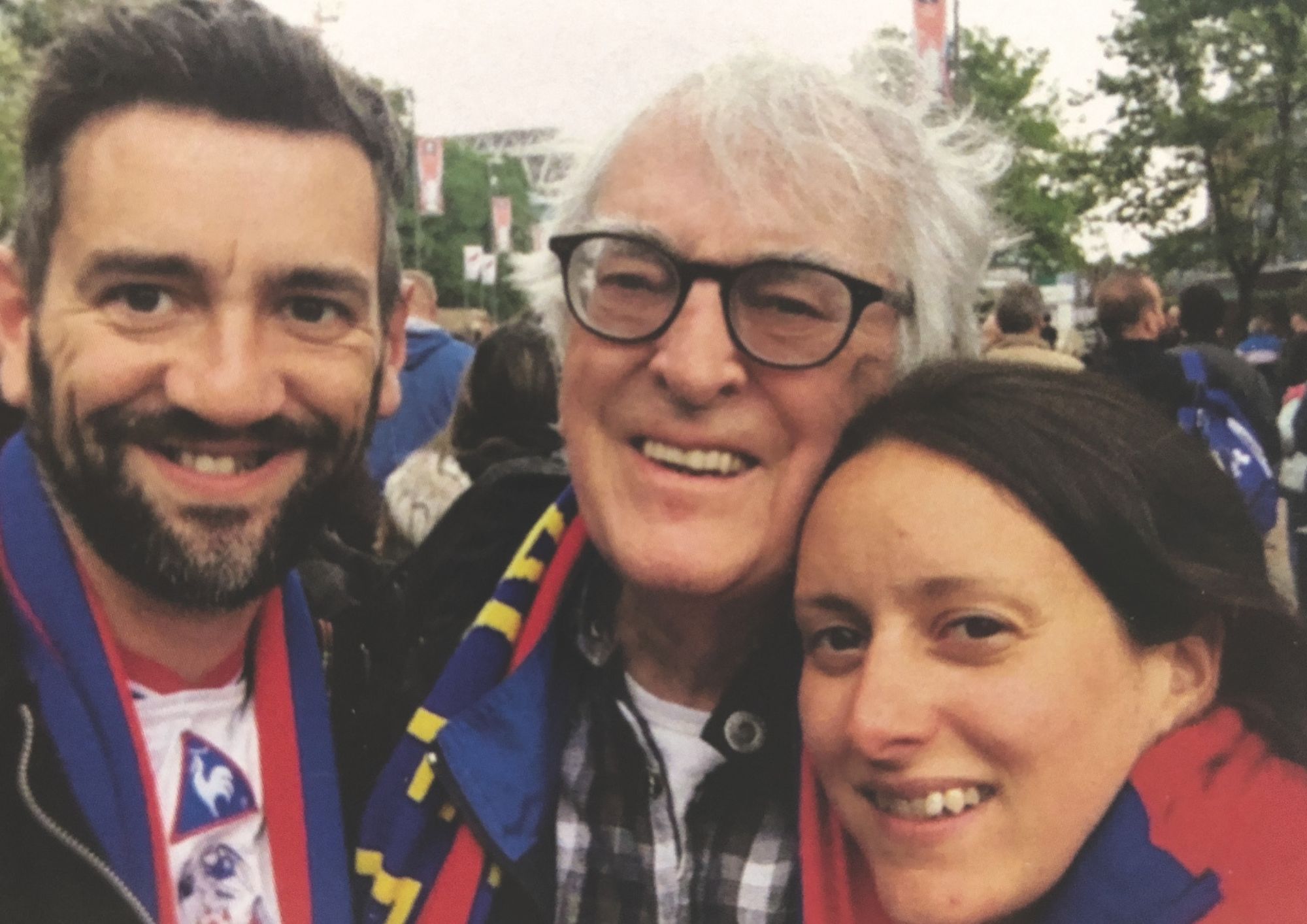
John Crouch with his son Tim and daughter Polly
MOURNERS’ traditional black was swapped for the royal blue and red of Crystal Palace last week at the funeral of Eagles fan and former Camden Labour councillor John Crouch.
John died two weeks ago aged 92 at his Lissenden Gardens home, and the packed pews at St Anne’s Church, Highgate West Hill, saw friends, neighbours and family gather to celebrate a man who made a telling difference to thousands of people’s lives – without them ever knowing.
John was the driving force behind the purchase of the Lissenden Gardens estate by Camden Council in the 1970s, and his work organising tenants and persuading the council to take the homes into public ownership created a model copied across London.
And the range of John’s interests – from his unwavering commitment to social justice, his love of football and the joy he got from singing – was laid bare at a service which included show tunes and a performance from the choir he helped found, The Fleet Singers.
John could be just as enthralled by sometimes indifferent players at Crystal Palace as he was watching Dame Margot Fonteyn at the Royal Ballet.
To mourners decked out in scarves and hats, his family explained John’s approach to the game.
“He would say it went straight in through the eye, by-passed the brain and hit you in the guts,” his son Tim said. John was born in August 1932 in Streatham, south London, to William and Rosalyn.
He had an older sister, Pam, whose early response was to hide his pram behind a bush in the garden. Being evacuated during the war, aged seven, was a distressing experience: sent to a family in Surrey, he ran back to find his parents.
As a National Serviceman, he was posted to Suez.
“There being not a single person less suited to military service, it is fair to say he was not a natural soldier,” said Tim.
Dragged from his bed at dawn, a sergeant was furious at how scruffy he was and told him he was confined to barracks. Nothing could have suited John better – he went back to bed and listened to the radio all day.
While in Suez, he faced a moral decision.
He found himself on a front line and an officer ordered him to open fire on an Egyptian farmer in the distance. He refused.
John set up an estate agent’s in the 1960s which became successful, but it was a sign of his indifference to materialism that when he decided to go to university, he gave his business partner his half and never asked for a penny.
A Labour councillor in Wandsworth – he defeated John Major – and his friend Alderman Donald Speakman explained his approach.
“He did not speak about ideology,” he said. “He looked at how policies can add value to lives.”
John and his wife Dominica moved to Lissenden Gardens and in 1970, a meeting at Gospel Oak School hall set in motion a process that would have reverberations across the country.
The estate was to be sold and John was articulate and convincing about the need for public ownership.
It would become the largest acquisition of housing Camden had ever made. Lissenden inspired movements at Coin Street, in Hoxton, Maida Vale, Brixton and Haringey.
John played a huge role in the neighbourhood, leading an annual carol service made up of atheists, communists and Jews but always sung with extra gusto.
As friends recalled, no one could say his singing voice was his greatest attribute but his enthusiasm knew no bounds. He had comic timing and was always willing to sacrifice his dignity for the greater good.
John served as a Camden Labour councillor in the 1970s and was on the housing committee as the council embarked on a programme of social housing.
Much of Highgate Newtown – including the community centre – stemmed from John’s time. When he saw an injustice, John felt compelled to act.
He went on “legalise cannabis” marches, despite never having tried it – he felt it was the morally right thing to do. His home was full of books, music, food, drink, dogs, cats, books, more books and people.
As his son Tim said, John will be remembered for always putting others first.
“An optimist – he believed in a better world,” said Tim. “He believed in the power we all have not to be beaten by bad things but to have the imagination and nous to find the opportunities and to lead the charge.”
