Neighbours ask: What would Engels have wanted his home to be used for?
Plan to turn author of Communist Manifesto into musuem
Friday, 27th February — By Tom Foot
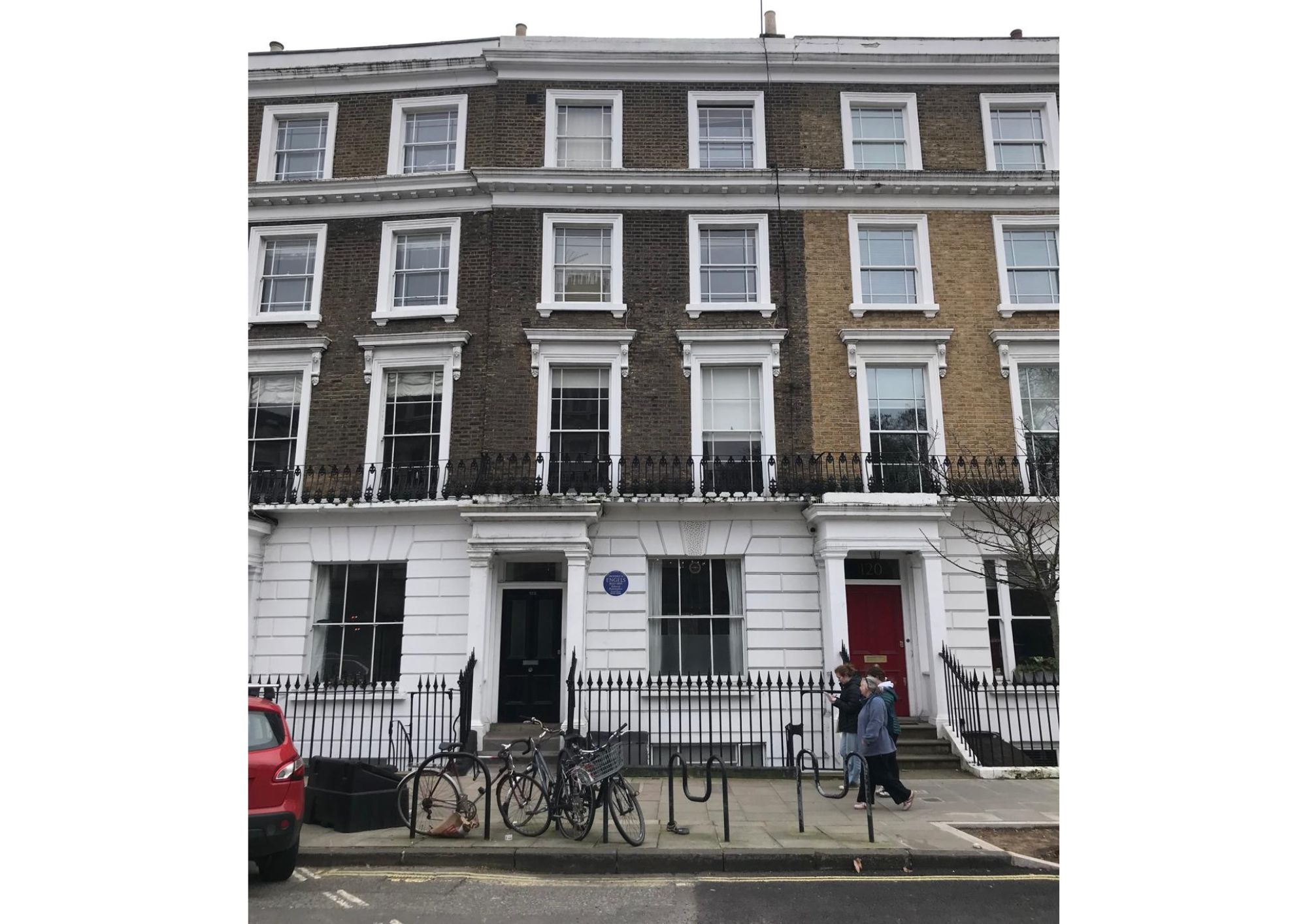
The house already has a blue plaque which marks it as Friedrich Engels’ former home
NEIGHBOURS of a house that could be turned into a meeting place and museum in one of the founding fathers of modern-day Communism say he would not have approved of the loss of housing.
122 Regent’s Park Road has been left to a trust by its former owner stipulating that it should be used “in such way or ways as they see fit as a commemoration of the life and works of Friedrich Engels who lived and worked there”. The trust has the freehold to the building, and leases to three of the four flats.
But a leaseholder on the top floor is also said to be against the project.
One neighbour of the building, who did not want to be named, said: “Both next-door neighbours at 124 and 120 Regent’s Park Road and one leaseholder in the building at 122 Regent’s Park Road itself are strongly opposed to the loss of housing dwellings that would occur if this public use of the building is permitted.
SEE ALSO WOMAN LEFT HOUSE IN PRIMROSE HILL TO BE ENGELS MUSEUM
“Regardless of the political agenda, which is not usually a correct use of charitable funds, we live in residential houses and have the right to quiet enjoyment of our homes. We do not wish to see large numbers of people using the house next door as there will undoubtedly be noise and disturbance. The walls of the houses in the terrace are not sound-proof.
“It is my firm belief that Engels himself would wish to provide housing in London now that housing is in such short supply. The plans for the building suggest that it would be empty much of the time, but with intermittent events taking place that would be noisy. There are no artefacts or items of furniture to view that have any connection to the life of Engels in the house.”
Residents have told the New Journal they are concerned about the possibility of large numbers of people queuing up to attend. events at Engels House.
The trust, which shared early plans with the community, says all events will be by appointment-only people will not be able to simply drop by to take a look.
And another neighbour said they believed the blue plaque on the building was more than enough to remember Engels by, suggesting that many homes in Primrose Hill had famous former residents.
Historian Sir Tristram Hunt, who wrote former is due to speak at an event about Engels at Primrose Hill Community Association from 7pm on March 16
A ‘natural communist’, suspicious of elite
A THREE-STOREY house in Regent’s Park, once home to communist Friedrich Engels, facing the park in Primrose Hill could reasonably fetch a couple of million quid, writes Tom Foot.
But instead of thinking of her home in financial worth, its owner wanted the property to be used to educate future generations and for political debate.
So who was Caroline Amy Read, who lived in Primrose Hill for almost 40 years?
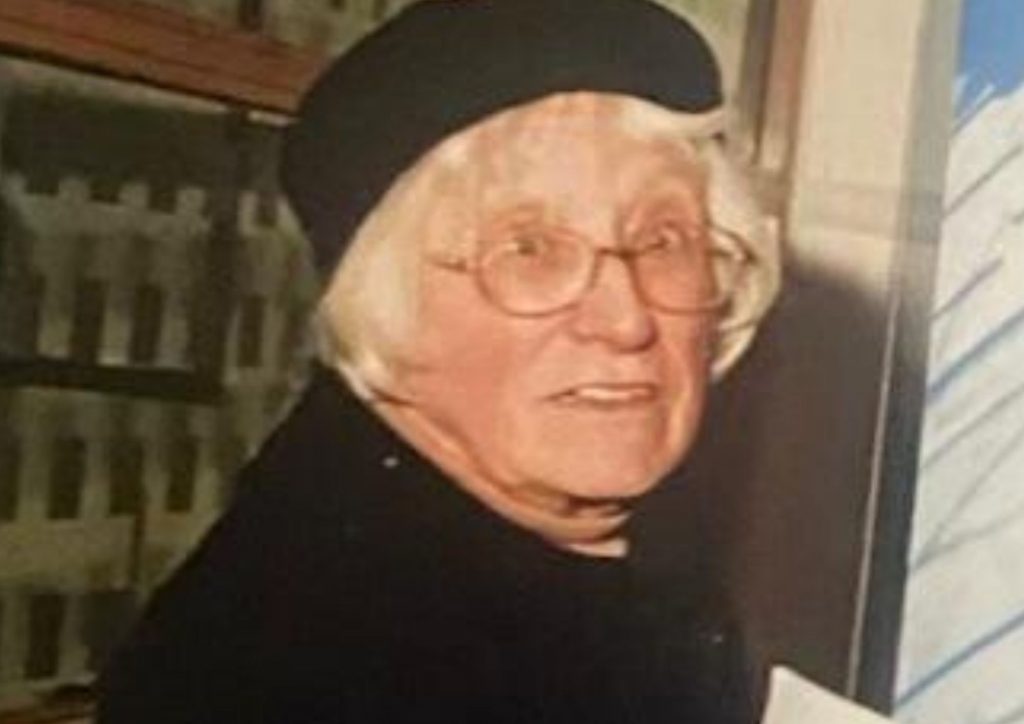
Caroline Amy Read
Her friend Meg Ryan said she had first met her when she was working as a librarian at the Langdon Secondary School in east London.
Ms Ryan, who was an art teacher at the time, said: “She had been a librarian from before the internet and computers and when they were incredibly important for impoverished families who could not afford access to books. That was what she loved about it. It was really important for her that children had access to books.”
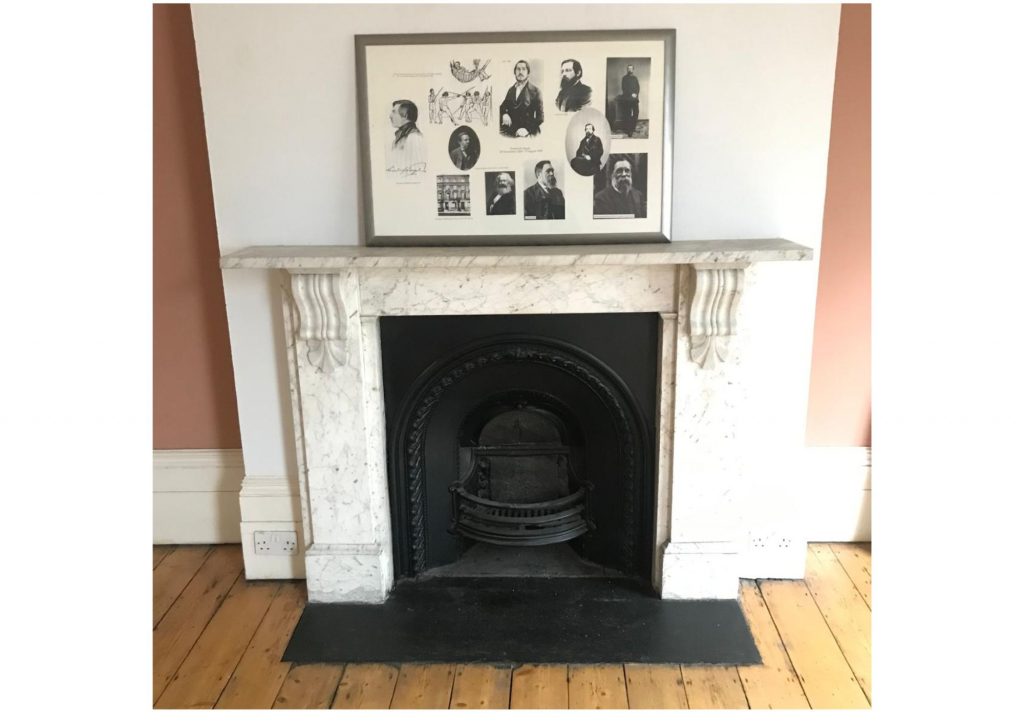
Inside the house in Regent’s Park Road
Ms Ryan said Ms Read’s home, which she stayed in from time to time, was once wall-to-wall with thousands of books and also dominated by two Persian cats, Pamino and Papageno named after the cheeky bird catcher in Mozart’s The Magic Flute.
“She was interested in politics, but she was not in any party. She loved reading Private Eye – so she had a healthy cynicism of politicians,” Ms Ryan said. “I would say she was a natural Communist. By that I mean she was giving, she was against elitism in all its forms.”
Ms Read left ownership of the house – the freehold and leases to three of the four flats – to a trust that her will stipulated should be run by Ms Ryan and other trustees.
She did not have her own children and had lived alone for most of her life. “
She just wasn’t interested in any men, or women, in that way whatsoever,” Ms Ryan said. “She was very proud to be living in Engels’ former home.”
Ms Read, who is believed to have grown up in the Chilterns and went to Oxford University, bought the property in 1982.
She played a role in the campaign to support Primrose Hill Library when it was threatened with closure during the austerity years. She authored a book, Primrose Hill Remembered, and was a “best customer” at Primrose Hill Books.
