LTN plans continue to divide residents and businesses
Cafe says traffic changes have left it on brink of closure
Monday, 9th November — By Amy Reid
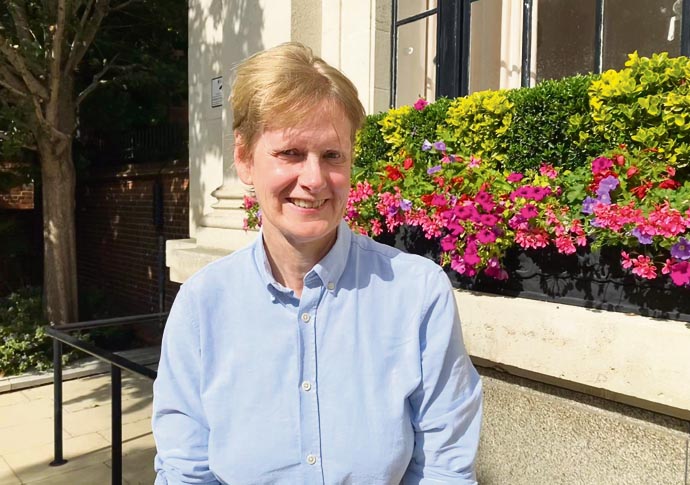
Labour councillor Rowena Champion
THE winds of discontent and class divide around low-traffic neighbourhood schemes continued to blow on Wednesday evening at a community meeting.
Councillors, council staff and residents of the Mildmay ward gathered to hear grievances about the area’s Liveable Neighbourhoods scheme, a set of traffic calming measures and greening efforts designed to encourage walking and cycling, while reducing car use and lowering pollution.
Labour’s environment chief Councillor Rowena Champion attended and answered countless questions from residents at the end of the meeting, and ward councillors Jackson Caines and Sophia Brown also addressed the group’s concerns.
According to one of the organisers, who asked to remain anonymous, the event was held to offer an independent forum for community members to share their experiences as many residents found the council’s initial consultation “biased” and felt their objections were “censored”.
A 2023 council survey on the scheme, which was first announced in 2020, only got around 506 responses in a ward of 14,000 residents.
One of the attendees said the whole process had eroded democracy, and another said that though the scheme is being assessed on an ongoing basis, the fact that bricks had been laid to extend pavements was proof conclusions were foregone and undoing changes was unlikely.
Another attendee raised the issue of the lack of consultation material in different languages, and disabled ward members said changes had limited their mobility. More pointed out that roads around the estate are deserted, leaving women feeling at risk as they walk home at night and in the early hours of the morning to work.
Traffic-calming schemes are both divisive and politically hazardous in Islington and nationwide. When an organiser asked attendees to sit at tables based on whether they held negative, mixed or positive views on the scheme, over 20 sat at the anti-LTN table, four sat at the pro-LTN table and around eight were on the fence.
When asked to feed back about the peaks and troughs of the scheme, the positive table praised the adaptability of councillors to residents’ concerns, while the negative table recounted a contradictory memory. The positive table said the improved air quality was much appreciated, while Mayville estate residents reported an increase in cars, and therefore, car emissions, diverting down Matthias Road.
Upcoming proposals to make its other bordering road, Boleyn Road, a one-way street came as a surprise to many – although information about this is available on the council’s website. The battle rages not just between motorists and cyclists, but also among those who live on roads where traffic is blocked and the roads onto which traffic is rerouted.
At Wednesday’s meeting, the sentiment gap between homeowners and, as one Mayville resident put it, the “great unwashed” was laid bare.
Pollution inequality is a common area of argument in the LTN world, although most evidence indicates traffic-calming schemes do not adversely impact certain socioeconomic groups more than others.
“We have eyes. You can see and feel the change,” Islington resident and prominent anti-LTN campaigner Rebekah Kelly told the Tribune. “The council doesn’t acknowledge people’s lived experience of issues and say it’s anecdotal.”
The Mildmay scheme is one of several Islington started during and following the pandemic. The Tribune reported that during the last full council meeting, Cllr Champion announced the proposed Barnsbury and Laycock traffic filtering scheme was being abandoned after huge pushback from locals.
Ms Kelly, who attended the meeting, said that “many parts” of the Liveable Neighbourhood schemes are “really positive”, adding: “The greening is very welcome, changing the school entrance from Matthias Road to the back of the school is really positive. People focus only on the road closures and not so much on the positive elements, because what affects their day-to-day are the road closures.”
But Ms Kelly added: “It’s got to be fairer. We have to do something to reduce traffic and pollution, but not all experiments work. There’s no shame in saying, ‘okay, we tried that, that didn’t work’.”
“It’s not about driving – I don’t have a driving licence. It is absolutely a class issue. During COVID, it wasn’t people who work from home being impacted, it was working-class people using the roads.”
Cllr Champion said: “We remain committed to reducing carbon emissions by as much as possible, as quickly as possible and in as fair a way as possible. Like any council with ambitious climate targets, our efforts are impacted by the national picture.
“As our new corporate plan sets out Liveable Neighbourhoods remain a key part of our approach and something that we will continue. We have already delivered a number of fantastic schemes including Mildmay, Highbury and The Cally as well as recent improvements in St John Street and Clerkenwell Green.”
‘We’ll be forced to close down’
THE owner of an independent cafe on the Mildmay-Dalston border says her business’s takings have plummeted 40 per cent since Islington council launched a low-traffic neighbourhood scheme in the area in November 2024, writes Amy Reid.
Selma Cicekci, who took over the Kingfisher Cafe in Kingsland High Street from her parents, says she will be forced to shut the beloved cafe after 23 years if both Islington and Hackney’s traffic-calming schemes come into full effect.
“At the moment we’re just making ends meet. But if all these road closures come in, we’ll be locking up shop,” she said.
“It would mean 23 years basically down the drain.”
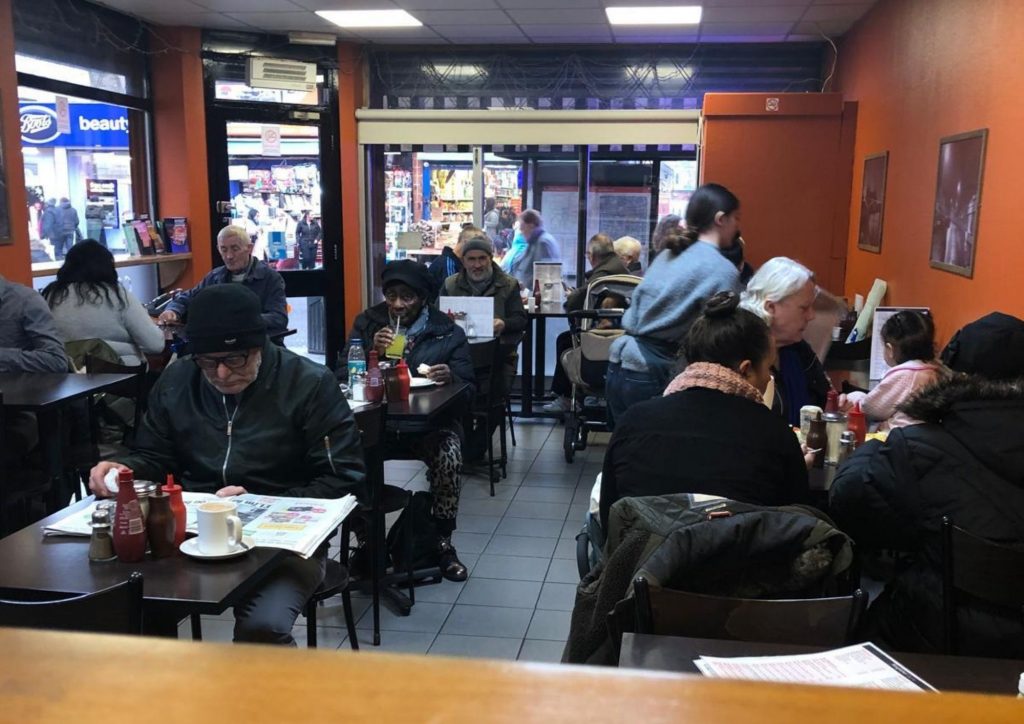
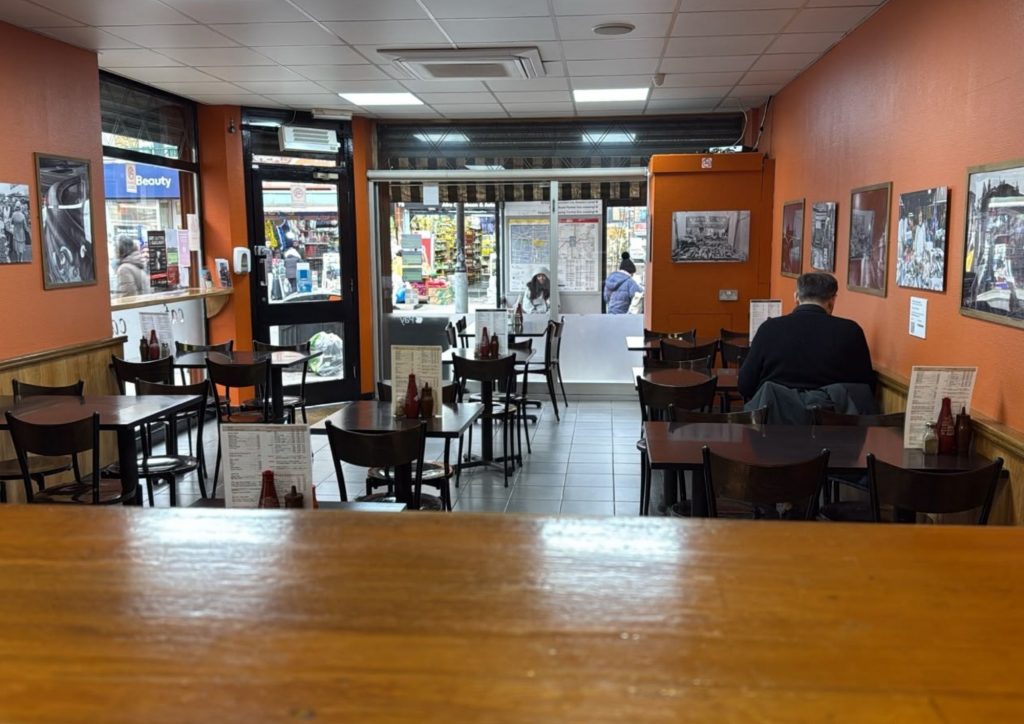
The cafe’s ‘before and after’ pictures
Islington put in place a variety of measures – including traffic filters, one-way streets and road closures – around the Mildmay ward to reduce car usage as part of an assessment period prior to the permanent implementation of the Liveable Neighbourhoods scheme. Meanwhile, Hackney Council is developing a similar scheme for neighbouring Dalston.
“It’s impacting all local businesses and market traders. It won’t impact big businesses, but independent businesses will be done. What will I do, sign on?”
She told the Tribune that although her workplace is a 10-minute walk from her home in Stoke Newington, she starts work at 4.30am and feels unsafe walking alone at that time.
What used to be a five-minute drive is now up to 45 minutes on her way home from work, which is around school pickup time. She added that the cafe’s bread and milk deliveries now arrive as late as 8.30am instead of their usual 4.30-5am due to the new traffic restrictions.
Several of her regulars have also stopped visiting since the start of the Mildmay scheme.
“If you come into our caff at 9 or 9.30, everyone says hello, everyone socialises, even if they don’t know each other outside of the caff,” she said. “I’ve had regulars coming for 10, 15 years and now obviously they have to go elsewhere.”
One frequent patron who lives on Essex Road told Ms Cicekci he would no longer be coming to the self-described “old English caff” because he spends “more time in traffic than he does eating”.
Ms Cicekci said: “I’m all for closing roads during school pickup to reduce pollution. You can grin and bear the odd hour here and there.
“[The councils] have to find some leeway and please everyone,” Ms Cicekci added. “If they were to actually listen and implement something to suit everyone’s needs, you’d think they were listening properly with the community. But they aren’t. It’s their way and that’s it. And then they expect us to be happy with our votes.”
The cafe owner explained that LTNs would dictate her decision at the next local elections.
“If someone knocked on my door and said they’d open the roads, you’d get my vote,” she said. “No matter the party.”
