Kristian von Hornsleth is not exploiting the homeless
Thursday, 16th November 2017
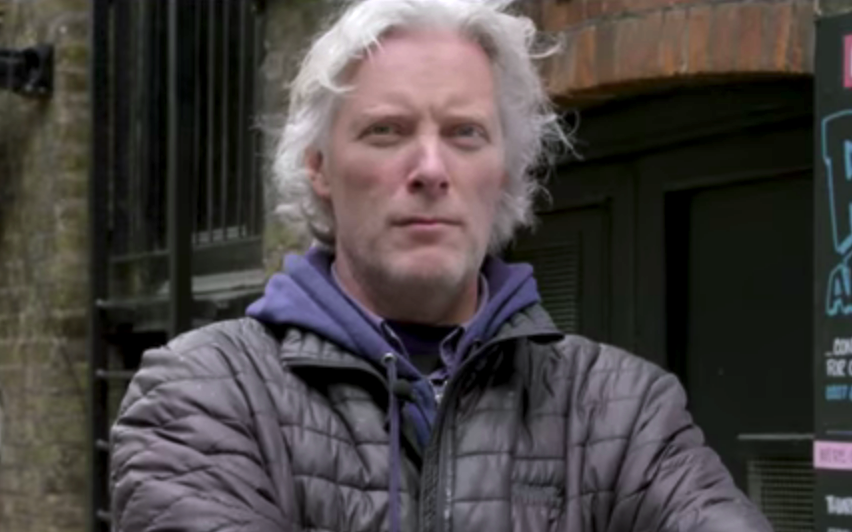
Kristian von Hornsleth
• MUCH praise for Kristian von Hornsleth for involving homeless men and women in his participatory artwork (Police probe artist who is ‘selling’ Camden’s homeless online, November 9).
He is correct in saying that homelessness is a “business”. Just as selling The Big Issue, and making a charitable donation is a business transaction.
What Hornsleth offers is a business transaction with parity with volunteers who directly benefit. This collaboration breaks through the bureaucracy of a charity with a controlled message of “depression – addiction – death – send us cash to ease your guilt”.
It is misleading to assume the homeless lack agency. They get the satire of the trackers. They get the joke.
These tracking devices are no more exploitative than signing up to Facebook. We are all exposed to various tracking devices in supermarket loyalty schemes, CCTV, internet searches and smart phones. We are all tracking each other.
For charities have a self-interest to perpetuate the homeless with a terminal lack of agency. Hornsleth reveals the homeless as art collaborators instead of objects of pity.
Hornsleth is not offering to solve homelessness but to temporarily transcend the experience. For the art buyer to witness the immense and arbitrary journeys through London is bound to be a fascinating spectacle.
Looking for a safe place to sleep, access to water and other amenities is a daily investigation. The art buyer gets to see the rationale of his/her understanding of the city that the majority will never experience.
These psycho-geographic drifts could disappear into graveyards, across railways sidings, behind supermarkets for bins. This is an art performance. This is the patronage of live performance art.
Homelessness can be a result of an existential crisis, a relationship breakdown, a necessary venue to find the rock bottom in an addiction problem.
It does not define that person. They are on a nonlinear journey to best understand how to live in a city. They enjoy a liberty that many have worked hard to avoid.
Being under constant surveillance for something other than a propensity to commit a crime can be complimentary.
I remember being run out of Hyde Park one night and found a bush to sleep behind in South Kensington. When I woke up, a group of art students were sketching a portrait of me from behind a window in the Royal College of Art.
I did not get paid for this, but it was reprieve from the daily labour of being homeless. It made me feel human, that I was participating in a class lesson, that some people recognised me as something worth observing.
It did not lengthen or shorten my journey on the streets – it was a welcome reprieve from the duration.
Hornsleth is making consensual homeless individuals (art participants) equal economic partners in a business endeavour. No harm, a bit of self-esteem from selling ones geographic experiences.
No doubt, the virtue signallers have a vested interest in protecting the vulnerability status of the homelessness and would never be as self-defeating as making them partners in an enterprise.
Hornsleth has immortalised the mythic urban journeys of the homelessness, and is a damn sight better than Camden giving them one way tickets to Palookaville.
MARK NEWELL
Busby Place, NW5
