‘It may sound strange to write a biography of a few thousands litres of silty, brown water’
Nell Frizzell jumped at the chance to bring together two passions – writing and swimming – in a book celebrating a centenary of the Heath’s Ladies’ Pond. Dan Carrier dives in...
Friday, 22nd May — By Dan Carrier
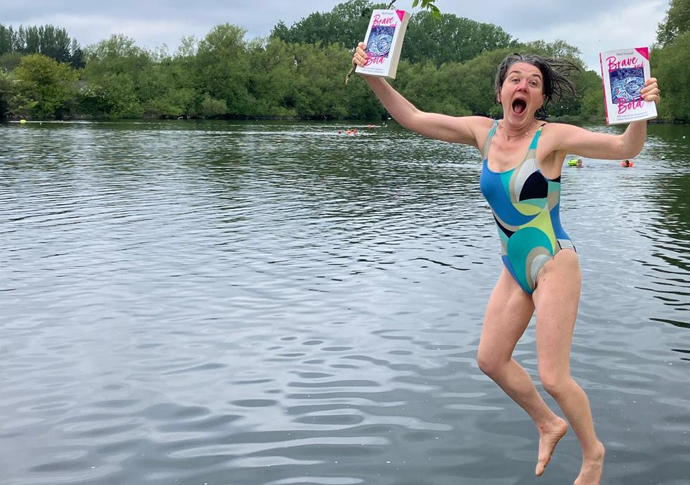
Nell Frizzell takes to the water with her book
IT is a beautiful and deeply personal experience – that visceral thrill of lowering yourself into cool, fresh water, pushing away from the jetty while bemused ducks watch your efforts.
For the past 100 years, the Ladies Pond on Hampstead Heath has provided a haven for women to take the waters of a River Fleet tributary, filtered through tons of bagshot sand – special moments in the lives of so many, through so many decades.
Now former Heath lifeguard and writer Nell Frizzell has been tasked with the job of writing the story of the pond to mark its centenary.
“In some ways it may sound strange to write a biography of a few thousands litres of silty, brown water – but it is significant in people’s lives,” she says.
“For the past 100 years it has been a place for people of all backgrounds, interests. I was a life guard for two years and you’d meet people from across London and further afield.
“The ponds are not just the playthings of a simple demographic of those who live near the Heath. It is somewhere where people have found a changed relationship with their bodies and understanding of nature in the city.”
She was approached by the Kenwood Ladies Pond Association to pen the book.
“You just do not say no to them – they are second only to the Mafia in that way,” she jokes.
“I have been going there for over 20 years and to bring these two passions – writing and swimming – together in one place, to be able to get into these lives and ask questions I have been wanting to ask…”
Trying to get to the nub of why people become quite so hooked about stripping off and leaping in is a frequent question non-pond aficionados ask.
“You cannot swing a cat there without it hitting someone interesting,” she says.
“I would go up to women in their knickers and people had amazing stories to share. People coming after long shifts, people who met their girlfriends there, stories from the past 100 years. I know there is a similar sense in the Men’s Pond – communists and hospital porters and train drivers hanging out with high court judges and radio broadcasters.
“Being naked creates a level of intimacy you don’t find elsewhere. Shoulder to shoulder with women you could find intimidating – but if you are there in your swimming costume, it evens things out.”
While the stories of lives and loves leap off the page like an eager swimmer on a hot summer’s day, Nell also considers the politics of public spaces and how they are managed.
“It is interesting, the relationship with the City of London, who run it – the Ladies Pond has some of the best advocates in the country. People who are determined, knowledgeable and hardworking, fighting for the rights of swimmers.
“We are losing a sort of understanding about public places and spaces, where you can have a good time and the place belongs to you.”
Nell’s book intertwines a social history of women since 1926 with how the ponds have changed. She trawled through archives, including a delve into the minutes of London County Council meetings: “There were different committees that help you understand local governance. There are beautiful, leather-bound, minutes that create a tangible reality, with information like the year they discussed installing showers, or allowed a paraffin stove so people could fry up sausages.”
And with any public space, politics is always lurking near the surface.
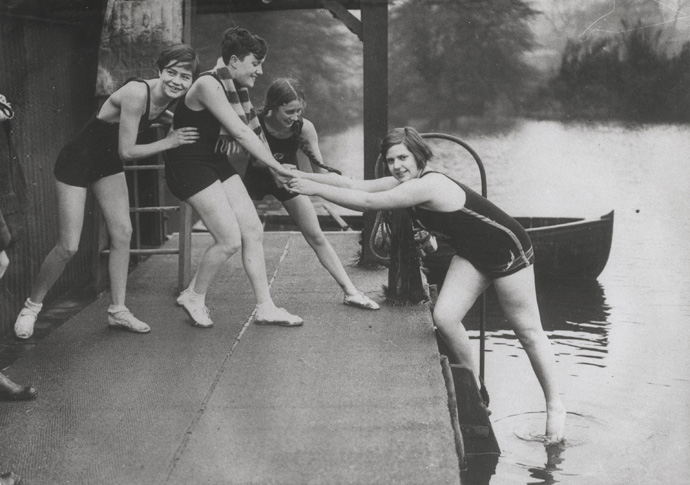
Swimmers at Ladeis Pond 1928
Swimmers at the Ladies’ Pond in 1928 [Bishopsgate Institute]
“Some people love the ponds because they feel they are open but others see them as political spaces and that politics does cross over the fence,” she adds.
“There were landmarks – women getting the Family Allowance, and then issues like the Equalities Act and its impact on people who use it. It can be seen as a very political space. For many, the pond has been a place not just of al fresco sunbathing and pond weed beards but of political awakening, even revelation.
“When Simone De Beauvoir published The Second Sex in English in 1953, it undoubtedly made its way into the swimming bags and coat pockets of many north London women; arming them with an insight into female oppression, that, coming hot on the heels of the Second World War, must have been genuinely compelling, even if some of these damp and duck-chasing readers didn’t automatically agree.”
And how the pond has changed is also marked, from the days where you could turn up and swim for free, to the imposition of charges and booking systems today.
“For the mid-summer sessions there does have to be a structure and rules about how long you can stay in, and to contribute,” reflects Nell.
“But in the spring and autumn it still feels like the ponds have always felt – a simple coterie of old-timers and new swimmers.”
There are new threats to the sanctuary to consider, too.
“Climate change is the biggest threat and I worry about the quality of the water and impact of longer, wetter summers and milder winters. But there is hope. Groups of intelligent people come together to advocate and find ways to change behaviour.
“The Ladies’ Pond is a great example of that. If only we could get a few pond regulars in power.”
Nell brings out the stories of the people whose names have graced the New Journal for years – people who have shown they understand the special nature of the pond, and have done what they can to protect it.
Jane Shallice, who is introduced with the quote “I’m not a feminist, I am a revolutionary socialist,” Anne Burley, Jessica J Lee, Mary Cane, Nicky Mayhew, Judy Hallgarten, Sian Berry – contacts this correspondent owes a great debt to for their knowledge, kindness and help.
But as well as the people, the creatures who don’t have to worry about dusk closing times make the place special.
“Swallows will routinely fly 6,000 miles from South Africa, often arriving at the Ladies’ Pond just in time for the International Women’s Day celebrations in March,” adds Nell.
“As someone who regularly says she can’t be bothered to catch the bus as it will take too long, this sort of journey is unfathomable.”
She discusses how the water remains fresh. The ponds were created as reservoirs for drinking water, fed by the springs up at Kenwood that eventually becomes the Fleet.
“When non-swimmers look at the ponds, they often say ugh, it is dirty, and how can you swim in that? Actually, the water is beautifully clean and you can feel it on your skin,” she says.
But there are hidden problems to be dealt with. Nitrates and phosphates are common pollutants across all British freshwater.
“The Heath hasn’t been grazed since the 1950s. Of course the absence of sheep and cows does not insulate the Ladies’ Pond from a certain amount of inflowing detritus, including the phenomenal amount of goose and dog poo that lands on the surrounding grass throughout the year.
“Today, just 14 per cent of assessed lakes in England are deemed to be at good ecological status; just 14 per cent of rivers, 19 per cent of estuaries and 45 per cent of coastal waters. We are, as a nation, quite literally drowning in filth.”
And the gentle asides make the book the perfect accompaniment for a sunbathe on the banks.
There was the day she had to tell Emma Thompson she had to wear a costume and she could borrow one of the “limp, sometimes stretched, articles… a permanent feature of the ponds for years; lying damp and dropping from hooks in the outdoor changing section and there to save the blushes of any visitor who had come unprepared”.
And for Nell, getting in holds the same magic as it did when she swam for the first time.
“We must cherish and protect it for all the brave and bold swimmers of the future,” she adds.
“Dive in – it’s all bonkers and the water’s lovely.”
• Brave and Bold: 100 Years of the Hampstead Ladies’ Pond. By Nell Frizzell, HarperCollins £16.99
