‘I know the importance of music, art and culture stories – and Koko’s is almost mythical’
Koko in Mornington Crescent celebrates its 125th birthday this week. From The Goons to Madonna, Dan Carrier looks at its illustrious past and exciting future
Friday, 8th May — By Dan Carrier
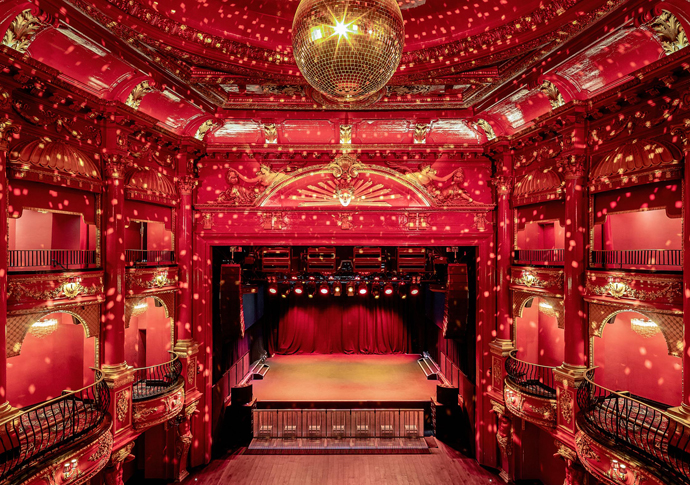
The interior of Koko Theatre [Taran Wilkhu]
IT is a hallowed space. A stage that has seen the cream of our nation’s talent entertain millions of people.
Koko, the Mornington Crescent theatre, celebrates its 125th birthday next week – and the man behind the venue’s current success, Olly Bengough, believes the concert hall has a special role to play beyond providing a great night out.
“In a world where there is so much division, music brings people together,” he reflects. “Music makes people see sense, it is about shared passions and that is what Koko does week in, week out. A Monday night in London with 1,500 people singing the same song together, people from all backgrounds, sharing in what the artist has created – those moments are special. That is something that today is incredibly powerful and incredibly important.”
Koko’s main auditorium is complemented by two smaller venues in house. It gives performers the opportunity for smaller, more intimate gigs and gives new talent a grassroots platform: Olivia Dean, the Brits and Grammy winner, played their House of Koko venue on her way up – and for Olly, offering opportunity is a key part of what Koko does.
“Koko is the only venue in the country with three places for performers,” he said.
“We have the theatre that holds 1,500, the jazz club for 60, and the café with 150 people. That has given us the ability to programme all manner of acts and genres – it brings in amazing talent, and it can be talent that is not yet known and we can help them on that journey. The building helps artists document and curate their music.”
Koko opened as the Camden Theatre in 1901, and Olly’s relationship with the grand old venue began in 2002.
“It was the Camden Palace,” he recalls. “It was the end of the rave era and frankly the place was on its last legs. Aesthetically, it was in a state: white walls had become yellow because of all the cigarette smoke. You could see through gaps in the floorboards. The beautiful plaster cornicing was falling apart. The sound was terrible. There was no live music and no planning for performances or content.”
Olly saw potential where others saw dereliction.
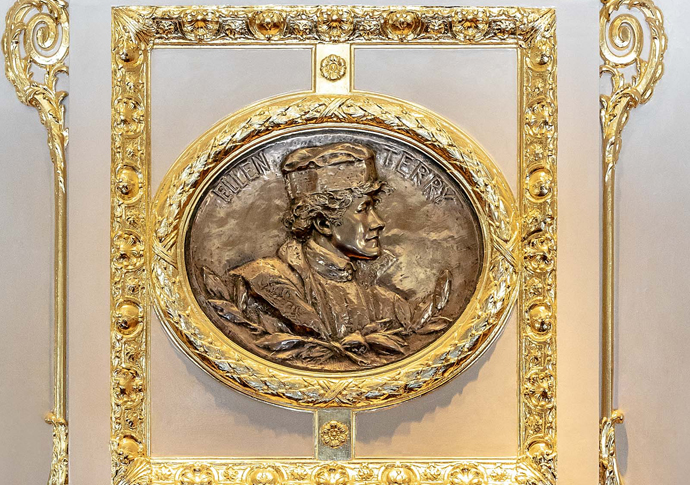
Ellen Terry depicted in a gold plaque in Koko Theatre’s reception [Taran Wilkhu]
“Edginess is cool,” he says. “You want personality and you want authenticity but when something is falling apart, it is just not fun, it is grimy, and creativity goes out of the building and people are not attracted to the place. Authenticity is very different from the sound not working properly – or the space even being safe.”
Olly saw a venue with history pouring off its walls but in urgent need of a new direction.
“I know the importance of music, art, culture stories – and Koko’s is almost mythical,” he says.
Victorian actor and household name Ellen Terry made the theatre a home from home, the first of many big names who found the venue key to their career.
“She was an icon, the most important actress of a generation, she was painted by John Singer Sargent – it is the first painting you see when you enter the Tate – and she performed Macbeth here. She started the story.
“Then there was Charlie Chaplin, who performed in the 1920s and the BBC took it on from 1945 to 1975.”
The BBC years saw the likes of Hancock’s Half Hour, The Goon Show and Monty Python record shows at the venue.
“The first 60 years were focused on theatre, the next 60 – from the Rolling Stones performing in 1963 – it shifted to live music,” says Olly.
“In the 1970s, ACDC, The Clash, Iggy Pop and the Sex Pistols came. Bob Geldof and the Boomtown Rats played.
“Bob came to make a documentary on Live Aid recently and he recalled how a fan knocked him spark out by mistake.
“Into the 1980s it played host to George Michael, Spandau Ballet, the Pet Shop Boys and Duran Duran.”
By the 1980s, Camden Town’s place as an epicentre not only for music but fashion too was reflected in the venue’s success.
“Madonna was in New York, and looking at London’s fashion in 1982. It was on this stage that she did her first London show. The area was just popping off with that particularly English sense of culture we do so well.”
Being in Camden helped develop a buzz, he adds.
“It is very different to a theatre in the West End. We do our own thing – it is rebel theatre,” he says.
“People ask: why does it keep on happening here? Why have we created something that inspires artists around the world? People want to tap into that energy – there is something definitely in the walls of this building.”
This background gave Olly the motivation to take the building on.
“I love my history and I love stories,” he adds.
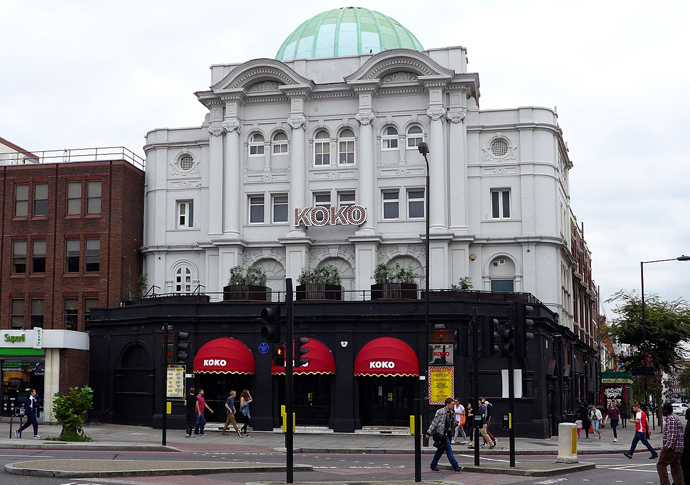
The exterior of Koko in Mornington Crescent [Oxfordian Kissuth]
“I came here in 2002 and it really appealed to me. I was 27 years old, and I loved it, even though it was completely falling apart. I love dreaming what can become of a space with some imagination. I could see the beauty, I could sense the history. And when you are young, sometimes you take on things that you might otherwise not.
“It wasn’t easy. We got the keys in 2004 and for the first six months it was a struggle. We lost a lot of money and there was a point where we wondered if we could continue.
“Then three things came into our orbit.
“In June 2005, Coldplay launched the XY album here. Madonna was here that night and we got a call the following day. Madonna said wanted to return to launch her album, Confessions on the Dance Floor, and AOL wanted to stream the concert live.
“The third element was it then went on to attract artists who were originators – people thinking about the world in a different way. It attracted the indie movement with Club NME on a Friday. The new British indie music scene was happening in Camden and Koko was a big part of that.”
The buzz around Camden in the post-Brit Pop era helped.
“It was like being back in the 1980s – this was a cultural explosion,” says Olly.
“Amy Winehouse came with her 50s beehive – there was a real attitude that mixed fashion and music – and the press picked up on all this.
“Amy performed her album, Back to Black, 20 years ago this year and was a seminal moment. Amy saw it as an iconic venue in her neighbourhood, and from here she went on to win Grammys. It has happened again with Olivia Dean.”
And Olly believes the impact of Koko reverberates beyond offering a great experience for performers and punters.
“Human creativity brings people together and promotes wellness,” he adds.
“The UK economy benefits – the creative industries generate 13 per cent of our national income, and it could be 20 per cent. That is huge – in some countries it is about 1 per cent.
“Instead of most culture and creativity being looked at as something for mavericks and dreamers, why shouldn’t the creative sector be recognised? It is a soft power that goes around the world. It is what we as a nation are brilliant at.”
