‘I feel it is important to track how Carnival has evolved down the years’
Dan Carrier talks to photographer Ian Watts, whose images of Notting Hill Carnival are on show at Outernet
Friday, 21st August — By Dan Carrier
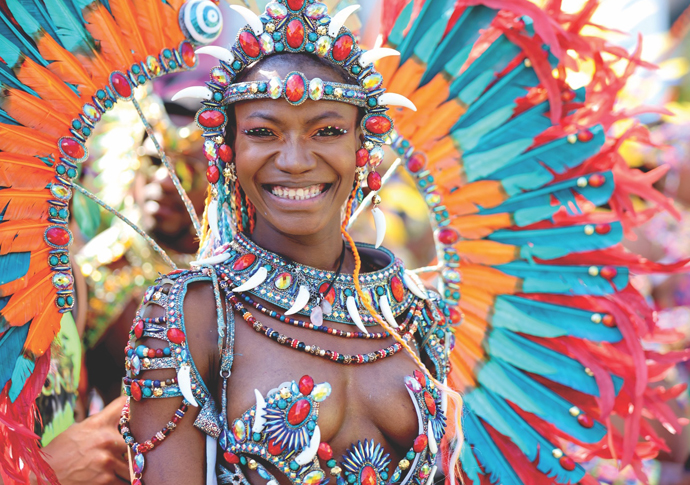
Ian’s photo of last year’s Carnival [Ian Watts]
IT was half a century ago when a teenage Ian Watts picked up his East German-made camera and headed out from a Harlesden youth hostel to hit the streets of Notting Hill.
It was the August bank holiday of 1976 and the young photographer had a plan: he’d take some pictures of Carnival and maybe Africa Magazine, a publication he worked for as a clerk, would be interested in publishing one or two.
That was the start of a journey that has lasted five decades – and next week, images from an archive amassed over 49 of 50 Carnivals are due to be shown at Outernet, the huge digital exhibition space beneath Centre Point in Tottenham Court Road.
“It was May, 1976 and I bought my first camera – a Praktica, made in East Germany – and it cost me £36,” he says. “The camera was pretty basic and you had to work carefully and well to get good images from it.
“I was working for the magazine and I wanted to be a writer – I loved people like James Baldwin. But there were a lot of journalists and it was competitive. I was working in the circulation department. People would come in and they’d ask me to take a photograph.
“I was really interested in capturing what was going on around me through my photography, what was happening in my world.
“I wanted to get involved. I was not sure I could get a break as a writer but there were no other photographers at the magazine. I focused on learning the skills. And the magazine saw my progress.”
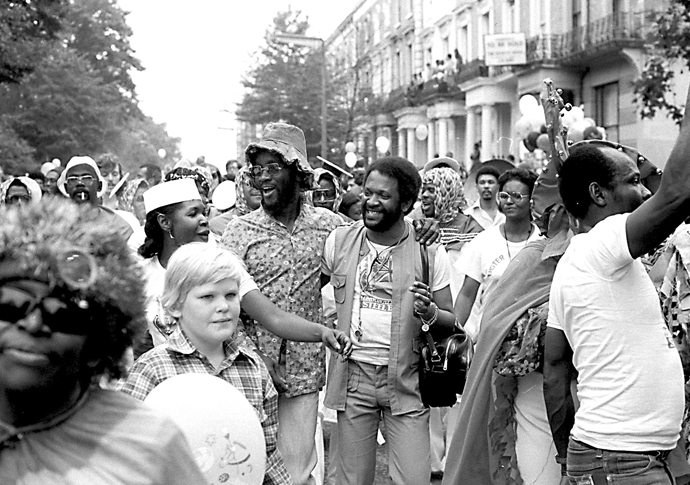
Carnival in 1976 [Ian Watts]
Ian’s career behind the lens – he is also an award-winning film camera man and the only Carnival he missed was in 2012, when he was filming in Siberia – has seen him not only chart Europe’s biggest street party, but given him access to some of the giants of contemporary culture: he has shot Bob Marley, James Baldwin, Miles Davis, Fela Kuti, Gil Scott Heron and Grace Jones, among others. He once turned up to a shoot in a basement in Kensal Rise to meet Marvin Gaye and took a photo of the singer which his subject told him perfectly captured his state of mind. Some praise for a young photographer.
He began in black and white and then progressed to using colour film. “You look at things differently when you shoot with black and white compared to colour,” he reflects. “It was about the light and how it falls and creates shadows and contrasts.”
The streets of Notting Hill gave him plenty of subjects.
“I was familiar with Ladbroke Grove. I used to go to parties at a place called the Metro Club,” he remembers.
The Metro had nights featuring the reggae legend Dennis Bovell and his Sufferer Sound System.
“I was really attracted by the reggae and dub played,” he says. “I grew to love it. And when I went to Carnival at first, I went to initially capture the static sound systems playing reggae.”
After a lifetime of capturing Carnival, it still holds the same attraction for Ian as it did that first year he went.
“It’s all about experiencing music, experiencing culture, reconnecting with friends,” he reflects.
“There is so much I get from it – the buzz, the cultural experience.
“Initially, I went for the music but now I go with a sense of it being important to document what is happening. I didn’t start out to do that but I feel it is important to track how Carnival has evolved down the years.”
His archive also acts as an important balance against the often negative and inaccurate coverage Carnival has attracted. As we live in divided times, it is vital that the truth about London’s party is protected and promoted.
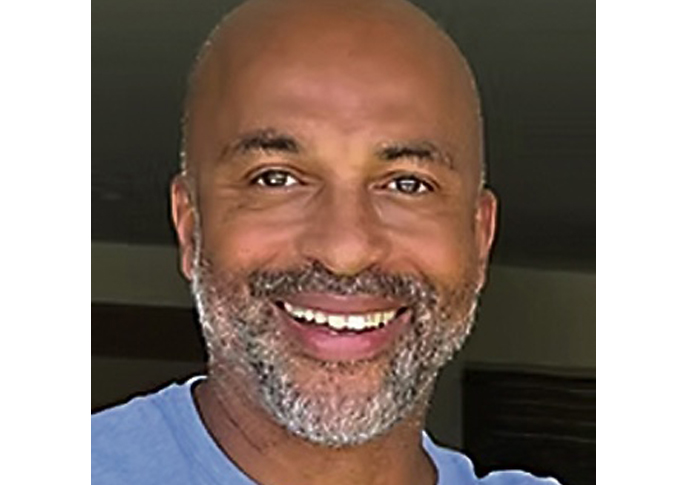
Ian Watts
“There is negative reporting and so it is important to counter that and frame it in an honest, truthful and positive way,” Ian says. “It feels as important as ever to show your support, important to show solidarity. Every year massive cultural events across the UK are celebrated – they bring people together and are part of our shared experience. But this one event, which brings around £400m to the London economy each year, is so often not spoken about in a truthful way.”
Every year, coverage tinged with an ugly dose of racism is promoted by the right-wing media with divisive agendas. All too often there is a focus on crime, which is low when compared to other similar sized events – yet portrayed differently as it becomes yet another weapon in a culture war.
“People come to enjoy Carnival not just from across London but from all over the world. It needs to be celebrated,” adds Ian.
Having watched Carnival evolve, he has seen it welcome all Londoners and has watched it help birth new genres of music.
“It is a reflection of the city we live in,” he says.
“And a key reason I love going is the music I will discover. You get to hear music you wouldn’t hear every day. I remember discovering Jungle and Grime through a carnival sound system. The next big thing often chrysalises at Carnival.
“For example, I first heard Fula Kuti and Afro Beat on a Nigerian sound system there.”
For the exhibition, Ian has had to trawl through his archives and go through an arduous process of selecting images.
“It was exciting – looking at early photographs from the 1970s, shot on basic cameras, and seeing how they have stood the test of time,” he says.
“When you shoot on film, you have 36 exposures and that’s it – and maybe you have five rolls of film with you. It means you really think about each one.”
And now, as his new exhibition launches a week before Londoners head to W10 and W11 once again, he can feel Carnival butterflies returning.
“I never get complacent about going,” he says.
“I get apprehensive, excited and I get prepared. That helps me ensure I am ready to capture it again with my camera.”
• See: www.ianwatts.tv and @ianwattstv
• Carnival 60: Ian Watts at Outernet, Charing Cross Road, is free and runs August 27-September 2
