Hugh Wood, composer's life in music
'He embraced life in all its dimensions – physical, mental and intellectual'
Friday, 20th August 2021 — By Dan Carrier
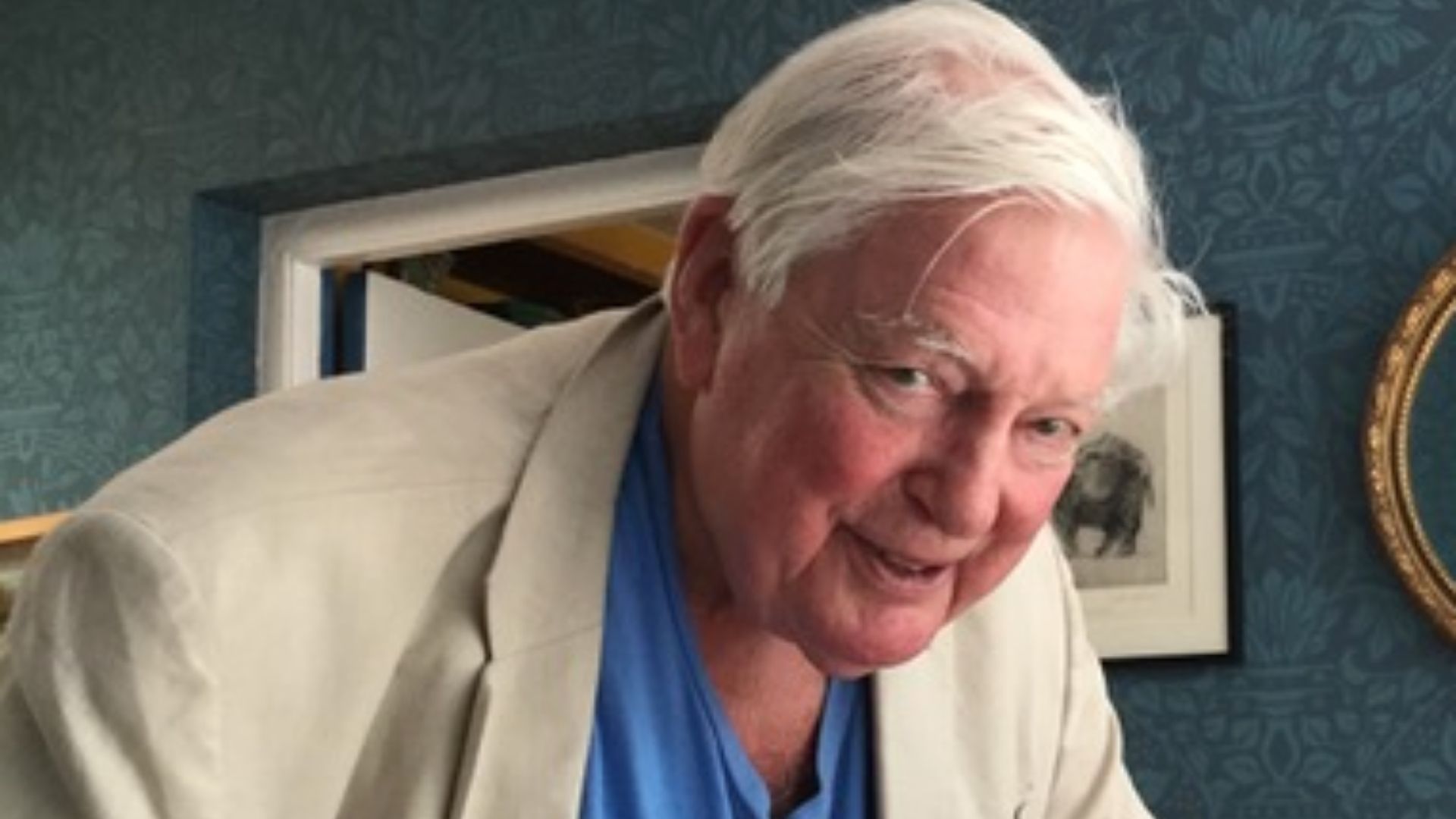
COMPOSER Hugh Wood, who has died aged 89, has left a celebrated body of work recognised as unique in the world of classical music.
Noted for originality, Hugh’s compositions avoided trends and created a sound that would become his trademark.
The Dartmouth Park-based music writer and lecturer was born in Parbold, Lancashire, in 1932. His mother, Minnie, was a pianist and gave Hugh his first lessons.
His father, James, a solicitor, was also keen musician, while his brother John was accomplished on the piano, trombone and French horn.
As a teenager, Hugh was immersed in classical music, regularly hearing the Liverpool Philharmonic.
An avowed Bach fan, he would later say the composer was his earliest enthusiasm and shaped his work. Hugh was called up to do his National Service in 1951 and was posted to Egypt with the Army Catering Corp.
On returning, he studied history at Oxford – but he spent a lot of time at concerts and composing for theatre.
After graduating in 1954, Hugh moved to London to study composing and with the help of tutor William Lloyd Webber would attend the Royal College of Music.
As well as composition, Hugh was highly regarded as a teacher, and held posts at universities in Glasgow, Leeds, Liverpool and Cambridge. He retired from teaching in 1999.
A formative early experience for Hugh had been hitch-hiking from Lancashire to Devon in the summer of 1948 to join the Dartington Summer School.
He would attend each year, and it was there he got to know his future wife, Susan.
They were married in 1960 and couple set up home in Inglewood Mansions, West End Lane, West Hampstead.
“We went to see a posh house, and then a run-down flat,” recalls Susan. “It was a sense of relief when we realised we both much preferred the run-down place.”
With eight rooms and rent at £5 a week, it was affordable, and large enough for Susan, a pianist, to practise without hearing Hugh compose.
They had three children Jenny, Becky and Chris. In 1958, a collection of variations for the viola and piano by Hugh was published – and it would be the first of many compositions that propelled him into the public eye, and saw him being commissioned by the BBC to write pieces for the Proms.
The family moved into Dartmouth Park Road in the late 1970s.
In 1988, they suffered an unimaginable, heart breaking tragedy when Jenny, then 26, was killed while on a walking holiday in Germany.
Hugh channelled his grief through his work, penning in her memory Cantata for chorus and chamber orchestra, based on a DH Lawrence poem.
He was a cultural polymath. Immersed in literature, he wrote for the Times Literary Supplement, and contacted the New Journal with stories and letters.
While inspired by the composers and musicians he loved, he also drew on 20th-century literature for a number of his vocal works.
As well as Lawrence, he put music to the words of Laurie Lee, WH Auden, Dylan Thomas, Ted Hughes, and Robert Graves.
Professor Edward Venn, who studied his work in his book The Music of Hugh Wood, said: “He was never blessed with self confidence – and it makes his music so good. He gave it so much care and attention. He embraced life in all its dimensions – physical, mental and intellectual.”
