HS2: Another crammed public meeting, another legion of opponents to high speed rail chaos
Thursday, 13th February 2014
Published: 13 February, 2014
By TOM FOOT
A PUBLIC meeting sent out a clarion call across Camden this week warning that every resident in the borough will feel the impact of the high-speed rail development.
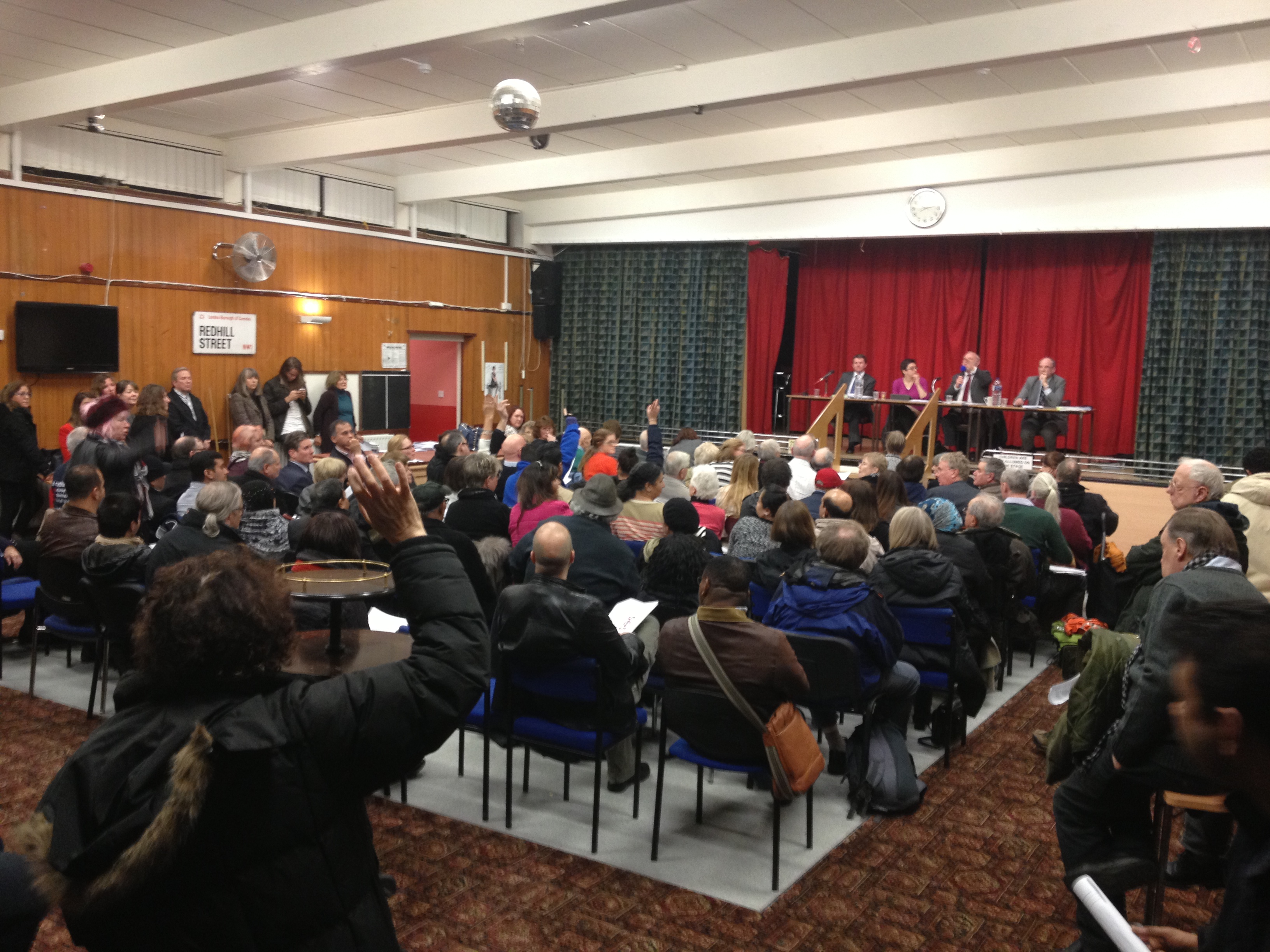
Nearly 200 people – many with homes facing demolition to make way for the £50billion railway – packed the Dick Collins Hall on the Regent’s Park estate to hear how they could fight back.
The HS2 rail route will bring thousands of smog-spewing lorries to Camden each day for more than a decade, demolish hundreds of homes and businesses, close major roads across the borough and shut down the popular North London Line while sending the property market into freefall.
One parent, who lives in Adelaide Road, Chalk Farm, told the meeting: “People need to know this is not just a Euston and Camden Town issue. It affects thousands of people all over Camden and they do not even know this is happening.”
Key questions were posed to a panel of speakers about where more than 200 replacement homes would be built in Camden and how 10 years of construction work would impact on schools and businesses.
The meeting came hot on the heels of meetings in Primrose Hill last month, when 600 people packed Cecil Sharp House to debate HS2, and in Primrose Hill Primary School last Thursday, attended by 250.
A 38 Degrees petition to “Save Camden”, calling for the scheme to be scrapped, has gathered a massive 30,000 signatures. A separate group of campaigners has begun organising a “Save Camden Lock” benefit concert for Camden Town.
The number of public meetings – five in Camden in the past two weeks – is evidence of widespread agitation against HS2.
Unlike previous meetings that have explicitly called for HS2 to be scrapped, Tuesday’s debate was titled “Reducing the impact of HS2”. It aimed to explain to residents yet another form of consultation over the project. Many present said they had had enough of responding through official channels and were angry at the defeatist tone.
Solicitor Alastair Lewis, Camden’s “parliamentary agent” at law firm Sharp Pritchard, told the meeting that from May there would be no turning back from the project because “Parliament will have decided there will be a HS2 project”.
Mr Lewis explained a complicated parliamentary process known as “petitioning”, where the public will be able to respond to a government-appointed Select Committee during a three-week window expected to open in May. Opponents of HS2 could “petition” the committee with arguments that the line should stop at Old Oak Common, in west London, instead of Euston, or that the link through Camden Town should be scrapped.
After the meeting, Hampstead and Kilburn Labour parliamentary candidate Tulip Siddiq said: “A lot of other people in other parts of Camden are not aware of the effect it will have on them – the travel disruption, the vents, the lorries. This is because HS2 have tried to hide the damaging effects of the scheme so these issues are only gradually starting to emerge.
“Personally, I think it’s an enormously damaging and expensive scheme. It’s ill-advised and I will be voting against it if I am elected to Parliament.”
Former Director of Public Prosecutions Keir Starmer, who lives in Dartmouth Park, told the meeting that “no one knows the true cost” of HS2 because full reports into the financial and environmental impact on Euston and Camden Town had not been carried out. He has told the New Journal the consultation was in breach of the European Convention of Human Rights.
Barrister Robert Latham, who has set up an Euston Action Group to campaign for the “best deal for Camden”, said he had organised UCL researchers to interview every person living in a home to be demolished by the scheme.
The Dick Collins Hall itself is earmarked for demolition under the project.
