How Bob helped bring down apartheid rule
Angela Cobbinah talks to Bob Newland about his role working undercover as a London Recruit for the ANC
Thursday, 27th August — By Angela Cobbinah
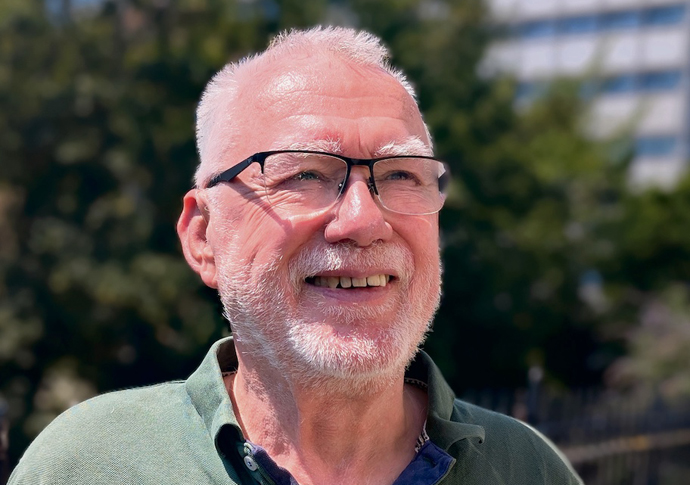
Bob Newland, author of Wherever the Struggle is [Angela Cobbinah]
IT is the stuff of spy novels. One evening more than 50 years ago, Bob Newland, a 21-year-old anti-apartheid activist, was invited to take a walk through Waterlow Park by his flatmate who whispered that the ANC had chosen him for a covert mission to South Africa. Was he on board?
Despite the risks involved – arrest, torture, even death at the hands of the feared South African security forces – Bob said yes. After a clandestine meeting outside the Dominion Theatre with his handler, future Mandela government minister Ronnie Kasrils, he was given a few weeks’ training before flying off to Johannesburg to plant devices in the street that would blast thousands of ANC leaflets into the air.
As a member of the 60-strong London Recruits, Bob is credited with helping to re-ignite the anti-apartheid struggle at a time when it appeared all but crushed following the exile and life imprisonment of much of its leadership, including Nelson Mandela. But after he came home from his two-week mission, he never breathed a word to anyone about it for more than 30 years.
“We were sworn to secrecy in order to protect the safety of all of those involved,” says Bob, still exuding the ebullience that led him to take the plunge all those years ago. It’s a good story, especially after a few drinks, but once you talk about it, you can’t control it. So I locked it away and didn’t even tell my wife.”
In 2005, more than a decade after the fall of apartheid, everything changed when the South African government honoured Bob and company at a ceremony in London. Since then, their astonishing story has been told in a number of publications, the 2024 film Comrade Tambo’s London Recruits and, in June, a BBC Radio 4 drama.
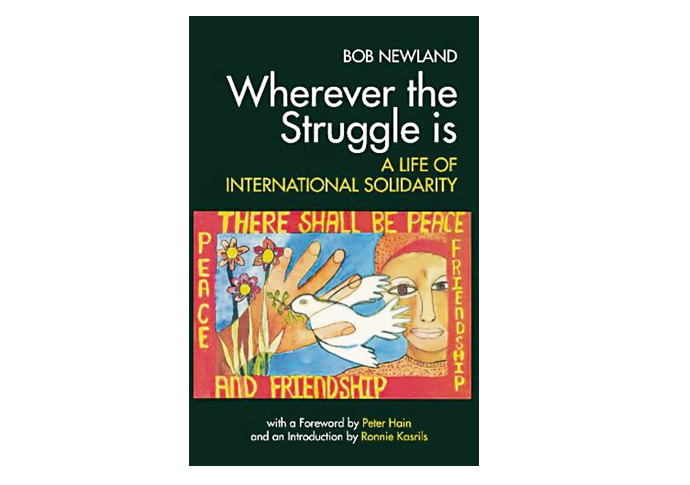
Now Bob has published Wherever the Struggle is, an engaging account of his decades as a political activist in which his time in South Africa inevitably takes centre stage. When he received the call in 1971, he was a member of the Islington Young Communist League and had become involved in anti-apartheid protests at the LSE, where Kasrils was a student tasked by ANC chief Oliver Tambo to recruit white Britons for the cause, using them as a cloak of invisibility.
“We were young and naïve but we were not dreamers,” Bob asserts. “We were very committed and wanted to change the world. I did not hesitate to volunteer.”
The plan was that he and his flatmate, Pete, would travel to South Africa to spread news of the ANC resistance the authorities insisted it had eradicated. The main vehicle was leaflet bombs placed in buckets inside large paper bags that would be detonated by small explosives and an egg timer.
The devices, which had been tested out on Hampstead Heath and could not cause injury, were designed to scatter leaflets in areas where black people congregated, like taxi ranks and bus and rail stations.
To smuggle the materials through airport security, false-bottom suitcases and Fortnum & Mason biscuit tins were deployed. Despite the meticulous planning, Bob, who had never flown before, remembers how he practically had a panic attack when metal detector alarms went off, triggered by a magnetic travel chess set he’d put in his pocket.
“The psychological strain was always intense,” he recalls, wincing. “Every time someone looked at us we thought they knew what we were doing. It was tough, things went wrong and we were really frightened.”
Once in South Africa, though, the importance of their mission was brought home to them as they witnessed first-hand the brutal realities of apartheid. “One day, we saw a white man kick a black man into gutter for not stepping off the pavement to allow him to pass. The casual dehumanis-ation was shocking and I wanted to intervene but that would have blown our cover, so I had to just walk on as if nothing had happened.”
Bob and his accomplice planted four devices, ensuring that they all went off simultaneously. That day, unbeknown to them, London Recruit teams had targeted other parts of Johannesburg and four other cities in a tightly synchronised operation, which also included the broadcast of recorded messages and freedom songs, sparking much alarm in the South African press the next day.
The impact was to breathe new life into the ANC and enable it regroup and organise. The following year, Bob travelled to South Africa again, this time to deliver equipment to ANC fighters. Taking much longer than expected, the plan was eventually aborted and Bob arrived home to the news that his worried mum had considered reporting him as a missing person. So it was decided that it would be too risky for him to return to South Africa. Two London Recruits volunteers would later be captured and tortured by South African police before being locked up for five and 12 years each.
Today Bob, now retired and living in Wapping, is busy giving talks about the London Recruits to often young audiences grappling with issues like Palestine and the environ-ment. “They love the message of international solidarity, which translates into a bigger story beyond London Recruits,” he says with a mixture of pride and humility.
“I have been asked by South Africans why I, a young white guy, would go all the way to their country to do what I did. My answer is shared humanity. But at the end of the day we were a small contributory factor in the liberation struggle. We went out there and by and large came back and got on with our lives. The bulk of the struggle was borne by the people of South Africa. They are the real heroes.”
• Wherever the Struggle is: A life of international solidarity. By Bob Newland. Merlin Press, £16.99
