High hopes: when Constable moved to Hampstead
Susan Owens talks to Peter Gruner about her new book on the artist, and reveals how he moved near the Heath in a bid to improve his wife Maria’s health
Thursday, 2nd April — By Peter Gruner
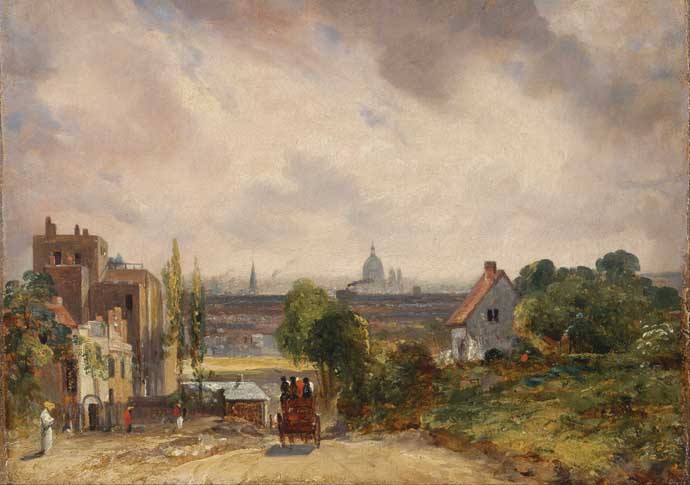
John Constable’s Sir Richard Steele’s Cottage, Hampstead
ARTIST John Constable chose to live in Hampstead to protect his dear wife Maria and their young children from the rising levels of air pollution in the capital.
So writes author Susan Owens in her fascinating new book, Constable’s Year: An Artist in Changing Seasons.
She points out that exhaust fumes may have been decades away in the 1810s, but “imagine the pollution caused by a coal fire burning in every kitchen. Smoke billowing from chimneys and the air tasting of soot”.
Talking to Review, Susan said that writing about Constable felt less like a choice and more like a compulsion. “I am fascinated by his art because the more you look, the more you find in it. It’s inexhaustible. And he wrote a great many letters, so you can get an unusually strong sense of what he was like as a person and what he was doing day to day.”
Susan writes that on hot days the capital could stink: “London’s sewerage system emptied human waste from the fast-growing population into the fetid Fleet river and thence the Thames. The bodies of the dead were packed, sometimes 10 deep, into crowded burial sites.”
Constable thought the village of Hampstead had the advantage of being higher up, with fresher air – and being close to the Heath, the closest approximation to the country that the city could offer.
Susan also mentions that Constable’s five-storey three-bedroom house in Well Walk – a short walk from Hampstead Heath – is still available, currently on sale for nearly £5million.
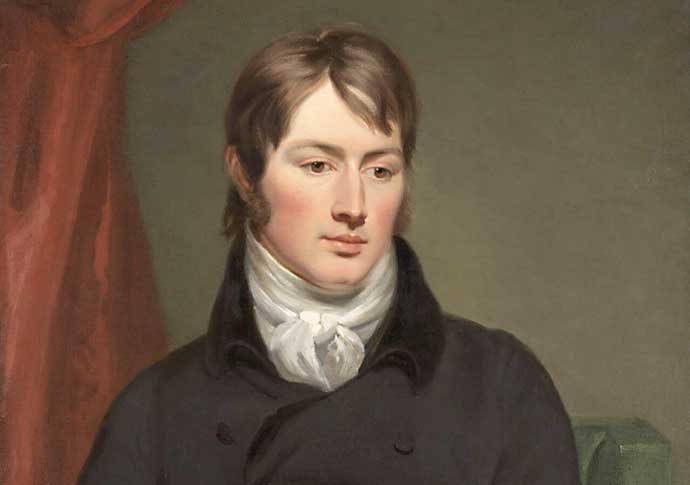
John Constable
The Hay Wain is probably Susan’s favourite Constable painting because of its strangely powerful sense of place. She suggests in her book that readers should go to the National Gallery and stand in front of The Hay Wain. “Try and shut out the gallery hum and let your eyes wander over the scene. After a few seconds the still warmth of a summer will come to meet you, an atmosphere so rich it could make you drowsy.”
Hampstead, of course, is well known for beautiful tall trees and high vantage points offering sweeping views over valleys and bodies of water. From 1819, Constable began exploring the area with a sketchbook but one day his attention was caught by sandpits dug out by builders for the new houses that were reshaping London.
Constable married Maria Bicknell in 1816 at St Martin’s-In-The-Fields in Trafalgar Square and always missed her when he was away. They were a devoted couple and ended up with seven children.
Susan writes: “He drew labourers shoveling sand, men with wheelbarrows and horses and carts taking it away to the builders’ yards.”
Constable worried a lot about Maria’s health and feared for her during bad weather. He wrote to her during a stormy February 1816: “I need not tell you that you must take all the care possible of yourself this horrid season – the spring is the most dangerous of all seasons, and is only loved by the poets, who are another race of beings.”
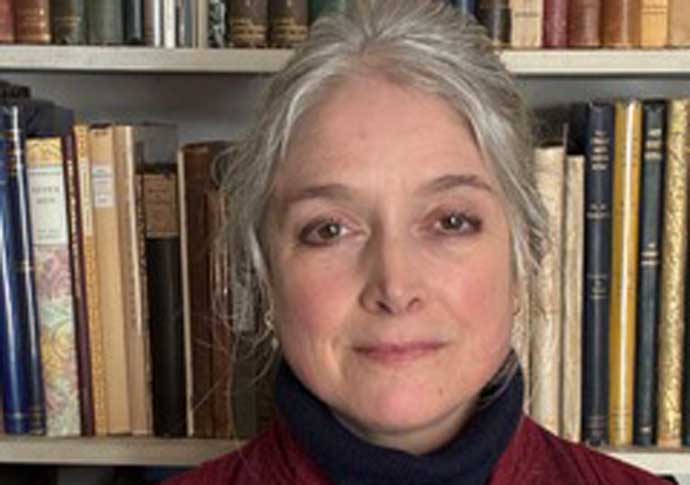
Author Susan Owens
But he adored Hampstead Heath and the various colours and lights and he and Maria went walking there as often as they could.
One of his first paintings was Branch Hill Pond, Hampstead Heath, 1819. Constable noted afternoons of July and August were often windy and felt that storms were on their way. He had been waiting for the autumn because he felt it brought a “peculiar tone and beauty” to the skies.
Poet and painter William Blake, looking through Constable’s sketches of The Fir Trees of Hampstead in 1820 exclaimed: “Why, this is not drawing, but inspirational.”
A new son arrived in January 1828. The strain of yet another labour, and of nursing the baby as well as looking after the other children, took its toll, and in the spring Maria’s health went into a steep decline.
In May, in desperation the couple travelled to Brighton hoping the sea air could help Maria and her sickly baby to gain strength.
John and Maria returned to Hampstead the following month. “She was sinking fast and might as well be at home in Well Walk, high above London, where her spirits could be lifted by views of the Heath. Maria died, aged 40, on a short dreary day in late November. Constable was devastated.”
He died in 1837 aged 60 and was buried next to Maria in St John’s Churchyard at Church Row, Hampstead.
• Constable’s Year: An Artist in Changing Seasons. By Susan Owens, Thames & Hudson, £25
