From Curie to Cavendish: women under the microscope
For decades, female scientists have been airbrushed from history. Craig Kenny applauds a new book that aims to reinstate them
Thursday, 17th September — By Craig Kenny
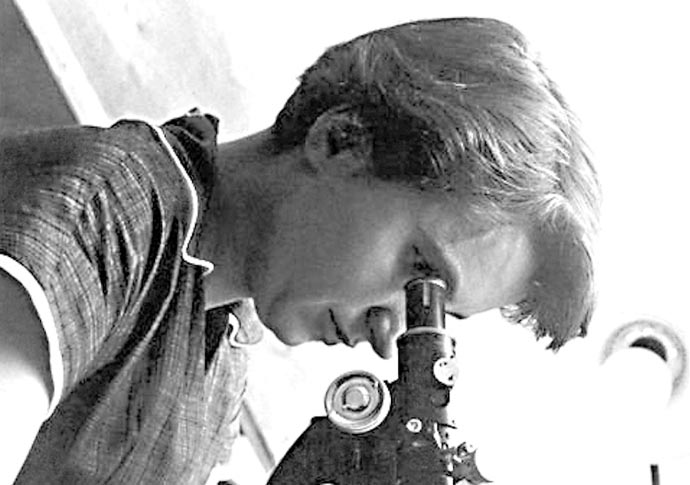
Dr Rosalind Franklin [MRC Laboratory of Molecular Biology]
THIS is a tale as old as human civilisation: How women’s ideas and achievements have been consistently overlooked, undervalued, or credited to their male colleagues. It is known as the Matilda Effect.
In A History of Science in 21 Women, Dr Marieke Bigg shows this process at work across every scientific discipline, from psychoanalysis to rocketry.
For instance, Dr Rosalind Franklin of King’s College London, produced the crucial evidence for the “double helix” structure of DNA, but when it came to awarding the Nobel Prize it was her male colleagues who were garlanded.
Although Marie Curie was the first woman to win a Nobel Prize (in fact she won two), the committee initially tried to award it to her husband and collaborator, Pierre, we learn.
In earlier times, publicly expressing your ideas could be dangerous for women. The Alexandrian philosopher Hypatia was accused of witchcraft and murdered by a mob.
When the natural philosopher Margaret Cavendish conceived of motion using the metaphor of dance, in contrast to the prevailing mechanistic ideas of the 17th century she was ridiculed as “mad Madge”. Bigg shows that Cavendish was as personally eccentric and argumentative as her male peers.
The story moves into the Victorian age, where we meet Ada Lovelace, daughter of the poet Byron. Together with Charles Babbage, she designed the first-ever programmable computer.
“She saw the potential of the machine; she imagined its future,” writes Dr Bigg.
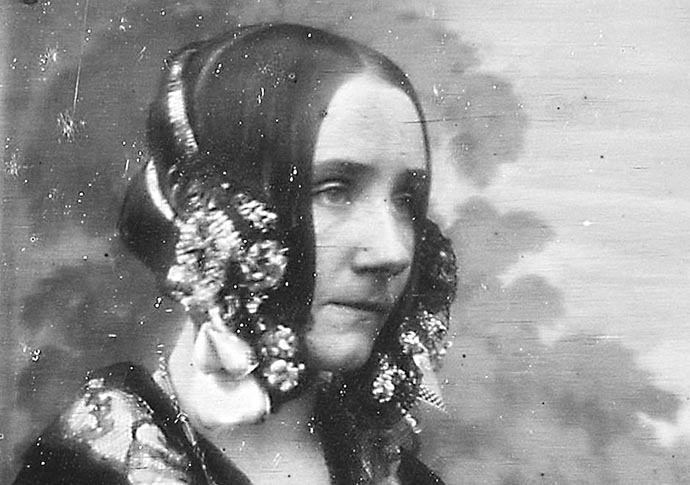
Ada Lovelace
Indeed, Lovelace was the first person to ask whether machines were capable of thought.
Name calling was common, even last century Barbara McClintock was labelled an “old bag” by peers who could not understand her pioneering work on gene transposition.
Sometimes misogyny was compounded by racism, as in the examples of physicist Chien-Shiung Wu and Nasa mathematician Katherine Johnson, whose story was told in the film Hidden Figures. Having mined the lives of other prominent people, Hollywood is increasingly profiling scientists like Turing and Oppenheimer. A movie about Rosalind Franklin is in production now, starring Natalie Portman. Bigg’s profile gives us a foretaste.
After spells in Cambridge and Paris, Franklin returned to London and probed the DNA molecule with X-rays. I used to teach A-level physics students a related technique, using electrons, to study graphite crystals.
Kings College in Westminster was a hostile environment for Franklin. Not only were women segregated from their male peers, there were also quota limits for Jews like her.
Her X-ray photograph #51 proved to be the crucial evidence of DNA’s double helix structure. Bigg tells us that Francis Crick and James Watson used the image without Franklin’s knowledge or permission, “in their quest to be first”.
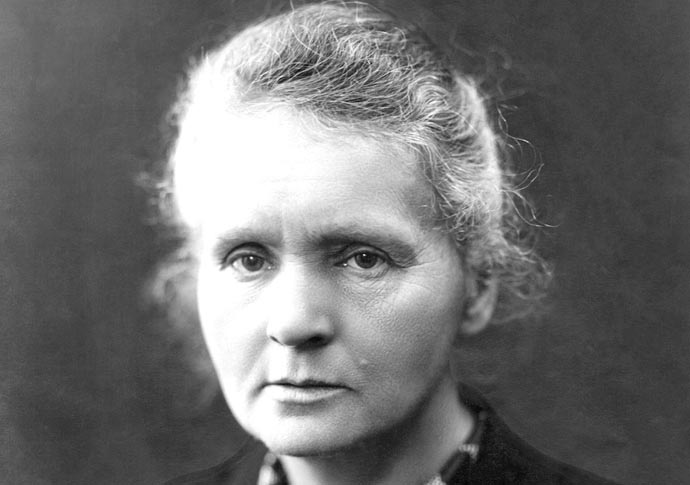
Marie Curie
The circumstances are opaque; Franklin had recently walked out of the project in a bad mood.
She was reluctant to declare a discovery without more proof and clashed with Watson personally.
By the time that the Nobel Prize was awarded to Crick, Watson and project director Maurice Wilkins, Franklin had died of ovarian cancer. But her example was inspirational to Jennifer Doudna, who pioneered gene editing decades later.
Despite attempts to undermine them, Bigg shows how women proved themselves the equals of men in scientific achievements. But it is often as campaigners and science communicators where they excel. After all, science is a collaborative enterprise with social consequences.
Each chapter of this book is both a portrait of an individual scientist and a study of the social attitudes and gender power dynamics of their era. The section on sexologist Virginia Johnson is a case in point. Imagine a researcher being asked to have sex with her supervisor as part of a study today.
The final chapter details how Timnit Gebru is challenging racial biases in the burgeoning field of Artificial Intelligence. She found that facial recognition software could identify white men but not black women.
The author concludes that these women offer a different story of human progress, towards a “future-proof” science.
Many great women of science are either not included or just mentioned in passing – Jocelyn Bell, Rachel Carson, Lise Meitner – enough for another volume.
• A History of Science in 21 Women. By Dr Marieke Bigg. Oneworld, £18.99
