‘For a few years, I wasn’t able to write – I was so annoyed with how I had been treated’
Former homeless street drinker and chess champion John Healy has published the sequel to his best-selling autobiography The Grass Arena. He tells Dan Carrier why it took nearly 40 years to complete
Thursday, 27th August — By Dan Carrier

John Healy [©George French]
WHEN John Healy sat down to write The Grass Arena, he gave an insider’s guide to a world on our doorsteps but rarely entered: John, who grew up in Kentish Town, became a street drinker and spent time in prison.
In The Grass Arena, he told the stories of the vagrants we walk past every day. He explains how while serving a spell inside he was taught how to play chess by a cat burglar called Harry The Fox: he dried out, became a chess champion and wrote an autobiography that has become a classic.
He has now written a sequel – a book as brilliant, raw and honest as his first – and in it he explains why it has taken four decades for a follow-up.
The Grass Arena was published in 1988 and became a best seller. It was clear that John was a beguiling, fascinating and brilliant writer – a new voice in the canon of English literature, and possibly the harbinger of a new wave of working-class writers. He was worthy of joining a 20th-century thread that can be traced from Robert Tressell through Walter Greenwood, James Curtis, Gerald Kersh and on to later voices such as Alan Sillitoe.
So why did it take nearly four decades before his sequel to The Grass Arena found its way into print?
The Glass Cage tells the reader of his life after the book, and is populated with a cast of friends, acquaintances and characters. As in The Grass Arena, John delves into worlds that rarely make the pages of books, and does so without any pretension.
“There was a lot of trouble after The Grass Arena,” he reflects. “I had a problem with the publishers and I got black-listed for 20 years. I was sent into an internal exile – the publishing world did not know how to react to me and I didn’t react how they wanted.
“For a few years, I wasn’t able to write. I was so annoyed with how I had been treated.
“But things kept happening that I thought I should write them down. They were things that made me laugh, and made me angry.”
John felt he was unsupported and condescended to by the editors at Faber, and he told them in plain language that their best-selling author was not overly happy with the way he had been treated. It felt like the middle-class cliques in the publishing world were happy to print his book, but they were on a “poverty safari”.
When he pulled them up on a lack of communication and support, they closed ranks: phone calls were not answered and when he expressed his dissatisfaction, the publishers stopped a literary career in its tracks.
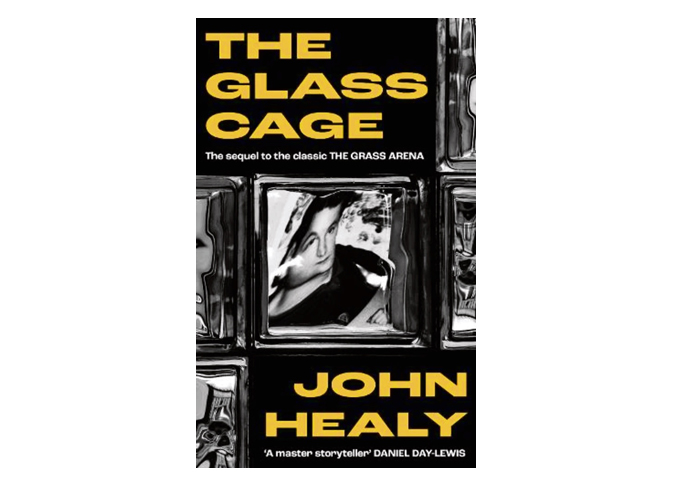
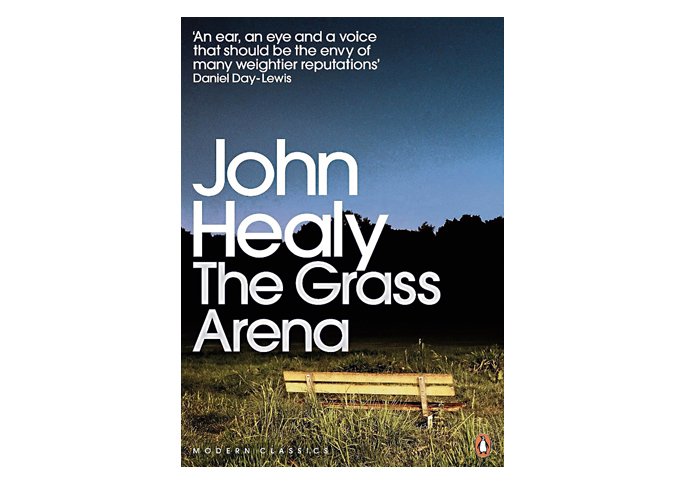
The Glass Cage is the sequel to John Healy’s best-selling autobiography The Grass Arena, published in 1988, and now a Penguin Classic
That reaction has robbed us of a valuable voice and a brilliant story teller: who knows what else John could have produced in the proceeding decades if he’d been understood, not treated as a strange one-off who had managed, against the odds, to become a best-selling author…?
In The Glass Cage John recalls how he could not understand how the publisher worked. Looking at this from a reader’s perspective, it feels like his publishers did not have the time or understanding to deal with him. They were out of their comfort zone.
He recalls how The Grass Arena had topped Ireland’s best-seller list, but that he found this out by accident. Then came the final straw.
“The Oxford University Press sent a letter requesting the use of material for students,” he writes. “The book would get a mention in 35,000 textbooks and 14,000 teachers’ books, along with 1,000 cassettes: 50,000 free adverts.
“I spoke to someone at Faber, but it was awkward. My opinion was of no account. There was a serious communication gap.”
He recalled how he tried to contact a director but was fobbed off: “Look, Mr Healy, it’s not form to make appointments over the phone. Perhaps you could write a letter listing points you wish to discuss…”
You can hear the frustration as he links them to “stern-jawed judges, police officers and prison wardens”.
He reflects that he was “carrying a terrible rage…I found it impossible to overstep the barriers which they had built up to keep those not of their class subjugated. On the rare occasions I had managed to speak with anyone, their voices became irritated. Time pressure would not allow them to listen, to recognise, so their replies, in words too perfectly pronounced, were impossible to make head or tail of. There was no use protesting – education had given them courage, class exalted them with clear overtones of righteousness… it had a sadistic edge.”
John says he lost his temper.
“I had never belonged in their literary world, so there was no reason now why I should protest at being banished abruptly.”
What happened next entailed two police officers knocking on his door and saying he had been reported for making a threat. He was later shown a memo sent round publishers desks: “destroy the rest of his work and deem The Grass Arena out of print…”
John is reflective about his new work.
“It took me a long time to find the right tone and the right way,” he says.
“I wanted the reader to feel like they were there, in the scenes I created, like I did with The Grass Arena. I wanted people to feel like it was something in 3-D, to feel it was an immediate experience.”
Despite the blows of a publishing world believing he had one book in him, he has created a second masterpiece.
“I am a toiler. I work at it,” he reflects. “I wanted to write about my experiences, and use words to flesh out in writing what I have been through, had done and seen.”
The Glass Cage shows John’s ear for dialogue is well tuned.
His stories of being a dishwasher at a greasy spoon in King’s Cross is so well formed you feel you are sitting in Tony’s café and watching the proceedings.
“The characters I was with before and after The Grass Arena were fascinating people who had interesting experiences,” he adds.
“They were not living ‘normal’ lives. After The Grass Arena was published, people would ask what happened next? I decided I wanted to write a sequel but I was not sure I had the material I needed in my head.
“I had to wait for life to happen, to catch up with me. You need experiences to draw on, you need also the benefit of hindsight so you can consider what was important.”
• The Glass Cage. By John Healy. Wilton Square Books, £16.99 hardback
