Hampstead serial killer demands compensation for losing chance to vote in elections
Thursday, 16th October 2014
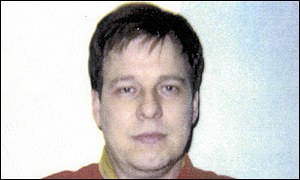
A HAMPSTEAD serial killer wants to be paid compensation for every election he has missed during the time he has spent in prison.
David Mulcahy, 55, one of the so-called Railway Killers, is among a group of long-term inmates who have lodged a claim with the European Court of Human Rights (ECHR).
If successful, the British government could be ordered to pay him around £1,000 for every missed opportunity to vote.
Mulcahy denies the crimes which he was convicted of and maintains his innocence through a website which questions the evidence against him. He has been told he must serve at least 30 years of a life sentence for three murders and seven rapes.
The claim for compensation follows an ECHR ruling, now nearly 10 years old, that found the United Kingdom breaches human rights by denying prisoners the right to vote in elections.
The rules have not changed, however, and Prime Minister David Cameron has said in the past that the idea of letting prisoners participate in elections makes him “physically sick”.
The UK has been granted an extension by the court to respond to the order, which will land the issue on the desks of whoever takes the reins of the next government.
Mulcahy was jailed in 1999, more than a decade after his accomplice and childhood friend John Duffy was sent to prison for life.
Duffy had broken a 10-year silence to give evidence against Mulcahy, with Mulcahy later claiming that Duffy had been paid £20,000 to appear against him at the Old Bailey.
The pair had grown up together and were said to have been inseparable during their early life after meeting on their first day at Haverstock School in Chalk Farm.
Police believed there had previously been a pact that if one of the friends had been caught, they would not implicate the other. While Duffy was in prison, Mulcahy lived in Hampstead and worked as decorator.
One of their first rape attacks was on a woman as she left Hampstead Heath station. They went on, in 1985 and 1986, to rape and kill three victims: Alison Day, Anne Locke, and 15 year-old schoolgirl Maartje Tamboezer. Most of their attacks involved ambushing women as they left train stations. The three who died were strangled and on two occasions there had been attempts to burn their bodies.
More than 1,000 vote compensation claims have been lodged at the European Court of Human Rights in Strasbourg but only on Thursday was it revealed that Mulcahy was on the list of claimants.
It has been previously estimated that, if successful, prisoners could receive £1,000 for every election they have missed the chance to vote in while being incarcerated. The total compensation bill could reach £1million if the prisoners win their cases.
Sean Humber, a human rights lawyer at Islington-based Leigh Day and Co, said last week: “The important point about human rights is that they belong to all of us all and not just the morally deserving.”
Justice Secretary Chris Grayling said: “I just don’t believe that the public want to give prisoners, some of whom have committed the most heinous of crimes, the right to vote.”
