British Library’s plan will put the squeeze on serious research
Thursday, 30th March 2023
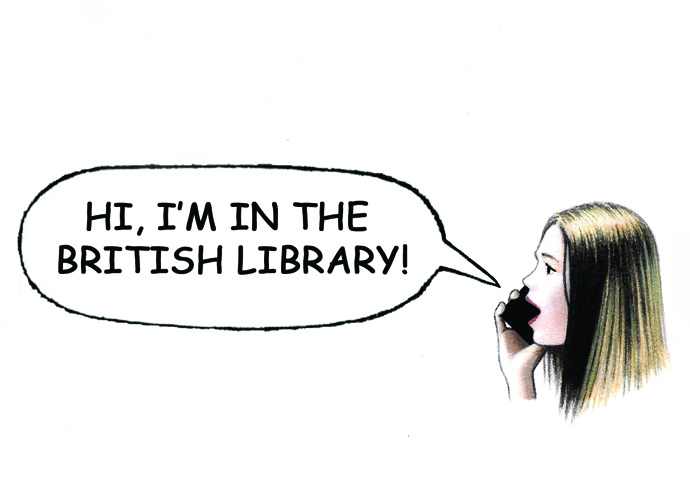
• THE British Library at Euston is considering turning one of its reading rooms into a public space.
This would mean that a reading room, currently available for those needing to consult the library materials, which is subject to restrictions (silence) would be lost.
Of the 11 reading rooms that currently exist six are open-plan and share a ceiling. If people talk in these room (Humanities 1, 2, Maps or Social Science, Science 1, 2), it can clearly be heard in others.
Infrequent incidents of noise disruption (including taking phone calls) can be reported to security staff.
A new “public room” (containing no reading material and not for consulting BL’s collection) will have no security staff and permit eating, drinking, conversations, and use of mobile phones, which will affect all readers working on conjoining floors.
At certain times of year, reading rooms become full because, as well as academics, researchers, writers and journalists, the library now gives reading passes to anyone on request, whether or not they need to consult the library’s materials.
Outside the reading rooms, every public space, aside from the terrace restaurant, has been turned into study space, complete with desks and sockets for those wishing to use the free wifi without the need to consult the material.
A reading room manager told us the public reading room is intended as an additional space for those who have been consulted as “users” not “readers”.
A new public room would not only reduce the number of places available for readers, but would disrupt those working in other areas of the library not open to public access. This would have a devastating effect on other researchers who come from across the world to consult the BL’s materials.
Every university in the area has its own library and there are local libraries. Dozens of cafés offer free wifi for the price of a cup of tea – the sole reason a public room would be used.
Camden Council have also granted planning permission for the BL extension. Therefore, we can see no reason why the British Library, founded as the pinnacle of research excellence, should now be on the brink of closing one or two of its reading rooms (Science 3 and or MAPS) with the sole intent of pleasing general wifi users at the expense of literary, journalistic and research talent.
Dr ECCY DE JONGE
JOHN MASON
DEBBIE RADCLIFFE,
WC1
