Avoiding front line? Former soldier blinded in Iraq upset by ‘insensitive’ best ally Trump
Alex Donnelly survived a bomb explosion in Iraq but was left blinded. 20 years on he’s standing for election in Camden with a Tory rosette. He tells Richard Osley that the president’s comments were wrong, but debates about the military and defence are important
Friday, 30th January — By Richard Osley
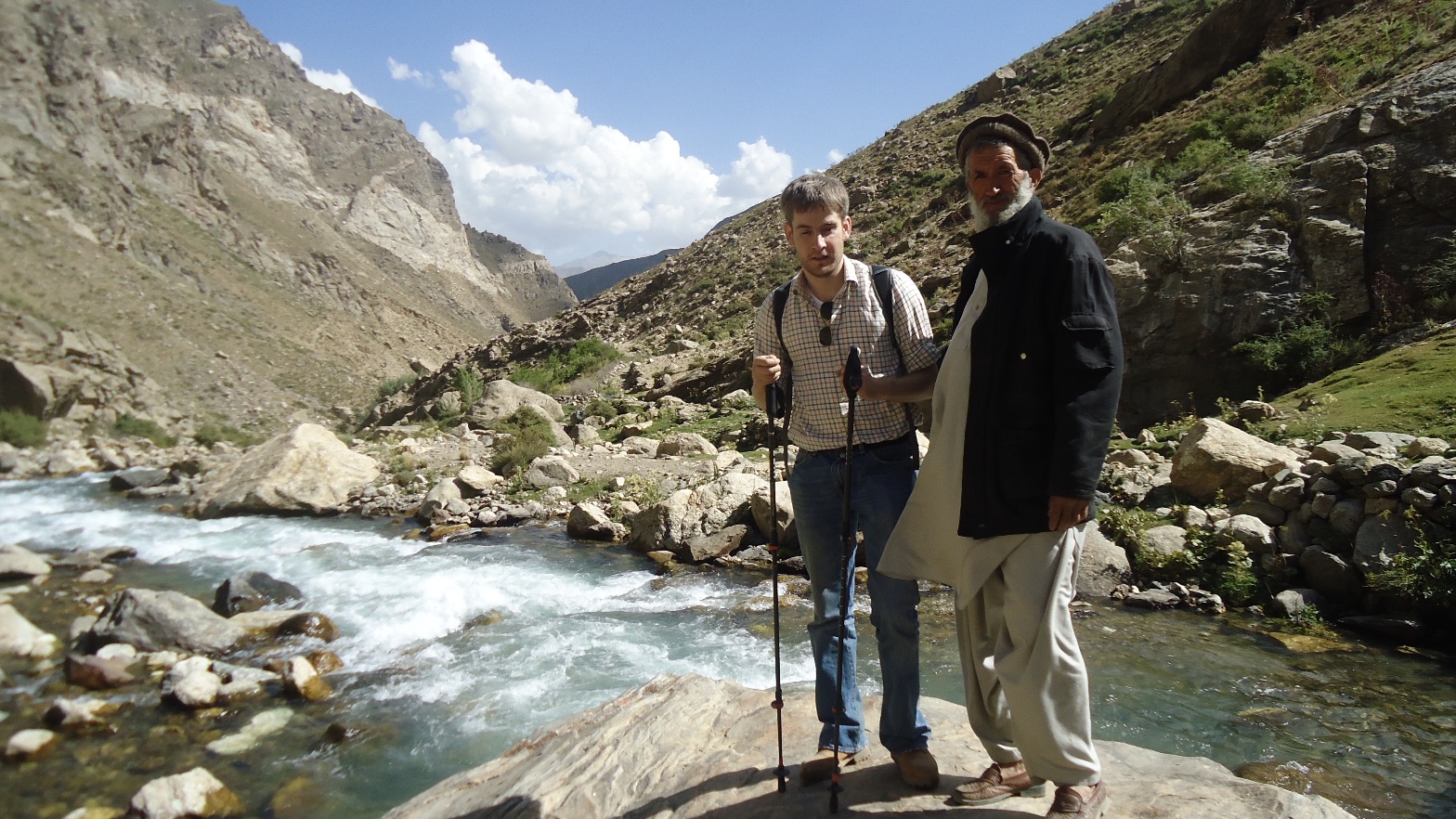
Alex Donnelly as a Winston Churchill fellow hiking through the Panjshir valley of Afghanistan in 2012 as a blind person with a local guide
A FORMER soldier who was blinded by a bomb in the last week of a six-month tour of Iraq has described Donald Trump’s comments about ally troops as “wrong, insensitive and disappointing”.
Alex Donnelly, who had a miraculous escape from death after a remote-controlled device was detonated by insurgents near Basra, told the New Journal that there should be more recognition for “bravery and sacrifice” – but that the United States remained the UK’s closest partner.
Four of Mr Donnelly’s colleagues, who were in the same boat as him, passing under a bridge on the Shatt al-Arab waterway, died in the incident in November 2006.
The US president was talking last week about service in Afghanistan during an interview with Fox News, but was widely condemned for his apparent dismissive attitude towards military personnel from the UK and other countries.
He said that the US had not really needed help from allies and that some troops “stayed a little back, a little off the front lines”.
Mr Trump rarely apologises for things he has said and done, but later backtracked to some degree by saying “the great and very brave soldiers of the United Kingdom will always be with the USA”.
The blast which changed Mr Donnelly’s life came on Remembrance Sunday that year, and caused a political and public reaction as it was, at that time, the biggest loss of British personnel in a single incident.
Coroner inquests later heard that more could have been done to check the bridge for devices.
“We were hit and completely taken out,” he said.
“The Marines tried to secure the area but they had a firefight going on. We were dragged to a base and I was taken by helicopter to a field hospital and they performed life-saving surgery.
“My understanding is that the timing of it was about an hour before the Queen laid a wreath for Remembrance Sunday, so it was poignant.
“Another sad thing – I say sad but if it hadn’t been me it would have been someone else – was that I was in my last week of a six-month tour. We were out on the river with the Marines and we had a job to do and I was going to be going home a few days later.”
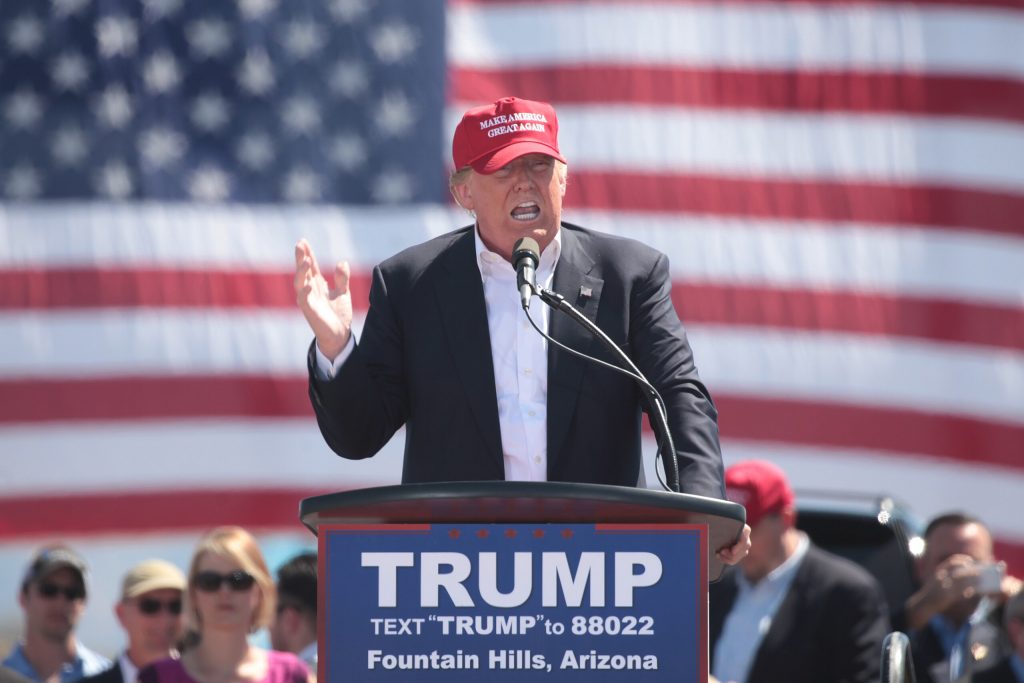
US president Donald Trump [Gage Skidmore]
He said he had been supported financially and had been treated for physical injuries but he felt that people who had served in Iraq had not been given enough support for mental health.
He has volunteered in the past locally to help traumatised veterans.
“I do feel – angry is probably too strong a word – that the military and Ministry of Defence had not prepared for the psychological challenge that intense combat was going to pose to troops who went sent to Iraq and Afghanistan.
“I was 24 years old at the time and yet I had zero psychological evaluation or treatment or talking therapy. There were physical injuries, smashed ribs, the stuff they needed to deal with. I felt financially supported but I came out of hospital and felt in terms of psychology I was picking myself up to move on with my life. I am very proud that I was able to do that, but there should have been more mental health provision for me and other people.”
Mr Donnelly’s personal story puts into perspective our use of terminology like “battles” when reporting on politics, but he himself is in the thick of the local campaigning ahead of May’s borough-wide council elections after being selected as a Conservative candidate in the Belsize ward.
“While Trump’s subsequent correction that British soldiers are ‘the greatest warriors in the world’ is welcome, a more comprehensive apology and recognition of the bravery and sacrifice of other NATO and Commonwealth allies – particularly Canada, Australia, and Denmark – should also have been made,” he said.
“That being said, it is also important for Britain and others to remember that while British fatalities in Iraq and Afghanistan tragically stretch into the hundreds, our American comrades suffered losses of many thousands and there is a legitimate concern in the US that they pay a disproportionate sacrifice in blood and gold to defend the freedoms and values we all treasure.
“In this regard, Kemi Badenoch’s December commitment of additional tens of billions to the UK defence budget and her pressure on Keir Starmer to increase defence spending as a proportion of GDP are important reaffirmations of British commitment and valour.”
He said that he was concerned by “amateurism in Reform” and “idealism” in the Labour Party and the Greens in debates on the military and said the Conservatives had more MPs who had experience of serving in the army.
Mr Donnelly, however, had previously been a Labour councillor in Oxford before moving to north London.
“I’m proud and it’s something important to me as a blind person, that I’ve worked in the NHS, as a soldier, as a public servant. I have that experience and respect for the public sector,” he said.
“I also have a recognition that the welfare state is at its best when it supports people to enable them to make a bigger contribution to society than the contribution they’re taking.
“I believed, particularly during the austerity years, that disabled people weren’t valued by that coalition government and I joined the Labour Party within that context. But it became clear to me I was quite politically naive and it became clear I was actually quite different in many ways to how I saw the world. I still did my job as best I could.”
He said he left the Labour Party because he felt it had an internal problem with anti-Semitism which was not being dealt with and that local councillors were more interested in passing motions and debating issues on international politics than helping people locally.
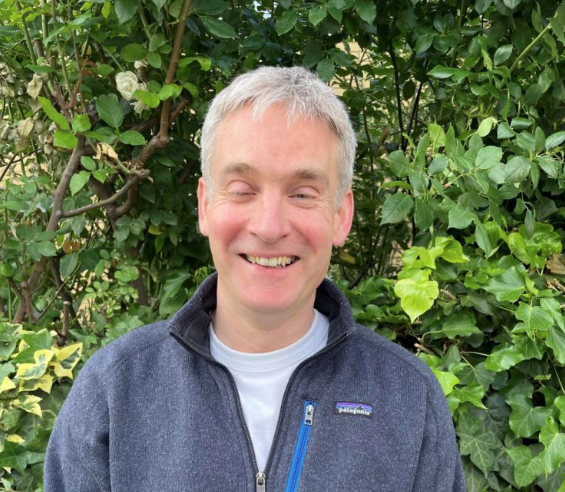
Alex Donnelly is standing for election in Belsize
He said it was “shameful” that the party had kept Jeremy Corbyn as its leader for five years.
Mr Donnelly said in Camden he did not want to be defined only as somebody who had been blinded in Iraq.
“It’s this big thing that happened to me,” he said.
“But I’m not thinking about it when I’m taking the children to school or helping to give them a bath.”
Mr Donnelly is standing for the Conservatives with local organisers facing steep challenges ahead.
The Tories have only three seats in the council chamber going into the election, having been replaced by the Liberal Democrats as the official opposition to the ruling Labour group. “The fact we might be under pressure right now is all the more reason to get involved,” he said.
Asked, as he was so angered by Mr Corbyn’s leadership of Labour, whether he had similar strong feelings about Boris Johnson’s time in control of his party, Mr Donnelly said: “I know this sounds like I’m dodging the question, but in terms of the time of Covid, the honest truth is that I don’t have the knowledge.
“Decisions were made quickly and a lot has come out which has been heavily criticised. At the same time, other European countries also had significant challenges.”
The leader of the local Tories at the last council elections, Gio Spinella, had blamed Boris Johnson’s behaviour on losses in Camden.
Mr Donnelly said: “The sorts of things which I thought were obvious mistakes – which I thought were unforgivable in my view – were, for example, that I thought it was very naive, when in my understanding MI5 and MI6 were advising against it, for Boris Johnson to elevate the son of a former KGB head of station in London [Evgeny Lebedev], to the House of Lords.
“When a prime minister is just disregarding the expertise of his most senior and informed government agencies, that for me suggests that he was not the right person to be leading the country.”
The Liberal Democrats hold all three seats in the Belsize ward. Voting is on May 7.
‘We were out there serving in Iraq but I didn’t mind the protests in London’
ALEX Donnelly knew that while he was heading out to serve in Iraq, there had been huge protests back in the UK against prime minister Tony Blair’s decision to join the United States in military action.
He said that this was part of the democracy that the armed forces were trying to protect and he did not resent the demonstrators who took to the streets.
“I’m quite open-minded about this,” he said.
“Over the course of history people will say it went well or went badly in terms of the British government’s position, but I do think that the United States is our closest ally and our interests are aligned with them. It was a political decision that we were going to support them and I think that was the right thing for us to do.
“Similarly, we live in a democratic country where I think protest and objection, particularly to major political events like war, is important. So I didn’t have a problem with people protesting.”
