A deep dive into freak weather already hitting the UK
Former BBC environment analyst Roger Harrabin hopes a colleague’s book outlining how unprepared the UK is for freak weather will open eyes
Friday, 8th May — By Roger Harrabin
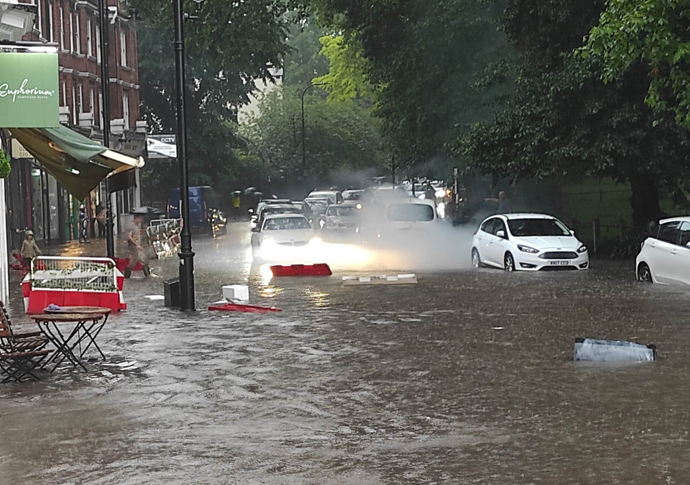
IT’S July 2021, and Tony Arancio is watching TV in his basement flat in South Hampstead.
Suddenly, he notices his home is being invaded by an onslaught of brown water: a storm relief sewer has been overloaded by torrential rain. Sewage is exploding out of toilets.
David Shukman, my long-standing colleague in the BBC science unit, takes up the story: “The flood kept rising. Ten minutes to reach Tony’s knees, 15 to his waist. Stinking, shocking, nightmarish. Tony turned to his front window. It overlooks a light-well. The murky brown water was surging in so powerfully that he couldn’t get close to what might have been a possible exit, let alone out of it.
“The other option was his front door, but right outside it are the stairs that lead up to the street, and they’d become a cascade. Water and sewage were pouring down. The door was jammed; he couldn’t budge it. The water was up to his chest.”
The Response – Shukman’s definitive account of freak weather already hitting the UK – sounds the alarm on the urgent need for resilience. The authorities, he believes, are unprepared for extreme weather that will get worse until we stop pumping out greenhouse gases, digging peat and felling forests.
Tony was certainly not prepared as the floodwater rose inside his flat. Shukman continues: “Tony could only breathe by standing on tiptoes. In desperate trouble, he stretched his arms up high, ‘like Jesus’, one hand holding his mobile phone. This really felt like the end. No one to hear his shouts, no one coming to help, no way out. An old man suffering surreal terror in one of the richest cities on earth. He rang his sister. He told her he would be dead in 15 minutes.”
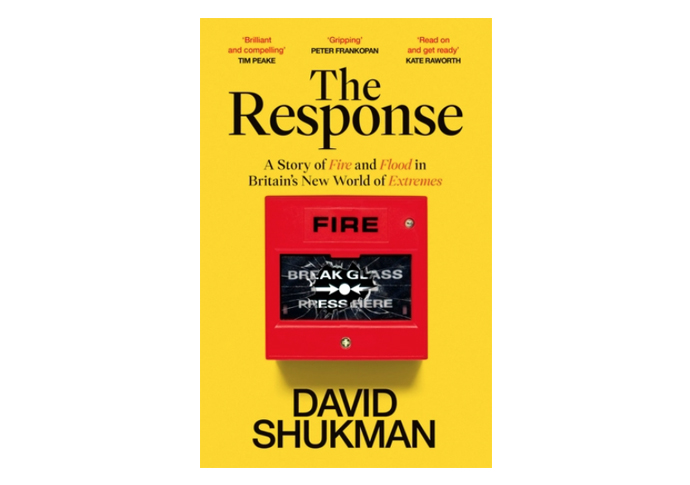
The Response reads like a thriller, but it’s also a deep analysis of the UK’s readiness for worse weather. While the authorities strived to cut planet-heating emissions, they have largely downplayed the need to protect our homes and businesses right now, he says.
The blame spreads wide. The Met Office failed to adequately signal the risks on the day of Tony’s nightmare, he says. And it’s not just floods: In 2009, a fire started on farmland beside Great Wakering in Essex and jumped to two houses nearby. Shukman says it was probably the country’s first fire crossing of the “rural-urban interface”.
July 2022 saw so many wildfires that the London Fire Brigade literally ran out of fire engines. I wondered if the authorities caring for Hampstead Heath had assessed grass fire risks. Might the changing weather, for instance, cause a rethink of the recent policy of allowing grass to grow tall and dry to encourage biodiversity? These sort of questions will become ever more pertinent.
You may ask why Shukman waited until leaving the BBC to raise the alarm on adaptation. In truth, we tried – though probably not enough. Adaptation was not “sexy” to editors, so we focused more on high-level policies to cut emissions, with stories often making headlines.
Meanwhile, the term adaptation was seized by the libertarian Right – people who argued against emissions cuts because humans are adaptable, and easily able to cope with weather disruption. That complacent hope has been swept away as the world floods and burns.
The book also touches lightly on the BBC’s reporting of climate change futures. It recalls one UN document, for instance, projecting that global temperatures could rise by as little as 1.1 Celsius or as much as a 6C, with a most likely figure of 3C.
I argued that our story should read something like this: “A UN report warns that pollution could raise global temperatures by as much as 6 degrees. This is not the most likely forecast but it is a genuine worst-case scenario – and it if it happened it would be catastrophic for humanity.”
A senior editor judged that to be scaremongering. He also said the audience would not cope with more than one number. So, the BBC helped the most likely computer projection – 3C – to become normalised in the climate debate.
We should have been reminding politicians and the public that we have only one planet, and warning that even taking a long-odds gamble on avoiding catastrophe was a reckless decision. It was, in my opinion, a subtle but serious misjudgement, and it has contributed to inadequate climate policies even in a leading nation such as the UK.
This book signals a vital new chapter in the climate debate. We clearly need co-ordination between authorities; wider drains; flood defences; an acceptance that land will be lost to the sea; sun-blocking awnings; clearing dead undergrowth which feeds fires; improving weather warnings; encouraging people to fortify their homes against flooding; air conditioning; storm drains; insulation.
The author offers no magic wand to secure the cash needed to invest in climate defences, while still renewing the electricity system, funding more renewables and re-arming to fight Putin… and all this against a background of shrinking GDP as a result of climate damages.
It is a monumental challenge – perhaps this book will open eyes.
• The Response: A Story of Fire and Flood in Britain’s New World of Extremes. By David Shukman, Witness Books, £25
• Dr Roger Harrabin was the BBC environment analyst for 25 years and is now a Hon Fellow at St Catharine’s College, Cambridge
