‘A camera gives you a reason to interact with people’
After the commuters go home to watch The One Show, the Tube after dark takes on a very different character. Photographer Mark McEvoy explains his tunnel vision to Dan Carrier
Thursday, 3rd September — By Dan Carrier
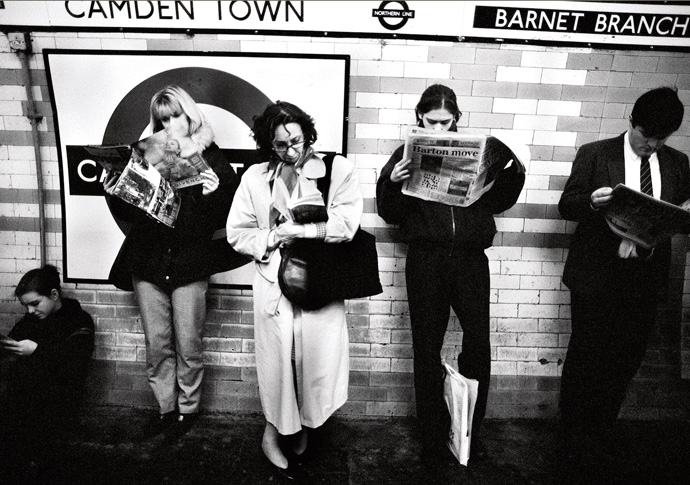
Examples of Mark McEvoy’s Tube photographs [All photos by Mark McEvoy]
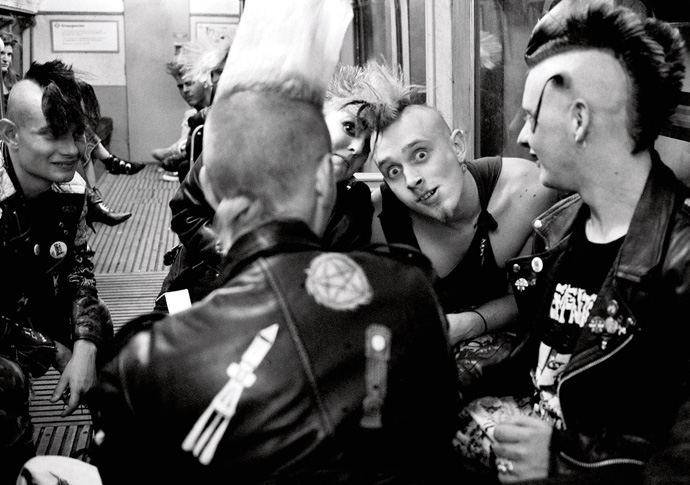
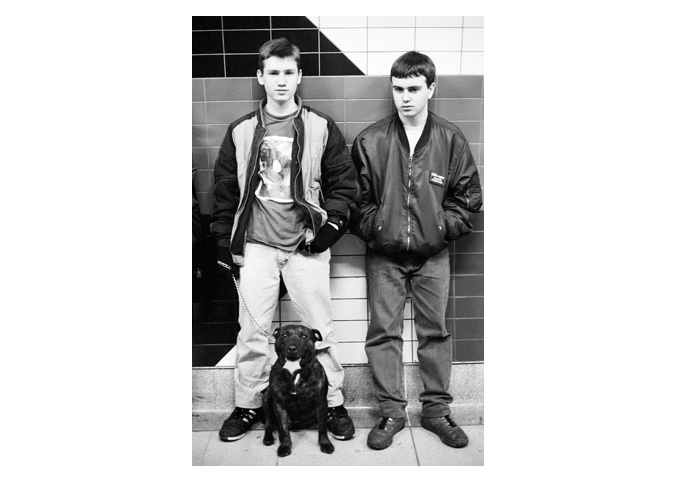
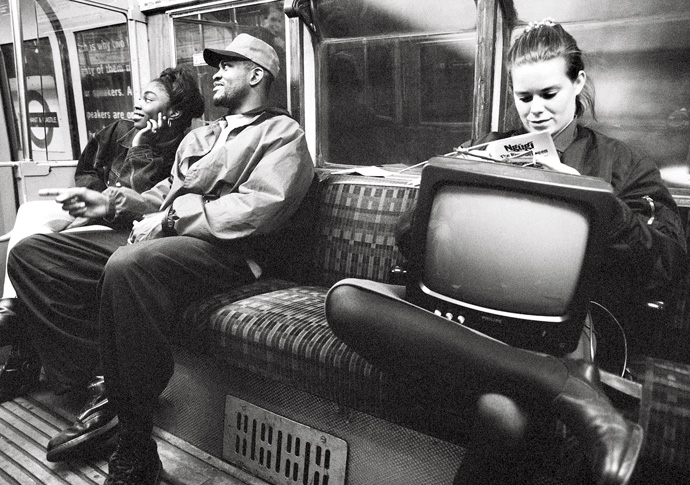
THE images are of Londoners out to play. Photographer Mark McEvoy spent many hours between 1992 and 1995 travelling the Tube at night, persuading people riding the trains to let him capture them on camera.
He went on the network on Friday and Saturday after 11pm, and entered a world that contrasted starkly with the daily commuters that used the Underground.
Now he is trawling through an archive he has built up over 40 years for his night Tube project, called Round Midnight.
The photographer, who grew up in West Hampstead and went to William Ellis School, was studying previous projects and was struck by his Tube shots.
“It is 35 years on, and it brings back a sense of nostalgia for the period, and time has added more depth to the pictures,” he reflects.
He sent one photograph to the Guardian’s Saturday review this summer, which has a photo feature each week – and they asked him if he had more. It prompted him to consider a photographic journey that has seen him travel the world and create in-depth studies that have been built up over the years.
They include bullfighting in Spain, the Notting Hill Carnival, a series on a circus, Christians crucifying themselves at Easter in the Philippines, lady boys in Thailand and one that followed a doctor working in Calcutta.
His journey as a visual artist began as a child.
“My family were originally American and in the 1960s my parents moved from New Jersey to London for work,” he says. “They fell in love with Europe. They loved the culture, loved the art.
“My father was a keen photographer. When I was around 14 years old he gave me an Olympus and said to me: ‘Take this and take some photographs’.”
Mark was encouraged to become a musician and he has earned a living at times playing violin in orchestras as well as teaching at Middlesex University, allowing him to also work on long-form photographic studies.
“A camera gives you a reason to interact with people,” he says. “People would let you enter their lives. I wanted to explore, have adventures, see what I could learn about the culture of the place.”
He studied at the Chelsea School of Art, where he learned to develop, and then completed a media studies course at the London College of Printing. It helped him hone the technical side.
“I was enthusiastic and wasn’t afraid to approach people,” he says. “Go with a smile on your face and people are open to having their picture taken if you speak with them.”
At college he began to explore the work of the Magnum photographic agency.
“I came across a book of Cartier-Bresson’s work in India,” he says. It prompted him to get a job at a Japanese restaurant in Hampstead, save up his wages and embark on a series of trips to India to take photographs.
“The Magnum photographers showed how it was not always about taking a picture, it was about going out and exploring a topic in depth.”
The Tube project began when he lived in a flat in Camden Square.
“It was the mid-90s and we were going out to The Fridge in Brixton,” he recalls. “I was on the Tube at about 11.30pm. I looked at the people sitting around me and saw London culture all around me. People were on their way to parties, dressed up, sometimes a bit drunk. It was a very different vibe to during the day, and I thought it was an interesting window into London life.
“I thought it would make a great project. I decided I’d just go out and try to capture it. I used black and white film and I didn’t want to shoot using a flash.
“It was a constrained space, so hard to do without being noticed. People would say to me: ‘What are you doing?’ People could be annoyed, and so instead, I just asked people if I could collaborate with them on a project, and explained I wanted to access their world.
“Sometimes it could be difficult – people would tell me to f*** off, sometimes they did not like having their pictures taken at all. But you’d ask permission and that would make them relaxed. Sometimes I’d ask and they would say no, so I’d just continue the conversation, explain what I was doing and why – and they’d relax and then say they didn’t mind after all.”
This personal touch was vital.
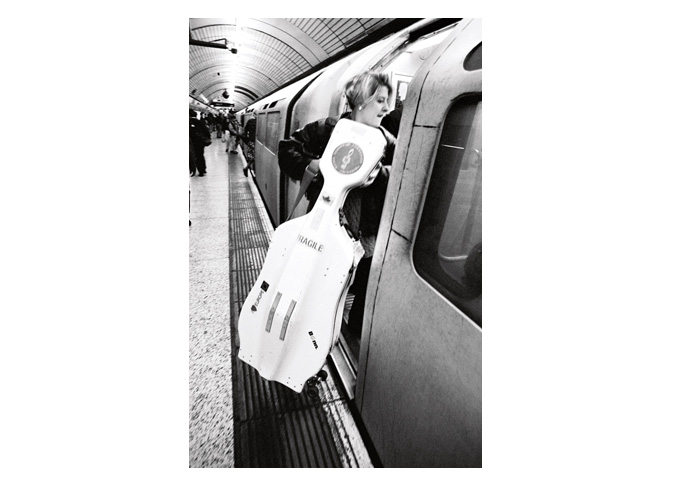
“All I would need was one person to be cool about it and I’d get a great picture. And then I’d carry on chatting and they’d relax and I’d take a few more – I wanted to take candid pictures and this happened after they’d accepted me and invited me into their world.”
The project went on for more than two years and Mark recalls how it helped him develop as a chronicler of people and places via the camera lens.
“It was challenging and made me think about how I approached subjects,” he says.
“It was an interesting dynamic and a lot of it depended on my mood. They would sense it in the same way dogs can sense if you are scared of them and they react, people would be okay if I was okay.”
Now the collection has found a new audience thanks to the Guardian’s Saturday review.
“They said they’d like to run it on the 10th anniversary of the night Tube services running,” he adds.
The London Transport Museum has expressed an interest in using the work for an exhibition and Mark is now looking through his huge archives to publish his own photography zines and create an online point for people to access his work.
“Most of this project has never been seen,” he adds. “I’ve become aware of the new meaning the images have taken on as an historical document of London culture. The fashion and style, older trains, adverts, newspapers and not one person looking down into their mobile phone. It was a slice of life captured in my youth.”
• See https://www.markmcevoy.com/
• Instagram: https://www.instagram.com/marktmcevoy/
